
For much of her early career, Taylor Swift faced a criticism that followed her from one album era to the next. While fans embraced her songwriting and emotional storytelling, skeptics often questioned whether her live vocals could truly stand on their own without the polish of studio production. The debate lingered for years, resurfacing in reviews, online discussions, and commentary from critics who doubted that the singer-songwriter could command a stage with nothing but her voice and her words.
In November 2021, Swift delivered a response that required no direct rebuttal. Instead, she stepped onto the stage of Saturday Night Live and let her music speak for itself. The occasion was already significant: she was promoting Red (Taylor’s Version), the re-recorded version of her 2012 album that had long been cherished by fans. Among its many highlights was the expanded 10-minute version of “All Too Well,” a song widely regarded as one of the most powerful pieces of songwriting in her entire catalog.
Rather than performing a shortened version designed for television, Swift chose to present the song in its full, unedited form. That decision alone was bold. A ten-minute ballad is a rare gamble on live television, especially on a fast-paced comedy show known for sketches, laughter, and quick transitions. Yet Swift leaned into the challenge, transforming the stage into something far quieter and more intimate.
The performance began simply. With a guitar in hand and minimal staging around her, Swift started the song’s familiar opening lines. There were no backup dancers, elaborate visual effects, or dramatic production tricks to guide the audience’s attention. Instead, the focus remained entirely on her storytelling. The lyrics unfolded slowly, painting a vivid emotional landscape filled with memories, heartbreak, and reflection.
As the performance progressed, the studio atmosphere shifted noticeably. The typically energetic SNL audience grew quieter with each verse. Swift’s delivery was controlled yet deeply expressive, allowing the narrative of the song to carry the emotional weight. When she reached some of the song’s most iconic imagery—references to a forgotten red scarf, autumn leaves falling into place, and the lingering echoes of a past relationship—the room seemed suspended in a collective moment of reflection.
What made the performance particularly striking was its patience. Swift allowed the song to breathe, letting pauses and subtle vocal inflections heighten the emotional impact. Each section of the ten-minute narrative built upon the last, creating a slow but powerful crescendo of feeling. By the time the final verses arrived, the audience appeared completely absorbed in the story she was telling.
When the performance ended, the response in the studio was unlike the usual thunderous applause that follows a musical guest on the show. Instead, there was a brief moment of stunned quiet before the applause began, as if the audience needed a second to return to the present. Some viewers later described hearing sniffles in the crowd, evidence of how deeply the performance had resonated.
For Swift, the moment served as more than just a promotional appearance. It became a powerful demonstration of the strength that has always defined her artistry: songwriting. While critics once questioned her vocal ability, the SNL performance highlighted something even more compelling—the emotional precision of her storytelling.
“All Too Well (10 Minute Version)” quickly became a cultural phenomenon after its release, topping charts and dominating conversations among music fans. But its live debut on Saturday Night Live cemented the song’s legacy in a unique way. Standing alone with a guitar and a microphone, Taylor Swift showed that sometimes the most powerful performance requires nothing more than a voice, a story, and the courage to share it.
News

Kylian Mbappe, Vinicius Jr and Aurelien Tchouameni booed by Real Madrid fans as Jude Bellingham goal against Oviedo overshadowed
Real Madrid’s inconsequential 2-0 victory over Oviedo was marred by a toxic atmosphere as supporters turned on their own stars…

Liverpool player ratings vs Aston Villa: Is Arne Slot’s time up?! Wretched Reds routed by Ollie Watkins & Co. despite best efforts of teenager Rio Ngumoha
Liverpool’s disastrous title defence hit a new low on Friday night as they were thumped by Champions League-bound Aston Villa…

The most disastrous deal of the Premier League season: Harvey Ellliott facing an uncertain future at Liverpool after being ostracised by Aston Villa
Harvey Elliott is ineligible to play for Aston Villa against parent club Liverpool on Friday night. But Unai Emery wouldn’t…

Elon Musk Doubles Down on Slamming ‘The Odyssey’ Casting: ‘Who Specifically Is the A–hole Who Added DEI Lies to Academy Awards Eligibility?’
Elon Musk is continuing his campaign against Christopher Nolan‘s “The Odyssey,” asserting that the Academy’s diversity guidelines are responsible for the director…
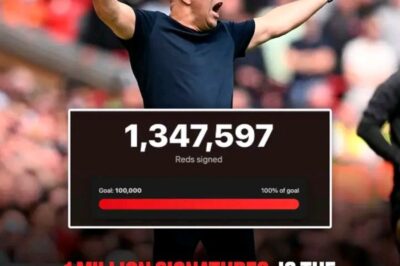
Liverpool fans launch massive petition to get Arne Slot sacked with over 1 million signatures in 24 hours
A petition calling for Arne Slot to be sacked has exploded in popularity among Liverpool supporters, reaching over one million…

Michael Carrick, you’re hired! Man Utd reach ‘broad agreement’ to name interim head coach as permanent boss
Manchester United are set to hire Michael Carrick on a permanent basis after reaching an agreement with the interim head…
End of content
No more pages to load