Newly released documents show that Tesla’s CEO will receive $158 billion in compensation in 2025. However, the truth behind this figure reveals a completely different calculation regarding control.
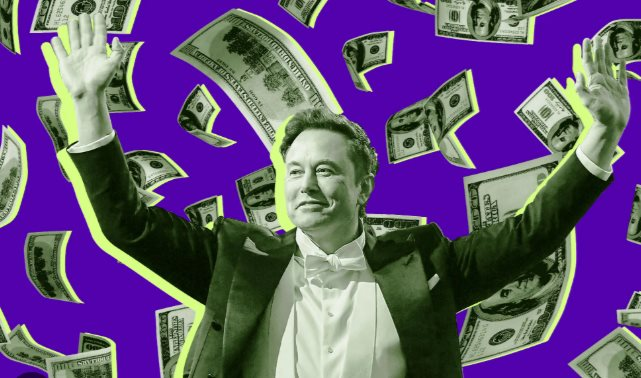
According to Bloomberg, Elon Musk is projected to earn up to $158.4 billion in compensation at Tesla in 2025. This figure is 2.5 million times higher than the median income of $62,786 for employees at the electric car company.
However, in the high-level world of finance , those “huge” numbers on paper often only reflect part of the picture.
A record-breaking figure, but the actual amount received was 0 USD.
Detailed reports from Dow Jones and the Wall Street Journal reveal a reality that completely contradicts what the public imagines. The $158.4 billion compensation package actually comes with a series of extremely stringent conditions. In fact, this CEO has not received a fixed salary from Tesla for many years.
The entire record-breaking compensation package is designed as a stock option and spans a 10-year plan. This structure only allows Elon Musk to realize his earnings if Tesla’s stock skyrockets and the company achieves specific operational goals.
The $158.4 billion includes the fair value of approximately $132 billion from last year’s stock package, plus more than $26 billion from an interim bonus that was canceled in April of this year.
To unlock the full reward package, potentially worth up to $1 trillion, Tesla faces incredible milestones. The company needs to increase its market capitalization from $1.43 trillion at the beginning of May to $8.5 trillion. Along with that comes the pressure of selling 20 million cars and 1 million robots annually.
Since Tesla has not reached its market valuation milestones or operational targets in the past year, the actual income the billionaire will pocket in 2025 is a round zero. The shocking figure in the current financial report is purely theoretical.
The power game behind the salary package
Behind the complex compensation agreement lies a hidden power struggle.
Last week, Tesla registered nearly 303.4 million common shares to be given to Musk as part of a planned 2018 offering. If the rights are exercised before mid-August, his ownership stake in the electric car company will increase to 20.3%. He currently also holds nearly 207.5 million shares that can be used as collateral.
However, Musk’s ambitions don’t stop there. He has repeatedly stated his desire to own at least 25% of the company’s shares to secure strategic control, particularly in key areas like AI and robotics. If he fails to achieve this, he has hinted that he might develop these projects outside of Tesla.
This poses a significant risk for investors, as Tesla’s future increasingly depends on humanoid robots and self-driving technology, while its traditional electric vehicle segment is stagnating. Since the beginning of the year, Tesla’s stock has fallen 15%, in contrast to the more than 5% gain of the S&P 500 Index.
The financial picture also reveals the close links between companies within the Musk ecosystem.
By 2025, Tesla will generate over $500 million from related companies. Specifically, approximately $430 million will come from selling the Megapack energy system for xAI, and $143.3 million from SpaceX, primarily from vehicle sales.
Conversely, Tesla invested $2 billion in SpaceX and spent $3.3 million on advertising on the X platform. Notably, SpaceX acquired xAI in February and is preparing for a large-scale IPO.
Some experts even suggest that a merger between Tesla and SpaceX is a possibility, allowing Musk to consolidate power over the entire ecosystem.
The $158 billion compensation is actually just the tip of the iceberg. What Elon Musk is pursuing is not simply money, but control and the power to shape the future of a technology empire.
In this game, stocks, robots, AI, and even Tesla are just pawns in a much larger strategy.
News
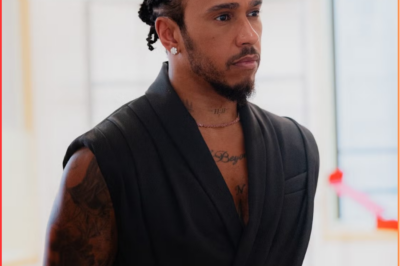
Lewis Hamilton admits that Mercedes engines are better than Ferrari engines.
Lewis Hamilton criticises Ferrari engine: “We have the best car, but it’s hard to fight the Mercedes power unit” Lewis…
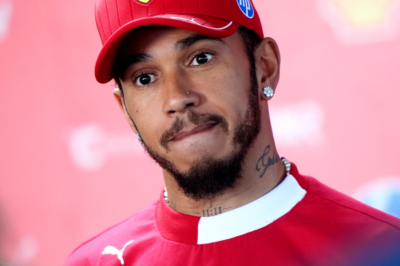
Lewis Hamilton found himself in a “no-man’s land” situation after a collision on the first lap.
Lewis Hamilton reveals extent of Miami F1 car damage that left him in “no-man’s land” Lewis Hamilton has revealed how…
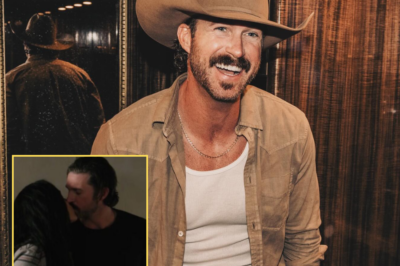
Riley Green made her official acting debut in the opening episode of ‘Marshals’ with a passionate kiss.
Things are heating up for Riley Green on Marshals. He made his acting debut on the Yellowstone spinoff Marshals a couple weeks ago as Garrett, a former Navy…
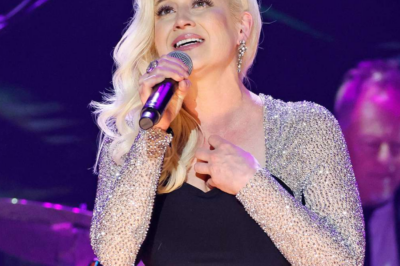
Kellie Pickler returns to ‘American Idol’
Singer Will Make Triumphant Return on ‘American Idol’ Years After Husband’s Death Next week’s episode of “American Idol” will be an exciting…

“Yellowstone” fans created a wave of excitement after the producers released the “Dutton Ranch” trailer.
‘Yellowstone’ fans ‘about to pass out’ over ‘Dutton Ranch’ trailer as Beth and Rip return “Yellowstone” fans are already saddling…
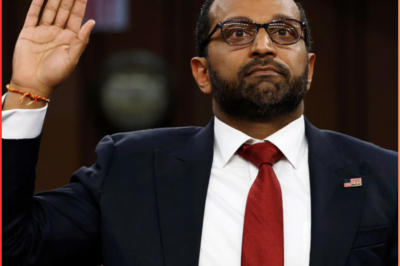
FBI Director Kash Patel has just helped the government save $300 million in an effort to restore public trust.
More than 1,000 agents reassigned to field offices and $300M in spending cuts already achieved, Patel says In just 14…
End of content
No more pages to load