Why do workers bear the heaviest taxes in the US, while billionaires get richer through strategies like “Buy-Lend-Die”?
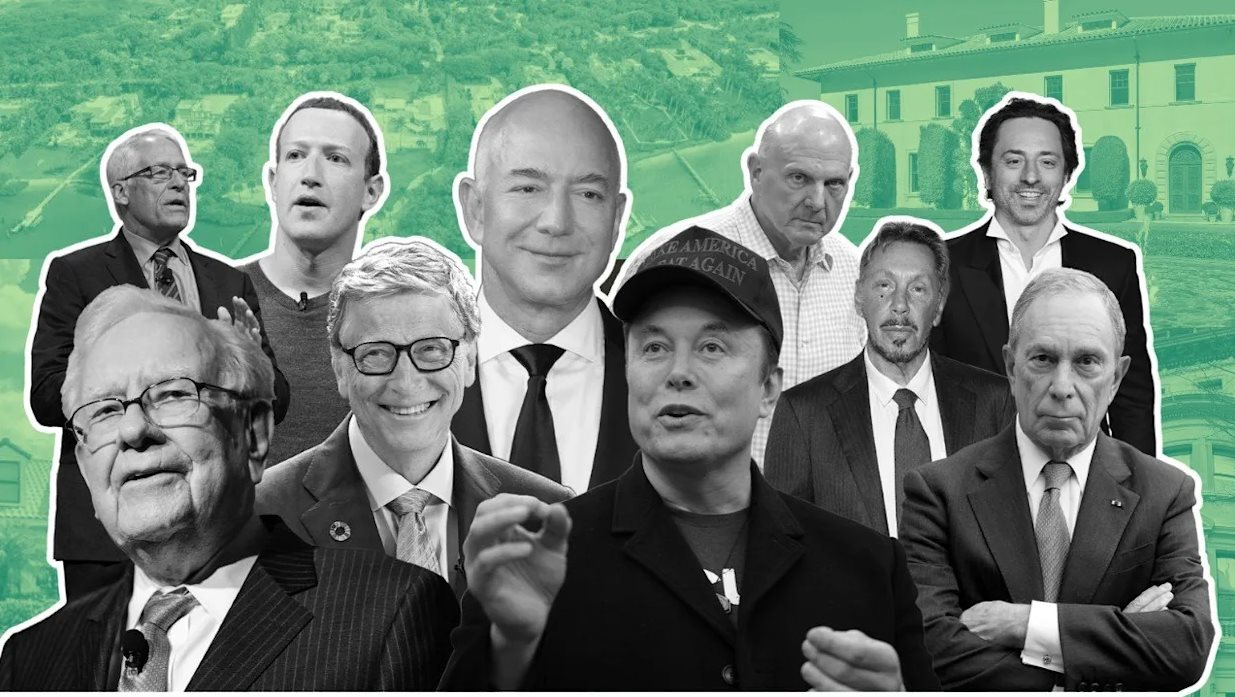
In Meta’s 2024 list of lowest-paid workers, the top name is surprising to many: Mark Zuckerberg, earning a mere $1. However, behind this modest figure is not a spirit of philanthropy, but a sophisticated financial strategy that has been expertly employed by America’s super-rich like Elon Musk, Jeff Bezos, and Warren Buffett for decades.
According to an analysis by Professor Ray Madoff from Boston University, the current tax system is inadvertently creating a new class of “aristocratic” individuals who possess vast fortunes but contribute less to the national budget than their lower-level employees.
The $1 salary strategy and “paper” assets.
In the US, income from labor is the most heavily taxed, with total income tax and payroll taxes potentially accounting for up to 50% of a worker’s earnings. Madoff stated that a self-employed individual with a modest income of $60,000 would have to pay over $13,000 in these two taxes. Meanwhile, high-income earners with salaries of $400,000 might have to pay around 30% of their income.
However, by refusing to accept a salary or accepting only a symbolic amount, billionaires have taken the first step in the process of “disappearing” from the Internal Revenue Service (IRS).

Earning a salary of $1 or even $0 allows billionaires to virtually disappear from the personal income tax system. They don’t avoid taxes by hiding their income, but by not generating taxable income in the first place. Low salaries don’t necessarily mean low income; they simply shift income to a less taxable form.
Instead of accumulating cash through payroll, they benefit from the growth in the value of the company’s stock they own.
Elon Musk will receive a salary of $0 from Tesla in 2024. Jeff Bezos earns $81,840 per year, a level low enough to qualify for tax breaks for his children in 2021. Even Warren Buffett, one of the higher-paid billionaires, only receives a total of $100,000 per year including salary and bonuses.
They are all minimizing their tax burden by keeping their salaries low. However, they are not giving up their compensation; on the contrary, they are being handsomely rewarded through the ever-increasing value of their stock.
In 2024, Bezos’s wealth increased by $80 billion, Zuckerberg’s by $113 billion, and Musk’s by $213 billion. Even better, they can enjoy this growing wealth without paying any income tax or having to declare it.
The key point is that U.S. law does not tax increased assets if the owner has not sold them on the market. When stock prices rise, their assets grow exponentially without any cash flowing into their personal accounts. In the logic of U.S. tax law, this is “unrealized profit,” not considered income and therefore not subject to taxation.
When Jeff Bezos’s wealth increased by $80 billion or Zuckerberg’s by $113 billion in a single year, the entire amount remained intact in their accounts without any disclosure obligations.
This is a type of “intangible income” with tremendous power, allowing their assets to grow exponentially without being eroded by conventional taxes.
Since the U.S. Securities and Exchange Commission allowed companies to buy back shares in the early 1980s, dividends, which were previously heavily taxed, gradually gave way to buybacks. Stock prices were driven up, benefiting the largest shareholders, while tax obligations were virtually indefinitely postponed. For tech billionaires, their wealth could increase by tens or hundreds of billions of dollars each year without triggering any tax revenue stream.
However, a perplexing question arises: If they don’t receive salaries and don’t sell stocks, where do billionaires get the money to maintain their lavish lifestyles with super mansions and private jets? The answer lies in the “Buy-Borrow-Die” strategy.
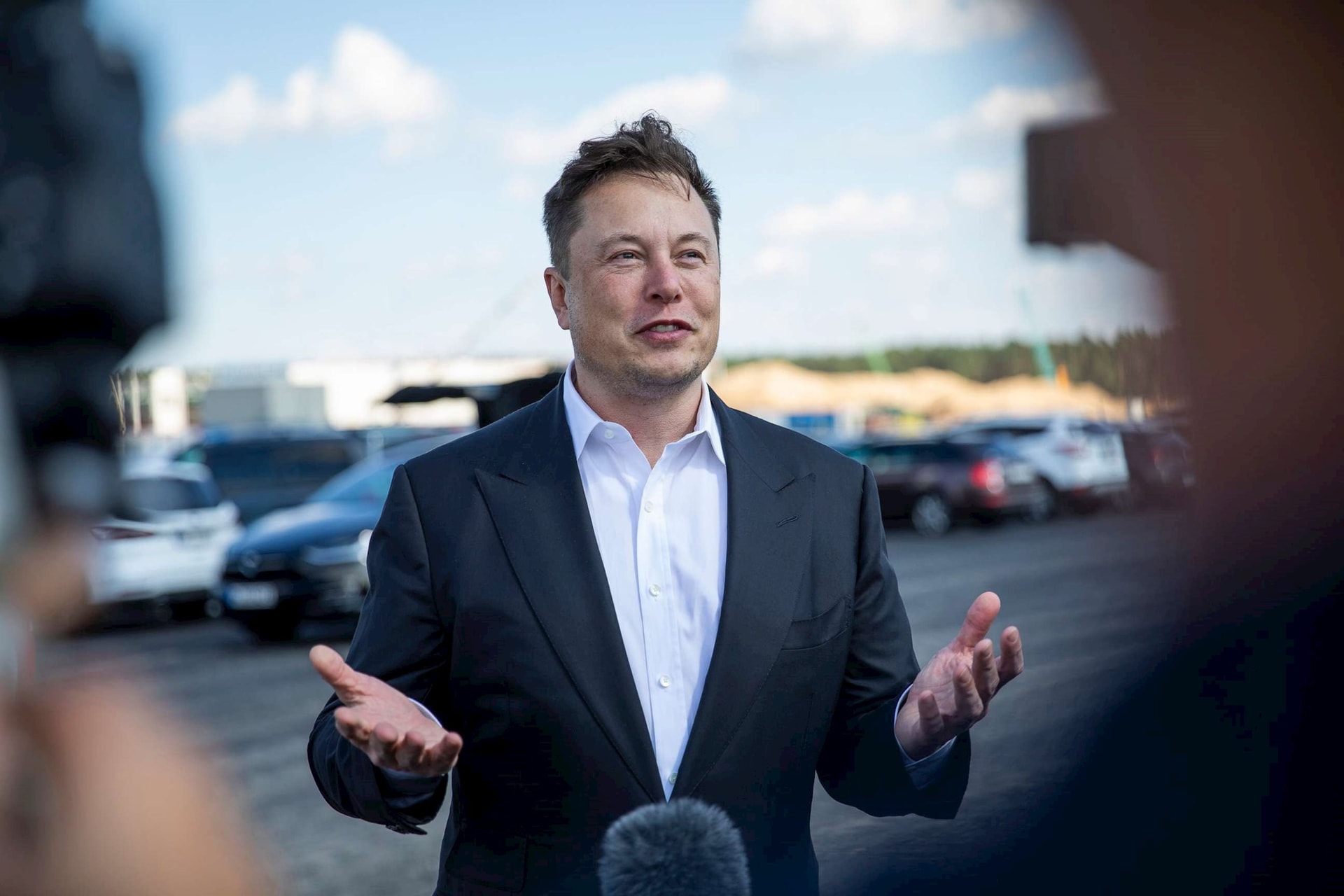
Instead of selling their shares and paying capital gains tax of up to 20%, billionaires use those very shares as collateral to borrow huge sums of money from banks. The story of Elon Musk pledging his shares to buy Twitter-X for $44 billion, or Larry Ellison’s recent involvement in the acquisition of TikTok, are prime examples.
These loans are completely tax-exempt because they are considered debt, not income. With their strong creditworthiness and substantial collateral, they receive preferential interest rates, often significantly lower than the natural growth rate of the stock.
To pay off their debt and interest, they simply take out a new loan based on the increased value of their assets. When it’s time to repay, they borrow again to refinance. Money for living expenses, personal investments, or even space travel is financed by debt, while the stocks, which are a source of tax revenue, remain unchanged.
This loop allows them access to virtually unlimited cash while maintaining control of the company and paying no income tax to the state.
Generational legacy
Even in the twilight years of their lives, the tax system has provided the ultra-wealthy with “special access routes” for the past 35 years. Although the US has an inheritance tax rate of up to 40% for assets over $15 million, the actual amount collected is very modest.
Through complex trust structures and family business protection provisions that have remained unadjusted by Congress for the past 35 years, billionaires can transfer tens of billions of dollars to future generations without paying nominal tax rates.
The $30 billion in total inheritance tax revenue collected in 2024 is just a drop in the ocean compared to the $50 trillion in assets of the richest 1%.
The inevitable consequence of this mechanism is a serious imbalance in the national tax burden. With the super-rich excluded, the financial pressure falls heavily on the shoulders of the “high-paying workforce” such as doctors, lawyers, and salaried CEOs, who earn high salaries but do not possess sophisticated tax avoidance tools.
These people, along with the middle class, are actually feeding the government apparatus, while billionaires, who benefit most from the infrastructure and stability of the system, often appear in tax statistics as the poorest.
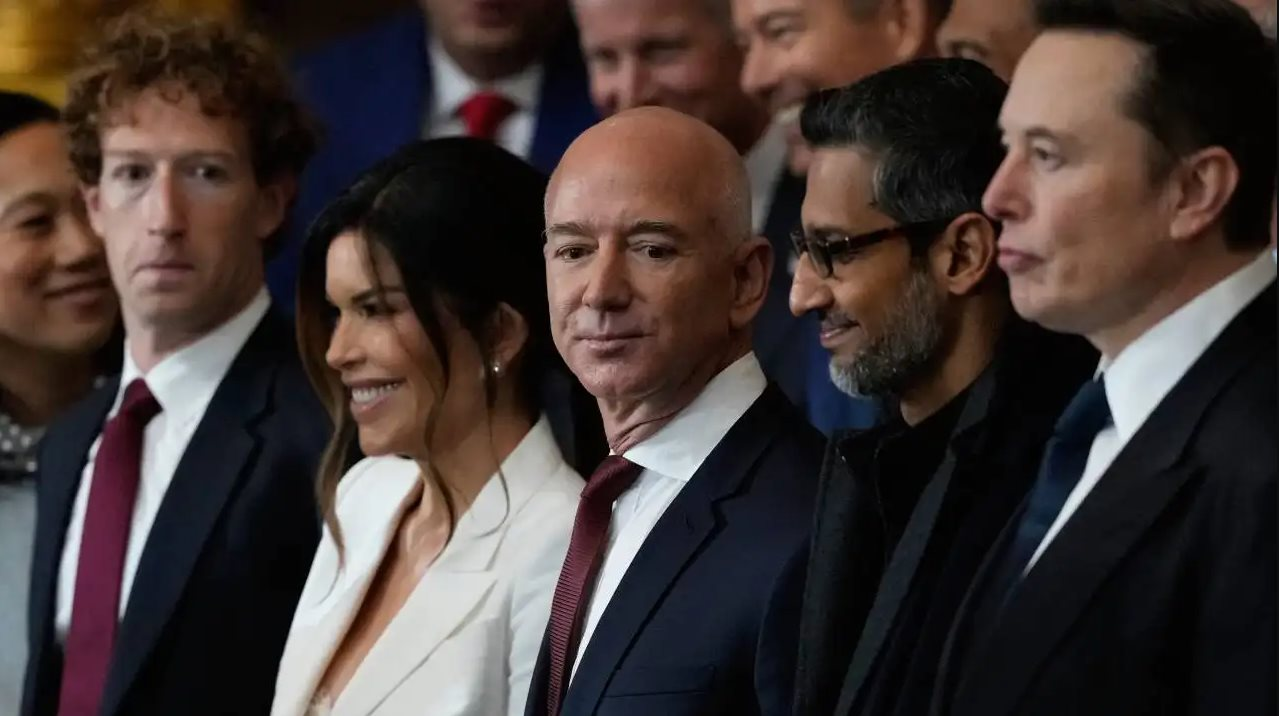
Meanwhile, the commonly cited statistics that “the richest 1% contribute the majority of income tax” are misleading. That refers to the top 1% with the highest taxable income, not the top 1% holding the most assets. These two groups are increasingly diverging.
According to Madoff, the wealthiest Americans don’t accumulate wealth through taxable income, and they are likely among the bottom 40% of earners who pay no income tax at all. The reality is that 30% of America’s wealth is currently controlled by the wealthiest 1%, and current regulations offer no guarantee that they will pay taxes on that ever-growing fortune.
This model is creating a profound social paradox: the richer people are, the more tools they have to avoid contributing. Without systemic changes to close legal loopholes, the wealth gap will not only be an economic problem, but will also become a barrier to social justice in the world’s largest economy.
News

Brianna Chickenfry continues to criticize Zach Bryan’s marriage to Samantha Leonard, claiming it was solely driven by…’hatred’.
Brianna Chickenfry Says Zach Bryan’s Marriage Was “All a Dig at Me” The post-breakup drama between Brianna Chickenfry and Zach…

It’s a Boy Again! Luke Combs and Nicole Welcome Baby No. 3
The Combs family just got a little bigger and a lot sweeter. Luke Combs and his wife, Nicole, have welcomed…

Carrie Underwood has faced a ‘storm of criticism’ regarding her politics and her stance on “standing on the right side of history”.
Carrie Underwood ‘American Idol’ boos spark firestorm, fans clash over MAGA and ‘right side of history’ claims Country star faces…

Kid Rock ‘asks’ God to punish those who tarnish his ‘honor’.
“Sooner Or Later, God Will Cut ‘Em Down”: Kid Rock Calls Out “Liberal Media” & Clarifies Pricing On His ‘Freedom…
Lee Greenwood is facing significant public backlash in the US after being accused of “FRAUD”.
Country Icon Slammed For Selling $100 Bibles Online: “Grift Never Stops” Lee Greenwood appeared on “Fox & Friends” reminding everyone…
Erika Kirk, CEO of Turning Point USA, was full of praise for Kid Rock’s performance: “Charlie will definitely love it.”
Erika Kirk sides with Kid Rock after disastrous MAGA performance in statement Charlie Kirk’s widowed wife Erika Kirk shared a…
End of content
No more pages to load