
Once a grungy pop idol, the No Doubt singer is embracing her country and Christian side. But the makeover is making her an enemy of the Left

Thirty years ago, an edgy new pop star looked set to take over the world. With her peroxide blonde hair, camo trousers and rebellious spirit, No Doubt frontwoman Gwen Stefani seemed like a breath of cigarette-smoke-tinged air: cooler and sexier than Britney Spears, but not quite as chaotic as Courtney Love; an artist who appealed to both rock and pop fans.
No Doubt’s third album, Tragic Kingdom (1995), sold more than 16 million copies, earned the band two Grammy nominations (for best new artist and best rock album) and spawned the colossal hit single Don’t Speak. Stefani’s decision to go solo in 2004 catapulted her to the A-list, with number one singles, sold-out tours and countless magazine front covers. She was the US’s favourite cool girl, whose empowering songs formed the soundtrack of millennial adolescence. Until she wasn’t. Two decades later, Stefani has found herself with a very different identifier: enemy of liberals everywhere.

A loud and proud Catholic who is now married to Oklahoman country singer Blake Shelton, Stefani’s current look – soft blonde waves, form-fitting occasion dresses, a suspiciously wrinkle-free forehead for a 56-year-old – is pure Maga Barbie, and a far cry from her grungy 1990s heyday. Fans who spent their teenage years plastering their walls with No Doubt posters could surely never have predicted their edgy idol would one day look like the older sister of White House press secretary Karoline Leavitt.
Stefani recently found herself in hot water over her decision to partner with the popular American “prayer and Bible study” app Hallow, which is anti-abortion and counts major Trump donor – and PayPal founder – Peter Thiel among its investors. Its other prominent celebrity backers include two of Hollywood’s most famous Christians, Mark Wahlberg and Chris Pratt.
After Stefani shared a video encouraging her fans to download the app and join its Lent prayer challenge – “Hey everyone, I just got my ashes, and I’m ready for Lent… Check it out. God bless,” she gushed – her more liberally minded followers went into meltdown. “This ‘Maga makeover’ thing is really gross,” one wrote on Instagram, while another said Stefani’s “pandering to the racist rednecks in this country is really disappointing to see”.
Her shift to the Right first became apparent in March of last year, when she shared (and praised) a video of divisive podcaster and former Fox News host Tucker Carlson’s interview with Catholic and staunchly anti-abortion actor Jonathan Roumie, who played Jesus in the crowd-funded television series The Chosen (and narrates various features on Hallow). She called Roumie a “powerful inspirational human”.
But Stefani is presumably unbothered by all the backlash. She was raised a devout Catholic in one of California’s wealthiest and most conservative enclaves, Orange County. Her strong faith makes it unsurprising she is keen to use her platform to promote religious values, even if some of those – particularly concerning abortion – are out of step with her traditionally liberal fanbase.
Stefani’s career peak in the early 2000s predated the onslaught of cancel culture, but her music and aesthetic, both of which flirted with global cultures and influences, have been frequently criticised over the years for being “exploitative”. First, there was the music itself: No Doubt’s sound was heavily influenced by ska and reggae, while her most popular solo songs – Hollaback Girl, What You Waiting For?, Rich Girl – borrowed from R&B, hip-hop and reggae. What was a white girl doing sampling music from Compton, her critics asked? The fact plenty of black artists and producers, from Pharrell Williams and Eve to Snoop Dogg, were lining up to work with her didn’t seem reason enough to pacify them.
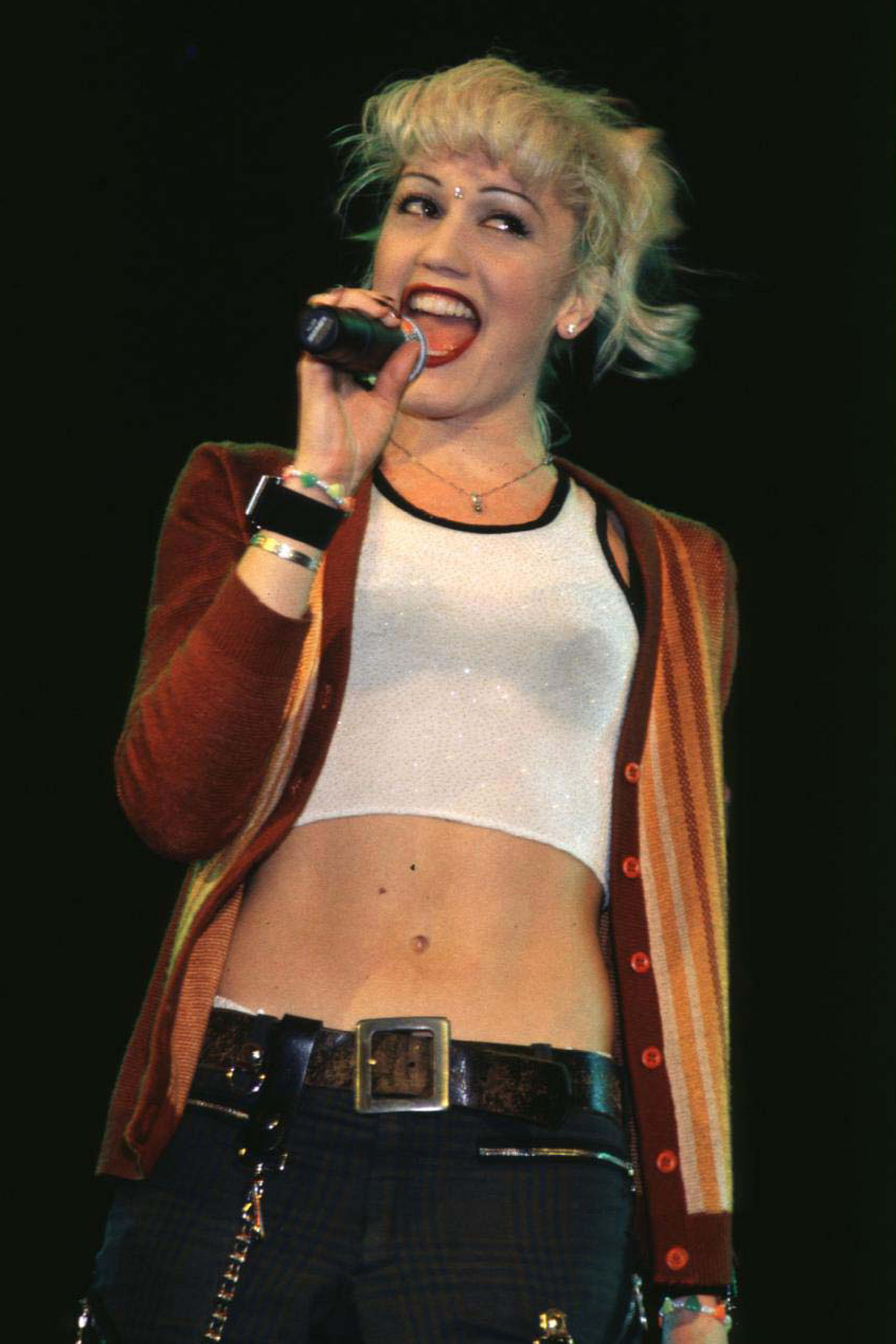
Today, trawling through Stefani’s discography feels like embarking on a round-the-world cruise: one day you’re in India, the next Los Angeles, Tokyo, Kingston. The music video for Luxurious (2004) takes inspiration from Latin American communities in California, depicting Stefani as a Frida Kahlo lookalike, haphazardly bashing piñatas. When No Doubt reunited in 2012, they decided to herald their return with a song, Looking Hot, accompanied by a “Cowboys and Indians” themed video which saw Stefani don numerous Native American headdresses.
Then there were the clothes. In the early Noughties, Stefani’s wardrobe ranged from Indian fabrics worn as midriff-baring maxi skirts, accessorised with a traditional bindi on her forehead, to tracksuit bottoms and du-rag headwear during her hip-hop era. She often wore her hair in Bantu knots, typical of the Zulu tribes in southern and west Africa.

All paled in comparison in the cultural appropriation stakes to her embracing of Tokyo’s Harajuku culture, however, which saw her recruit a group of Japanese backing dancers to perform with her and appear at promotional events (in 2005, just a year after the release of Stefani’s platinum-selling album Love. Angel. Music. Baby., the American-Korean comedian Margaret Cho compared the Harajuku girls to a “minstrel show”). They were allegedly contractually obliged to speak only in Japanese in public, despite being American citizens. Stefani’s sampling of different cultures didn’t go unnoticed in the press – a New York Times feature from 2005 labelled her the “mistress of appropriation”, while Vice described her as “racist pop Frankenstein”.
Though Stefani’s most popular years pre-dated the onslaught of cancel culture on the internet – including debates about “cultural appropriation” by Western artists that have plagued the careers of her pop successors Katy Perry, Miley Cyrus and Ariana Grande – her detractors have certainly made up for lost time. It’s been 16 years since Hollaback Girl was released, yet Reddit threads are now dedicated to debating whether the song is “problematic”. (Stefani doesn’t seem to agree, and still regularly performs it live.)
:max_bytes(150000):strip_icc():focal(646x0:648x2)/gwen-stefani-gallery-16-2000-bcde164aed0f439ebed5a6427b84135a.jpg)
She has acknowledged some of the criticism – but rather than giving in and apologising for her cultural window shopping, she’s doubled down. In 2014, she told Time magazine that she did not regret using the Harajuku girls as backing dancers and marketing tools, because her appreciation of Japanese culture was meant as a “pure compliment”. Speaking to Allure magazine in 2023, Stefani – born to an Italian-American father and Irish-American father – said she “identifies not just with Japan’s culture but also with the Hispanic and Latin communities of [her hometown of] Anaheim, California”. Unlike other celebrities who have been crowbarred into making public apologies for cancellable offences or opinions, Stefani has stayed defiantly quiet.
Stefani’s not-that-new Maga makeover reflects the current American desire to mythologise and promote traditional ways of living, shown in popular culture from Lana Del Rey’s music to Taylor Sheridan’s all-conquering Yellowstone TV franchise. In 2024, she released the country-influenced album Bouquet, filled with songs that swapped the feminist-friendly, girl-boss messaging No Doubt was famous for – on angsty hits such as Just A Girl – for odes to marriage and settling down; it was duly slammed by critics.

The fact it was recorded in Nashville with help from her country star husband Shelton only added further fuel to the fire for her liberal former fans, who felt like she had replaced independence with subservience. In response to the fuss over the Hallow advert, one X user said: “She’s married to a God-loving Southern country singer, what do you expect?”
Nor was it the first time her romantic life had been tied up with her music. Stefani has said her heartbreak after splitting from No Doubt bandmate Tony Kanal inspired some of their biggest songs. Then came Bush frontman Gavin Rossdale, whom she met at a concert and was married to for almost 13 years; they divorced after he allegedly had an affair with their nanny. She seems settled with Shelton, who is her fellow judge on talent contest The Voice, and they’ve released multiple duets together.
One imagines Stefani isn’t too bothered by the drama. She has a net worth of $160m (£120m), a secure marriage and three healthy children. In May, No Doubt will begin their summer-long residency at the Sphere in Las Vegas, following in the footsteps of U2, the Eagles and the Backstreet Boys, after netting $10m to reunite at Coachella in 2024. Stefani is still famous, still singing Hollaback Girl – and, one imagines, still tapping away at her Hallow app.
News
Tiger Woods attended Kai’s graduation ceremony but did not participate in the party.
Kai Trump celebrates high school graduation with famous family, Tiger Woods before intimate dinner party Kai Trump celebrated her high…
The former Jackson 5 member has been ordered by the court to pay more than $6.5 million in restitution for heinous crimes committed in the past.
Jackson 5 Alum Forced To Pay $6.5 Million After Being Accused of Historic Heinous Crime A Jackson 5 alum has…

The girlfriend of the late star Liam Payne was furious after being banned from social media because of… her revealing cleavage.
Late pop star’s girlfriend hits out after bizarre social media ban in heated online rant Kate Cassidy, 26, has hit…

Niall Horan ‘refused’ to attend Harry Styles and Zoë Kravitz’s wedding… and here’s why…
Niall Horan Says He’s Not Going to Harry Styles, Zoë Kravitz’s Wedding Less than a month after Harry Styles and…
Chinese people are ‘both angry and in love’ with Elon Musk.
Despite remaining a “tech idol” for many Chinese, Elon Musk is facing increasing pressure from rivals in the country of…
Elon Musk’s 5-year-old son causes tiger-head bags in China to sell out
Elon Musk’s 5-year-old son causes tiger-head bags in China to sell out; what does the manufacturer have to say? Appearing…
End of content
No more pages to load