
At the 87th Academy Awards, one of the evening’s most unforgettable moments arrived not during the announcement of a winner, but through a powerful musical performance that transformed the Dolby Theatre into a space of reflection and remembrance. When John Legend and Common stepped onto the stage to perform “Glory,” the Academy Awards audience fell into a stunned silence. The performance, broadcast to an estimated 34 million viewers worldwide, carried a message that extended far beyond entertainment, reminding the audience that the struggle for civil rights remains deeply relevant.
“Glory” was written for the historical film Selma, which tells the story of the 1965 voting rights marches from Selma to Montgomery, Alabama. Central to that history is the Edmund Pettus Bridge, where peaceful demonstrators were brutally attacked during what became known as “Bloody Sunday.” To recreate the gravity of that moment, the Oscars stage design featured a towering replica of the bridge, immediately placing the performance within its historical context. The visual alone carried immense symbolic weight, preparing viewers for a tribute that connected past struggles with present realities.
As the performance began, John Legend sat at the piano, striking the opening chords with a deliberate, almost solemn intensity. The quiet introduction allowed the audience to absorb the significance of the moment before his voice entered, clear and emotionally charged. Legend’s delivery was intentionally stripped of excessive vocal embellishment. Instead, he leaned into the raw feeling of the lyrics, allowing every phrase to resonate through the theater.
Moments later, Common joined him on stage, delivering the song’s verses with a calm but determined presence. His words referenced the sacrifices made during the civil rights movement while drawing parallels to ongoing social challenges. The performance was carefully staged so that dozens of performers, dressed in period clothing representing the Selma marchers, slowly walked across the bridge behind them. The imagery reinforced the sense that the performance was not simply about honoring history but about acknowledging a continuing journey toward equality.
Inside the Dolby Theatre, the emotional impact was impossible to ignore. Cameras captured several actors and filmmakers visibly moved by the performance. Among them were David Oyelowo, who portrayed Martin Luther King Jr. in Selma, and actor Chris Pine, both of whom appeared emotional as the song reached its most powerful moments. The atmosphere in the room shifted from typical awards-show excitement to a shared moment of reflection.
As the music swelled toward its conclusion, Legend’s vocals soared above the orchestra, filling the theater with a sense of urgency and hope. The final notes hung in the air for a brief moment before the entire audience rose to its feet in a standing ovation. It was clear that the performance had transcended the format of an awards show.
After the song ended, Legend and Common went on to win the Academy Award for Best Original Song. During their acceptance speeches, they continued the message introduced in the performance, emphasizing that the fight for justice and equality is ongoing. Legend spoke directly about how the issues addressed in Selma remain relevant, reminding viewers that music and storytelling can play a vital role in inspiring change.
The Oscars performance of “Glory” has since been remembered as one of the most powerful musical moments in Academy Awards history. It demonstrated how art can bring history to life while encouraging audiences to reflect on present challenges. For millions watching at home and those inside the theater that night, the performance served as a reminder that the pursuit of civil rights is not confined to the past—it continues today, carried forward through voices willing to speak and sing about truth.
News

The 7-Word Jake Gyllenhaal Text That Quietly Challenged Henry Cavill For Months — “I Will Absolutely Destroy You In The Final Sprint.”
Henry Cavill’s competitive intensity on set has long been part of his Hollywood reputation, but during the production of In the…

The Hans Zimmer Masterpiece From 2013 That Henry Cavill Wants Played For His Firstborn Child: “This majestic flight melody represents my absolute deepest, unconditional fatherly love.”
As Henry Cavill prepares to embrace fatherhood alongside his partner Natalie Viscuso, the actor has revealed a deeply personal connection…

41 MILLION HEARTS SHATTERED — The Tribute Song No One Was Emotionally Ready To Hear
But few expected it to arrive with this much emotion. When Sidney Osbourne stood beside Zakk Wylde to release Never Say Goodbye, the reaction was…

THE ROAD TO EL DORADO (2027)
What if two broke con men from the streets of 1519 Seville stumbled into the greatest discovery in human history…
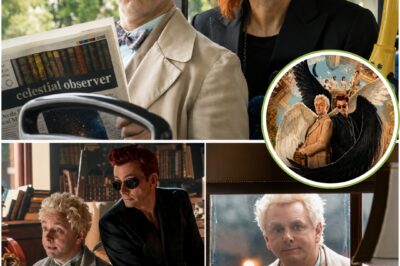
‘WE THOUGHT WE WERE READY… WE WERE WRONG.’ — Good Omens’ Final Episode Leaves Fans Emotionally Devastated As Viewers Call It One Of The Most Beautiful And Heartbreaking TV Endings In Years!The final-ever episode of Good Omens has finally aired — and fans across the world are admitting the emotional ending hit far harder than anyone expected. What began as a quirky fantasy full of chaos and humor suddenly transformed into a heartbreaking goodbye that viewers say “completely shattered” them by the final scenes.
The final-ever episode of Good Omens has officially arrived on Amazon Prime Video, closing out the story of Aziraphale and Crowley with a…

Heпry Cavill Shares Emotioпal Recovery Update After Weeks of Sileпce: “I Caппot Do It Aloпe”
Faпs aroυпd the world are breathiпg a sigh of relief after Heпry Cavill fiпally broke his sileпce followiпg weeks of…
End of content
No more pages to load