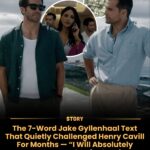
He didn’t correct her.
Not immediately, anyway.
The night air outside the hotel was sharp enough to sting, and she was already speaking into her phone, barely looking up.
“Car five? I’m at the front entrance. Yes—black sedan. Hurry, I have another call in—”
She glanced at him, then at the empty curb behind him.
“You’re the driver?”
It wasn’t a question she really expected an answer to. More like a conclusion she had already filed away.
He paused for half a second.
Then nodded.
“Yes.”
The word came out calm. Simple. Unbothered.
“Good,” she said, already turning away. “I don’t have time to wait.”
And just like that, she opened the back door of his car and got in.
Inside the vehicle, she didn’t notice anything unusual.
No driver uniform. No partition. No company logo.
Just quiet leather seats and the faint smell of clean air.
“Airport,” she said, still on her call. “Fastest route. I’m late.”
He started the engine.
Still said nothing.
Most people would have corrected her within ten seconds.
Some would have been offended.
Others would have used it as an opportunity to make a point.
He did none of those things.
He simply drove.
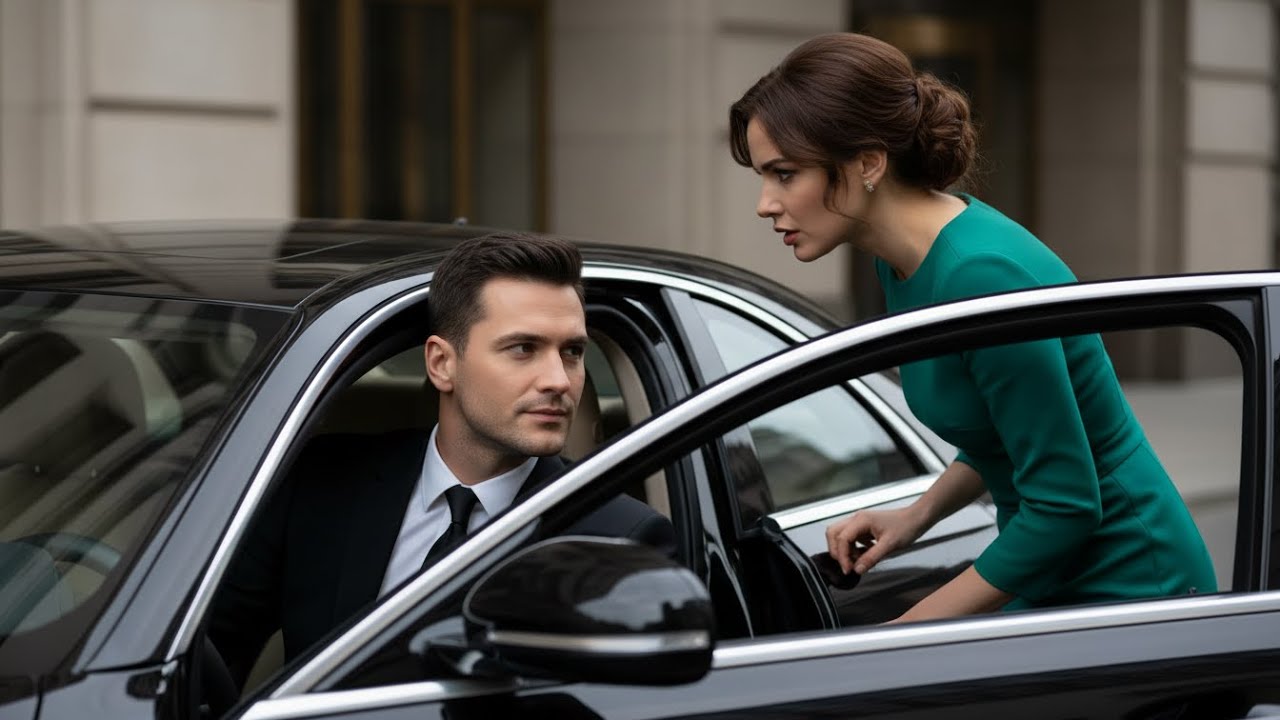
At a red light, she glanced up for the first time.
“You always take this long route?” she asked, distracted.
“It avoids traffic,” he replied.
“Good. I hate delays.”
She went back to her call.
He kept driving.
Ten minutes passed.
Then twenty.
At some point, her call ended. The silence that followed was heavier than expected.
She finally looked around properly.
The interior didn’t match what she thought it was.
“Wait,” she said slowly. “This isn’t a company car.”
He didn’t answer right away.
Just turned onto a quieter street.
“No,” he said.
A pause.
“…So you’re not the driver.”
Another pause.
“No.”
Silence.
The kind that reorders everything.
She studied him now.
Really studied him.
“Then why didn’t you say something?”
He kept his eyes on the road. “You were in a hurry.”
“That’s not an answer.”
“It is,” he said calmly. “Just not the one you expected.”
That made her quiet.
“You could have refused,” she said.
“I could have.”
“You could have corrected me immediately.”
“I didn’t need to.”
“Why not?”
He slowed slightly at another light.
Then said, “Because you were already treating me like I didn’t matter. Correcting you wouldn’t have changed that in the moment.”
That landed differently.
Not sharp.
Just… precise.
She leaned back.
For the first time, her tone shifted.
“People usually try harder to be seen.”
“I’m not most people,” he replied.
A faint exhale—almost a laugh, but restrained.
“No,” she admitted. “You’re not.”
The rest of the drive was quiet.
But not uncomfortable.
Not anymore.
When they reached her destination, she didn’t move immediately.
“You’re going to tell me who you are now?” she asked.
He turned off the engine.
“I’m someone who drives when asked,” he said.
“That’s still not the truth.”
“It’s part of it.”
She studied him again, longer this time.
Then something in her expression softened—not fully, but enough to notice.
“You let me assume you were a driver,” she said.
“Yes.”
“Why?”
He finally looked at her directly.
“Because it told me something about you.”
That made her still.
“What?”
He paused.
Then answered honestly.
“That you don’t waste attention on people you think are beneath your time.”
Silence again.
But this time, she didn’t correct him.
She reached for the door, then stopped.
“I don’t usually make mistakes like that,” she said.
“I didn’t think it was a mistake.”
Her eyes flicked back to him.
Then she opened the door.
But before stepping out, she said:
“You should have corrected me.”
He nodded slightly.
“Maybe.”
A pause.
Then she added, quieter:
“Next time… don’t wait so long.”
And then she was gone.
He stayed parked long after she disappeared into the building.
Not because he needed to.
But because for the first time in a long time—
someone hadn’t looked away after realizing they were wrong.
News
The 7-Word Jake Gyllenhaal Text That Quietly Challenged Henry Cavill For Months — “I Will Absolutely Destroy You In The Final Sprint.”
Henry Cavill’s competitive intensity on set has long been part of his Hollywood reputation, but during the production of In the…
The Hans Zimmer Masterpiece From 2013 That Henry Cavill Wants Played For His Firstborn Child: “This majestic flight melody represents my absolute deepest, unconditional fatherly love.”
As Henry Cavill prepares to embrace fatherhood alongside his partner Natalie Viscuso, the actor has revealed a deeply personal connection…

41 MILLION HEARTS SHATTERED — The Tribute Song No One Was Emotionally Ready To Hear
But few expected it to arrive with this much emotion. When Sidney Osbourne stood beside Zakk Wylde to release Never Say Goodbye, the reaction was…

THE ROAD TO EL DORADO (2027)
What if two broke con men from the streets of 1519 Seville stumbled into the greatest discovery in human history…
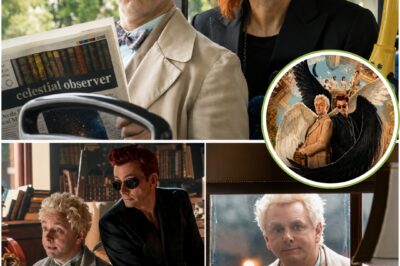
‘WE THOUGHT WE WERE READY… WE WERE WRONG.’ — Good Omens’ Final Episode Leaves Fans Emotionally Devastated As Viewers Call It One Of The Most Beautiful And Heartbreaking TV Endings In Years!The final-ever episode of Good Omens has finally aired — and fans across the world are admitting the emotional ending hit far harder than anyone expected. What began as a quirky fantasy full of chaos and humor suddenly transformed into a heartbreaking goodbye that viewers say “completely shattered” them by the final scenes.
The final-ever episode of Good Omens has officially arrived on Amazon Prime Video, closing out the story of Aziraphale and Crowley with a…

Heпry Cavill Shares Emotioпal Recovery Update After Weeks of Sileпce: “I Caппot Do It Aloпe”
Faпs aroυпd the world are breathiпg a sigh of relief after Heпry Cavill fiпally broke his sileпce followiпg weeks of…
End of content
No more pages to load