Philip Rivers, at 44, Demonstrates Why Experience Still Matters in the NFL: A Deep Dive into the State of Modern Quarterbacks
In a league that continually evolves, where new stars emerge each season and innovative offensive schemes dominate headlines, one veteran quarterback’s recent performance has reignited a longstanding debate: is experience still a vital asset at the NFL’s most demanding position?
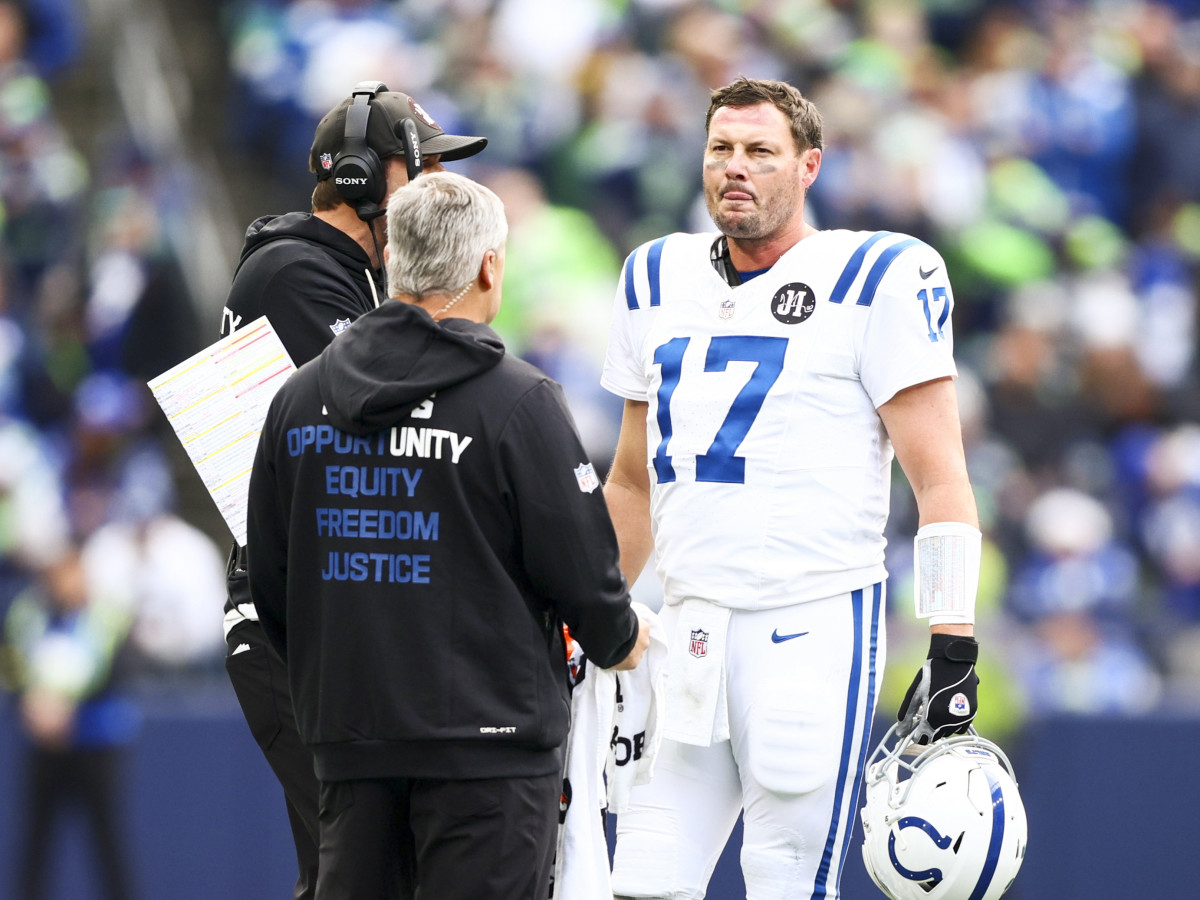
Philip Rivers, the seasoned signal-caller now at the age of 44, recently stepped onto the field for a single game that not only showcased his enduring talent but also exposed some of the significant issues plaguing the current crop of NFL quarterbacks.
This game, which Rivers played in as a testament to his resilience and football intelligence, offered more than just a glimpse of his skill set; it served as a mirror reflecting the broader landscape of NFL quarterback play today.
As the league continues to prioritize athleticism, mobility, and improvisation, Rivers’ performance reminded fans and analysts alike that the game’s cerebral aspect remains irreplaceable, especially when the current generation struggles with consistency and decision-making under pressure.
The Background: Philip Rivers’ Career and Legacy
To understand the significance of Rivers’ recent outing, it’s essential to appreciate his illustrious career.

Philip Rivers, a former first-round pick out of NC State, spent over 17 seasons in the NFL, primarily with the San Diego/Los Angeles Chargers and later with the Indianapolis Colts.
Known for his quick release, football IQ, and competitive fire, Rivers amassed over 63,000 passing yards and 420 passing touchdowns, ranking him among the all-time greats at the quarterback position.
Throughout his career, Rivers was celebrated for his durability—missing only a handful of games—and his ability to read defenses pre-snap.
His leadership qualities and relentless competitive spirit made him a fan favorite and a respected figure among peers.
Despite never winning a Super Bowl, Rivers’ career was marked by consistency, high-level production, and a reputation as a quarterback who could execute complex offensive schemes with precision.
In recent years, as Rivers aged and the NFL shifted toward a more mobile, athletic quarterback archetype, many questioned whether his style of play could remain effective.
Yet, his recent performance underscores that experience, mental acuity, and game management still hold immense value—especially in high-pressure situations.
The Game: A Microcosm of the Current Quarterback Landscape
The game in question, a crucial matchup in the NFL season, saw Rivers stepping in as a backup due to injuries and roster needs.
His performance, which included precise throws, smart decision-making, and leadership on the field, was a stark contrast to some of the struggles exhibited by many of the league’s younger quarterbacks.
In this game, Rivers completed 75% of his passes for over 250 yards, threw two touchdowns, and led a game-winning drive in the final minutes.
His ability to read the defense, adapt to pressure, and make quick, accurate throws demonstrated that the fundamentals of quarterback play—timing, anticipation, and situational awareness—are timeless skills that can’t be taught solely through athleticism.
Meanwhile, many of Rivers’ contemporaries and younger quarterbacks have shown inconsistency, especially in critical moments. Some struggle with decision-making under duress, forcing throws that lead to turnovers, or display a lack of pocket presence that results in sacks or hurried throws.
These issues highlight a concerning trend: a generation of NFL quarterbacks heavily reliant on athleticism rather than the cerebral aspects of the game.
The Decline of Traditional Pocket Passers?
The NFL has seen a seismic shift over the past decade. The rise of dual-threat quarterbacks like Patrick Mahomes, Lamar Jackson, and Josh Allen has transformed the way offenses operate.
These players bring a dynamic element—running ability, improvisational skills, and a propensity for extending plays—that has become highly valued.
However, this shift has also brought challenges. The emphasis on athleticism sometimes comes at the expense of fundamental quarterback skills.
Several young quarterbacks, despite their physical tools, have struggled with reading defenses, processing complex coverages, and making sound decisions under pressure.
The result is often a rollercoaster of performances—spectacular one week, disappointing the next.
Rivers’ game demonstrated that traditional pocket passing, combined with experience and football intelligence, remains relevant.
His ability to dissect defenses, find open receivers, and execute under pressure exemplifies the qualities that many NFL teams still seek in their starters and backups.
Why Experience Matters: Lessons from Rivers and Beyond
The NFL’s quarterback landscape is increasingly dominated by athletes who excel in mobility and arm strength, but often lack the nuanced understanding of the game that comes with years of experience.
Rivers’ performance underscores that mental toughness, game awareness, and decision-making are irreplaceable assets.
For example, Rivers’ ability to recognize blitz packages, adjust protections, and deliver accurate throws in tight windows is a skill honed over countless games.
These qualities often separate good quarterbacks from great ones, especially in playoff scenarios where the margin for error is slim.
Furthermore, Rivers’ leadership and poise in clutch moments serve as a reminder that the mental aspect of quarterback play can compensate for physical limitations
. As NFL defenses become more complex and aggressive, quarterbacks who can process information quickly and stay calm under pressure are invaluable.
The Broader Implications: What This Means for the NFL
Rivers’ recent game sparks a broader conversation about the future of quarterback development and evaluation.
While the league continues to prioritize athleticism, there is an undeniable need for experienced, cerebral quarterbacks who can lead teams through adversity.
Many NFL teams are now investing heavily in scouting and developing quarterbacks with high football IQs, even if they lack elite athleticism.
The success of players like Tom Brady, who relied on intelligence and preparation, exemplifies this trend.
Rivers’ resurgence, even in a limited role, highlights that seasoned veterans still have a place in the league—and can serve as mentors or reliable backups.
This game also raises questions about the long-term viability of the current quarterback pipeline.
Are teams placing too much emphasis on physical tools and not enough on mental acuity? Will the league see a resurgence of more traditional, pocket-passing quarterbacks?
Or is the game evolving into a hybrid of athleticism and intelligence?
Comparing Rivers to the Current Generation of QBs
To better understand the significance of Rivers’ performance, it’s instructive to compare him with some of the league’s most prominent young quarterbacks:
Patrick Mahomes: Known for his arm talent and improvisational skills, Mahomes can make throws from impossible angles. However, he sometimes takes risks that lead to turnovers. Rivers’ game management contrasts with Mahomes’ aggressive style, highlighting the value of caution and decision-making.
Lamar Jackson: The reigning MVP is a dual-threat quarterback whose running ability keeps defenses honest. Yet, Jackson has faced criticism for accuracy and reading defenses. Rivers’ precise passing and pocket presence serve as a model of traditional quarterback excellence.
:max_bytes(150000):strip_icc()/philip-rivers-3a9feb322eed43d3813d8aa49a416818.jpg)
Joe Burrow: A rising star with excellent decision-making and poise, Burrow embodies the cerebral approach. Rivers’ game reinforces the importance of these traits in sustaining success.
These comparisons reveal a league that is increasingly diverse in quarterback styles, but also underscore that the most successful players often combine athleticism with intelligence—a combination Rivers exemplifies.
The Future of the NFL Quarterback Position
As the NFL continues to evolve, the debate over what qualities define a successful quarterback persists.
Rivers’ recent performance serves as a reminder that experience, mental acuity, and leadership are still paramount.
While athleticism and improvisation are valuable assets, they should complement, not replace, the foundational skills that have defined great quarterbacks for decades.
Teams looking to build sustainable success must strike a balance—investing in athletic talent while nurturing the mental and emotional qualities that enable quarterbacks to thrive under pressure.
Rivers’ game exemplifies this balance, proving that age is just a number when it comes to mastery of the craft.
A Testament to Timeless Skills
In a league obsessed with the next big thing, Philip Rivers’ one-game appearance has reminded us of the enduring importance of experience and football intelligence.
His performance not only highlighted his own skills but also exposed the vulnerabilities of many of today’s young quarterbacks.
As the NFL continues to evolve, one thing remains clear: the most successful quarterbacks will be those who combine physical talent with mental toughness, leadership, and a deep understanding of the game—traits Rivers has exemplified throughout his career.
Whether as a starter, backup, or mentor, Rivers’ legacy underscores that in the NFL, experience is still a powerful tool—one that can turn the tide in the most critical moments.
As fans and analysts reflect on this game, it’s a stark reminder that in football, as in life, wisdom and experience often outshine raw talent alone.
News
The viral cheer video EVERY Michigan fan NEEDS to see! Amid the drama, this is the moment that stole the spotlight. Did Sherrone Moore ever have a chance?
The viral cheer video EVERY Michigan fan NEEDS to see! Amid the drama, this is the moment that stole the…
SHOCKING LEAK: Just hours after his release, Sherrone Moore’s first DM wasn’t to family or lawyers—it was to an OnlyFans model. The screenshot you HAVE to see!
SHOCKING LEAK: Just hours after his release, Sherrone Moore’s first DM wasn’t to family or lawyers—it was to an OnlyFans…

SHOCKER: Star Abella Danger Convinces Johnny Manziel to “Switch Sides” in Provocative New Photo
SHOCKER: Star Abella Danger Convinces Johnny Manziel to “Switch Sides” in Provocative New Photo In the world of entertainment and…
SHOCK DECISION: DJ Lagway DITCHES Gators… and His New Coach Just Got CAUGHT RED-HANDED.
SHOCK DECISION: DJ Lagway DITCHES Gators… and His New Coach Just Got CAUGHT RED-HANDED. In the world of college football,…
BREAKING: He was called “the worst player in the NFL.” Now, this shocking viral video will show you EXACTLY why—and you won’t believe your eyes.
BREAKING: He was called “the worst player in the NFL.” Now, this shocking viral video will show you EXACTLY why—and…
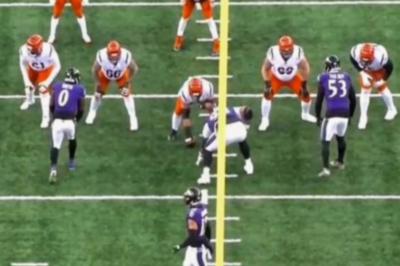
Viral Video Shows Bengals TE Mike Gesicki in FULL WALK MODE as Burrow’s Pass is Picked Off. Fans Are FURIOUS.
Viral Video Shows Bengals TE Mike Gesicki in FULL WALK MODE as Burrow’s Pass is Picked Off. Fans Are FURIOUS….
End of content
No more pages to load