President Trump reveals the first person who spearheaded the airstrike campaign against Iran.
US President Donald Trump said Defense Secretary Pete Hegseth was “the first” in his administration to push for an airstrike campaign against Iran.
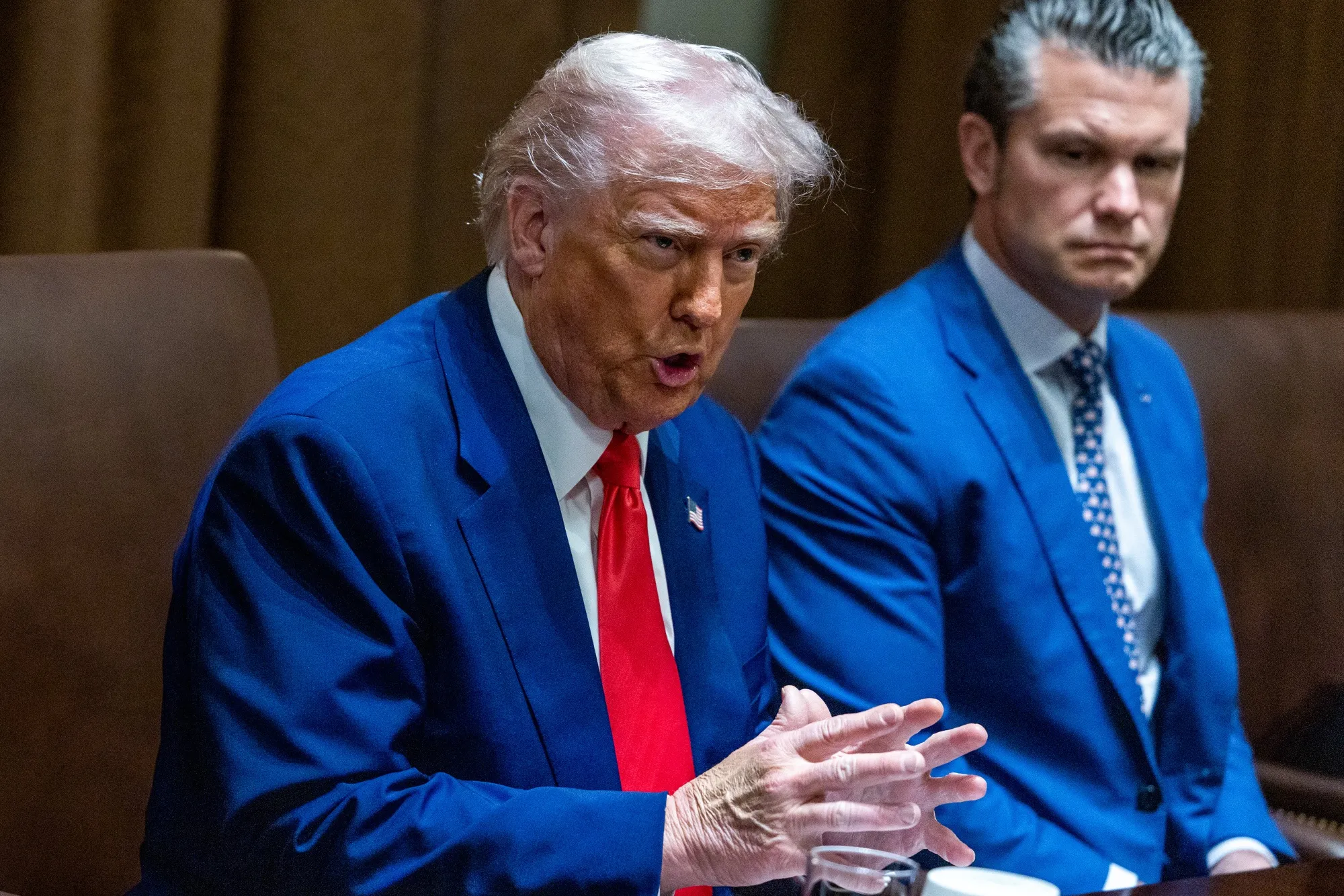
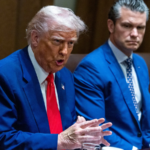
US President Donald Trump and Secretary of Defense Pete Hegseth (Photo: PA).
Speaking at a discussion in Tennessee on March 24, US President Donald Trump said he had consulted with senior military leaders on how to handle the situation with Iran, and Defense Secretary Pete Hegseth quickly supported military action to prevent Iran from acquiring nuclear weapons.
“I called a lot of our great people. We have some really good people, and I said, ‘Let’s talk, we have a problem in the Middle East. There’s a country called Iran, and they’re getting closer to nuclear weapons,’” Trump recalled.
“Pete, I think you were the first to speak up. And you said, ‘Do it, we can’t let them have nuclear weapons,’” Trump added.
Secretary Pete Hegseth, seated next to Mr. Trump, simply nodded and smiled slightly as the President spoke.
The U.S. began its air campaign against Iran on February 28, participating in coordinated attacks with Israel. According to data from the U.S. Central Command, since then, the U.S. military has struck more than 9,000 targets and damaged or destroyed more than 140 Iranian vessels.
To date, 13 American soldiers have been killed in the fighting, while approximately 290 have been wounded.
As the conflict was about to enter its fifth week, President Trump announced a five-day postponement of an attack on Iran’s energy infrastructure, citing ongoing negotiations between the two sides.
He said that Vice President JD Vance and Secretary of State Marco Rubio “are in talks right now.” He believes that an agreement to end the conflict is very close.
Trump said that, through intermediaries, the US had sent Iran a list of 15 peace conditions, including the requirement that Iran abandon all plans to develop nuclear weapons.
“We’re having very good discussions. They started last night, and a little bit the night before. They want peace, they’ve agreed that there will be no nuclear weapons. We’ll see. But I think there’s a very high chance (of reaching a peace agreement),” Trump said on March 23.
However, senior Iranian officials, including Parliament Speaker Mohammad Bagher Ghalibaf, have denied that such talks took place. Tehran has only stated that messages were conveyed through intermediaries.
Iranian military spokesman Ebrahim Zolfaqari suggested that the US may be “negotiating with itself” amid the White House’s repeated talk of contacts with Tehran aimed at ending the conflict.
Zolfaqari also warned that energy and oil prices would not return to their previous levels until the US “abandoned” the idea of attacking Iran. Oil prices cooled this week after Trump mentioned the possibility of negotiations, but remain significantly higher than before the conflict broke out.
News
John Daly Crashes Down Steep Slope in Shocking Golf Course Mishap
John Daly is no stranger to viral moments. And he was recently involved in an incident that left fans in stitches….
Tiger Woods makes a comeback at the TGL golf tournament: A failure on the course, but a victory in the business of sports.
After a long period battling spinal and Achilles tendon surgeries, “Super Tiger” Tiger Woods officially returned to competition in the…
Country music singer rips Donald Trump and MAGA: ‘You don’t have any real values’
Bryan Andrews might be the most outspoken country music artist when it comes to his disdain for Donald Trump, and…
“It couldn’t be a coincidence”: The truth about Erika Kirk, CEO of Turning Point USA, spending $1,000 on shopping just hours after her husband’s death has been revealed… and there’s still so much we can’t “understand.”
Truth about vile slur that Erika Kirk spent $1,000 shopping hours after husband’s assassination Erika Kirk’s camp has forcefully rejected…

What did Morgan Evens go through that led him to frankly call his divorce from Kelsea Ballerini “horrible”?
Morgan Evens gets real about ‘awful’ divorce from Kelsea Ballerini: ‘Wouldn’t wish it upon anyone’ The musician and Kelsea Ballerini…
Joy Behar “disappeared” from the interview with Carrie Underwood after criticizing the singer’s performance about Donald Trump.
Joy Behar leaves “The View” table, skips Carrie Underwood interview after criticizing singer’s Donald Trump performance Behar previously criticized Underwood…
End of content
No more pages to load