
The US Congressional Joint Economic Committee – a body composed of members of both the House of Representatives and the Senate – has officially opened an investigation to clarify allegations that billionaire Elon Musk’s Starlink company provided satellite internet services to fraudulent centers operating in Myanmar.
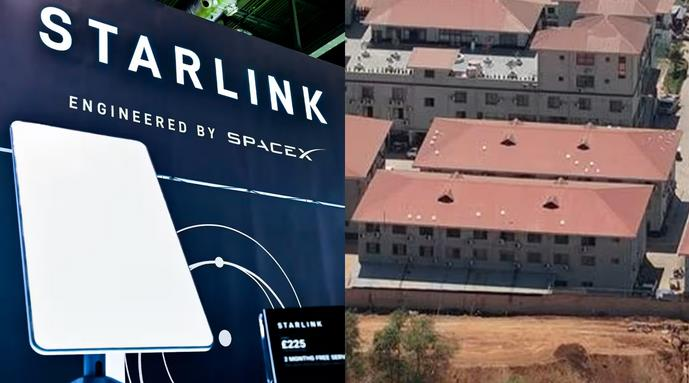
The investigation, which began in July, could lead to Musk being subpoenaed to testify before Congress, according to an announcement on October 13. Senator Maggie Hassan, a key member of the committee, was the first to call on Musk to act after receiving warnings from politicians in the US and Thailand, a country that shares a border with Myanmar.
Images taken on September 17 show objects believed to be Starlink antennas appearing on the roofs of buildings in the KK Park complex in Myawaddy town, Myanmar – considered one of the biggest “scam dens” in the region.
California prosecutors had previously warned Starlink about the possibility of its satellite system being exploited by cybercriminals in Myanmar, but the company had not responded. SpaceX, Starlink’s parent company, has remained silent on this information.
Starlink is suspected of indirectly assisting transnational crime rings
Myanmar and Cambodia have long been considered hotbeds for online fraud centers run by organized crime gangs from China, which generate billions of dollars in profits each year, causing heavy losses to people in many countries. According to US Deputy Secretary of the Treasury John K. Hurley, in 2024 alone, US citizens lost more than $10 billion to online fraud originating in Southeast Asia – a 66% increase from the previous year.
In February, the governments of China, Thailand and Myanmar launched a joint crackdown, forcing armed groups that protected the scam center in Myanmar to pledge to “eradicate” illegal activities in the town of Myawaddy. About 7,000 people, mostly Chinese nationals, were rescued from facilities described by the United Nations as “scam call centers” that used forced labor and human trafficking victims.
But just a few months later, construction activity at complexes like KK Park has picked up again. Satellite imagery from Planet Labs PBC shows dozens of new buildings being erected or renovated between March and September this year. Some even have Starlink antennas installed.
Starlink becomes the leading internet provider in Myanmar
Data from APNIC – the Asian internet registry – shows that Starlink became the largest internet service provider in Myanmar between July 3 and October 1. Notably, the Starlink network was not present in Myawaddy during the crackdown earlier this year, suggesting that the system may have been re-deployed after the scam centers reopened.
At the Myawaddy border area, a series of new constructions, expanded security checkpoints and at least five new ferry terminals across the Moei River – the natural boundary between Myanmar and Thailand – have been built to facilitate the transport of goods and supplies.
Analysis confirmed ongoing construction activity at multiple suspected scam hubs, including Shwe Kokko – a complex the US Treasury once listed as a “notorious scam den”.
Last month, the US imposed sanctions on nearly 20 individuals and entities in Myanmar and Cambodia, including figures linked to She Zhijiang, a Chinese crime boss believed to be the founder of the Yatai New City project in Shwe Kokko, which is home to many high-rise buildings used for online fraud.
Tough move from US Congress
Based on the initial evidence, the US Congressional Joint Economic Committee believes that it is necessary to clarify whether Starlink is intentionally or unintentionally assisting transnational crime rings. This investigation is considered a big test for Elon Musk and SpaceX in controlling the use of their technology in conflict or unstable areas.
If found in violation, Starlink could face severe sanctions, including bans from providing services in some countries and criminal investigations into individuals involved.
As Starlink expands globally, the incident raises new questions about the responsibility of tech companies when their products can be used for illegal purposes — and whether the “borderless internet” is becoming a double-edged sword in the digital age.
News

Paige Spiranac is “sad” because of online body shaming.
Paige Spiranac Admits the Emotional Weight of Online Body-Shaming For Paige Spiranac, the comment section is both a goldmine and…

Elon Musk’s new AI has come up with a way to insert ads into every scene you’re watching.
A new tool called Halftime can make characters in old movies and series unexpectedly switch to introducing a brand new…

Elon Musk is about to launch a trillion-dollar blockbuster.
Billionaire Elon Musk is preparing for a “blockbuster” IPO with SpaceX, potentially valuing it at $1.5 trillion. When the startup…

“The Satanic Temple Defends Country Star Zac Brown Band Amid Backlash Over a Performance Critics Say ‘Reeked of’ Occult Ritual.”
Country music star gets support from Church of Satan after demonic accusations From left, Zac Brown and Marcus King of…

Stranger Than Fiction: A Mother Impersonates Country Star Luke Bryan to Stage Her Own Daughter’s Kidnapping.
Mother pretended to be country star Luke Bryan to fake daughter’s kidnapping: police Luke Bryan performs on the main stage…

Heartbreaking letter from Raul Malo to his fans before his death: “You have supported me more than you can imagine.”
Country star’s letter to fans before death: ‘You all carried me more than you know’ Raul Malo died on Dec….
End of content
No more pages to load