Tesla shareholders celebrated at the end of the year as Elon Musk pushed the stock back to its peak exactly one year earlier.
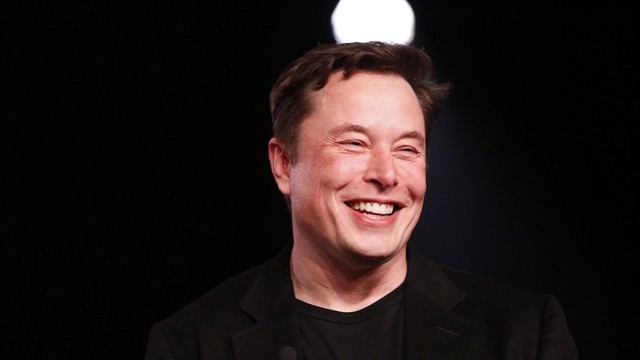
CNBC noted that Tesla investors had a rather difficult start to 2025, but by the end of the year, the situation had changed and they unexpectedly received a lot of good news to celebrate.
Specifically, after Tesla shares plummeted 36% in the first quarter, their worst performance since 2022, Tesla stock rebounded completely, closing at a record high of $489.88 (up 3.1% on Tuesday) and is now up 21% year-to-date.
In fact, the previous session’s peak price was $488.54, almost exactly the same as a year ago, while the previous closing record was $479.86.
This week’s boost comes after CEO Elon Musk, the world’s richest man, announced that Tesla is testing fully autonomous vehicles in Austin, Texas, with no passengers. This announcement comes nearly six months after the launch of a pilot program with safe drivers.
Thanks to this surge, Tesla’s market capitalization rose to $1.63 trillion, making it the seventh-largest publicly traded company by value, behind Nvidia, Apple, Alphabet, Microsoft, Amazon, and Meta, and slightly ahead of Broadcom. According to Forbes, Musk’s net worth is now approximately $684 billion, $430 billion more than Larry Page, the co-founder of Google, who ranks second.
Bullish investors see this as a signal that the company will finally fulfill its long-standing promise: to transform existing electric vehicles into robotaxis simply by updating the software.
However, the Tesla autonomous driving systems being tested in Austin are not yet widely deployed, and a number of safety questions remain.
2025 was truly a rollercoaster for Tesla. The company started in what seemed like an advantageous position thanks to Musk’s role in President Donald Trump’s White House, where he headed the Department of Government Effectiveness (DOGE) to drastically streamline the government and cut federal regulations.
However, Musk’s public endorsement of far-right figures in many places and his harsh political rhetoric have triggered a wave of consumer boycotts, further weighing on Tesla’s brand reputation and sales.
In the first quarter, Tesla reported a 13% decrease in vehicle deliveries and a 20% drop in automotive revenue. In the second quarter, the stock recovered, but sales continued to decline, with automotive revenue falling 16%.
The second half of the year was more positive. In October, Tesla reported a 12% increase in third-quarter revenue as buyers in the US rushed to purchase electric vehicles to take advantage of the federal tax credit that expired at the end of September. The stock rose 40% during this period.
Nevertheless, business challenges remain due to the loss of tax incentives, the wave of protests targeting Musk, and strong competition from lower-priced or more attractive EV models from BYD and Xiaomi in China, as well as Volkswagen in Europe.
In October, Tesla launched more affordable versions of the Model Y and Model 3, but so far these haven’t helped boost sales in the US or Europe. In the US, the new minimalist options seem to be eating into sales of the higher-priced models. According to Cox Automotive, Tesla’s US sales in November fell to their lowest level in four years.
Despite the challenging environment for EV manufacturers in the U.S., Mizuho this week raised its price target for Tesla stock to $530 from $475 and maintained its buy recommendation. The firm’s analysts wrote that reported improvements in FSD (Full Self-Driving (Supervised)) technology “could support rapid expansion” of the robotaxi fleet in Austin and San Francisco and “potentially eliminate” human supervisors soon.
Tesla currently operates a ride-hailing service under the brand Robotaxi in Texas and California, but the vehicles still have drivers or safety personnel sitting inside.
News

Inside Erika Kirk’s ‘private meeting’ with Candace Owens: “Oh my God, I’m still alive!”
Inside Erika Kirk’s ‘Private Meeting with Candace Owens’: Conservative Mouthpiece Reveals She ‘Disagreed on Various Points’ With Charlie’s Widow as…

Joe Ely, singer and country music trailblazer, dies at 78
Joe Ely, the progressive country music pioneer and renowned Texas singer-songwriter, has died. He was 78. Ely died on Monday,…

Is Justin Bieber’s return to the Baby set linked to Selena Gomez? Netizens this he is still ‘living in the past’
Justin Bieber’s surprise return to the filming location of his “Baby” music video has ignited wild speculation online, with fans…

Niall Horan replaced from ‘The Voice’ final performance after ‘rough couple of weeks’
Niall Horan will not be taking the stange in ‘The Voice’ final performance Niall Horan replaced from ‘The Voice’ final…
“What’s Going On Here?” Lexi Thompson Branded ‘Self-Centered’ After Retirement Decision Led to Chaos & Confusion
It was only months after announcing her retirement (from “full-time golf”) that Lexi Thompson returned to golf. Then came not one, not…
Scottie Scheffler wins PGA Tour player of the year fourth year running to join Tiger Woods in history books
Scottie Scheffler joins Tiger Woods in PGA history books as the only two players to have won PGA Tour player…
End of content
No more pages to load