Once again, Elon Musk said he was an “alien” at an international forum, along with many other acknowledgments throughout his entrepreneurial life.
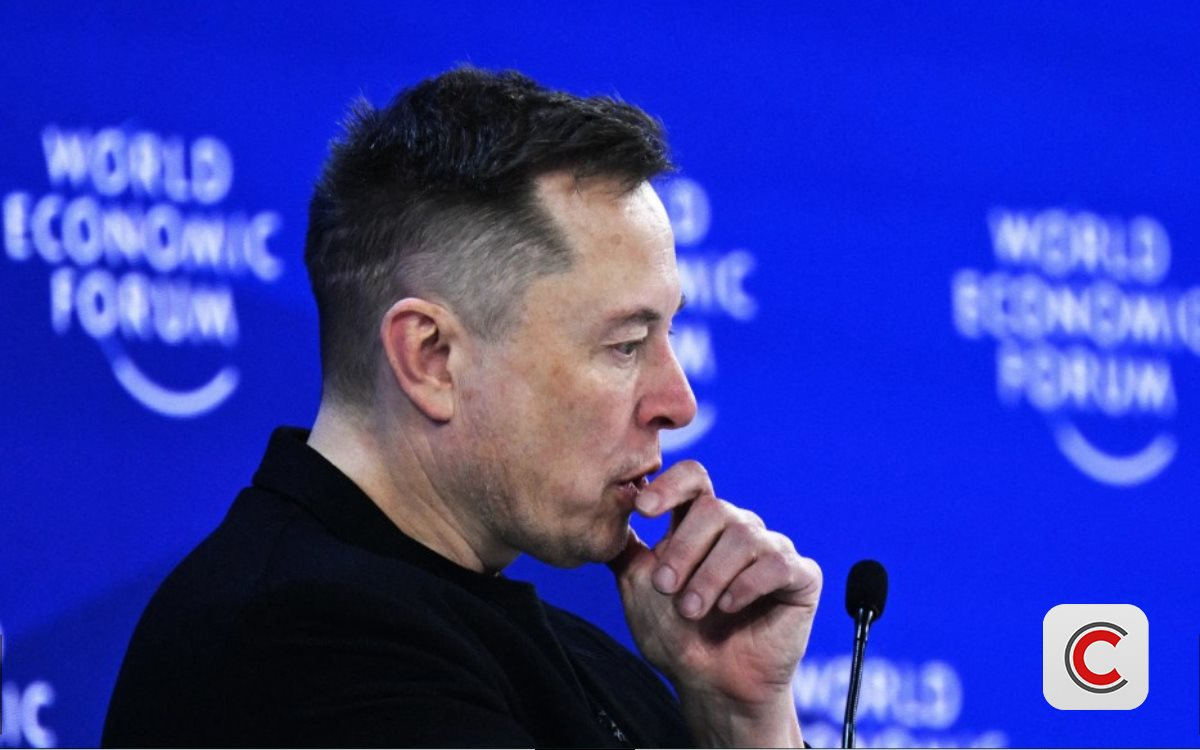
At the World Economic Forum (WEF) held in Davos, Switzerland, billionaire Elon Musk once again caused a stir in the audience when he referred to himself as an “alien.”
However, behind that seemingly playful remark lies a worldview that is serious to the point of being extreme: This billionaire built Tesla and SpaceX because he feared “loneliness.”
Even more surprisingly, this perspective is directly shaping the personal fortune of $600 billion and the future of a $2.8 trillion empire with iconic corporations like Tesla, SpaceX, and xAI.
For humanity
In a conversation with BlackRock CEO Larry Fink, Elon Musk expressed a surprising view: Despite leading the space race, he believes the likelihood of intelligent life existing beyond Earth is extremely low.
For Musk, humanity is “a tiny candle of consciousness in a vast abyss of darkness.” To combat this “loneliness,” the billionaire decided to build iconic structures like Tesla and SpaceX.
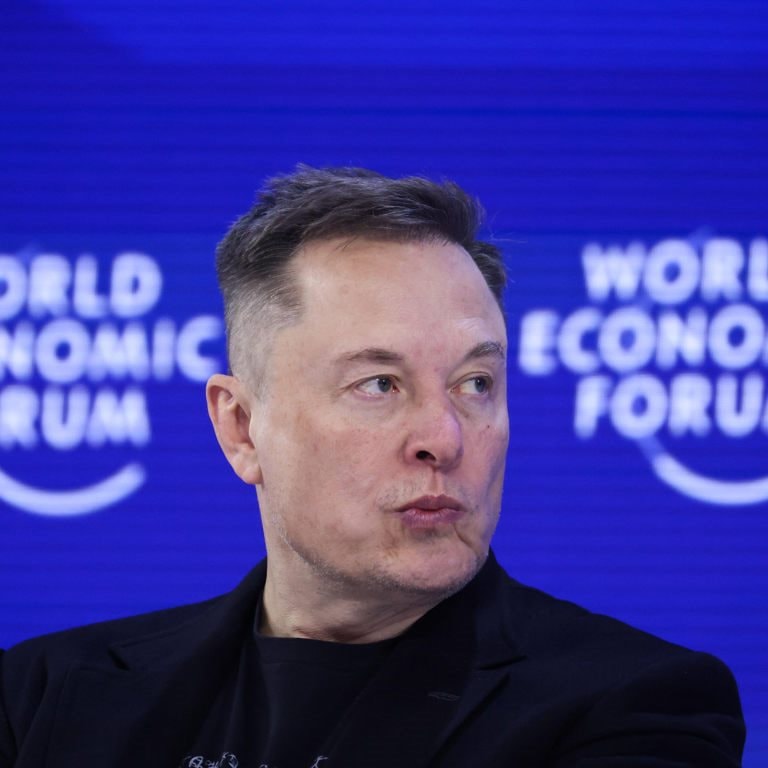
This is how Musk approaches the “Fermi Paradox,” the famous question by physicist Enrico Fermi about why, despite the vastness of the universe, we have yet to find any evidence of extraterrestrial life.
The Tesla CEO once shared on social media that: “The most terrifying answer to the Fermi Paradox is: There are no aliens.”
Because he believes that consciousness is rare and unique, Musk considers the project of preserving humanity his most urgent mission. He built SpaceX not just to launch satellites, but to create an “insurance contract” for humankind on Mars.
The world’s richest billionaire doesn’t want to die on Mars from the impact of a collision; instead, he wants it to become a springboard for expanding resources and exploring the limits of consciousness.
Tesla and SpaceX are often viewed as conventional electric vehicle or rocket manufacturers, but Musk asserts they represent an extension of his belief in securing the future.
The combined market capitalization of Tesla (approximately $1.4 trillion) and SpaceX (valued at around $800 billion), plus other entities, is creating an ecosystem geared towards what he calls “sustainable prosperity.”
This founder envisions a future where humanoid robotics will make work an option rather than a necessity. According to the billionaire’s predictions, humanoid robotics technology will achieve functional advancements by the end of this year and could be widely commercialized within the next few years.
“With robots and AI, this is truly a path to prosperity for everyone,” Musk asserted to Larry Fink.
He envisioned a world with billions of robots, outnumbering humans, taking on tasks ranging from childcare to assisting the elderly, effectively solving the problem of global poverty.
Argumentative
Musk’s philosophy doesn’t stop at theory. He once erected a statue depicting the “Fermi Great Filter,” illustrating a fork in the road with two paths: one leading to survival and the other to destruction.
Musk has applied this “choose one or the other” mindset extensively when taking over X (formerly Twitter) and, most recently, in his leadership role at DOGE in the US government.
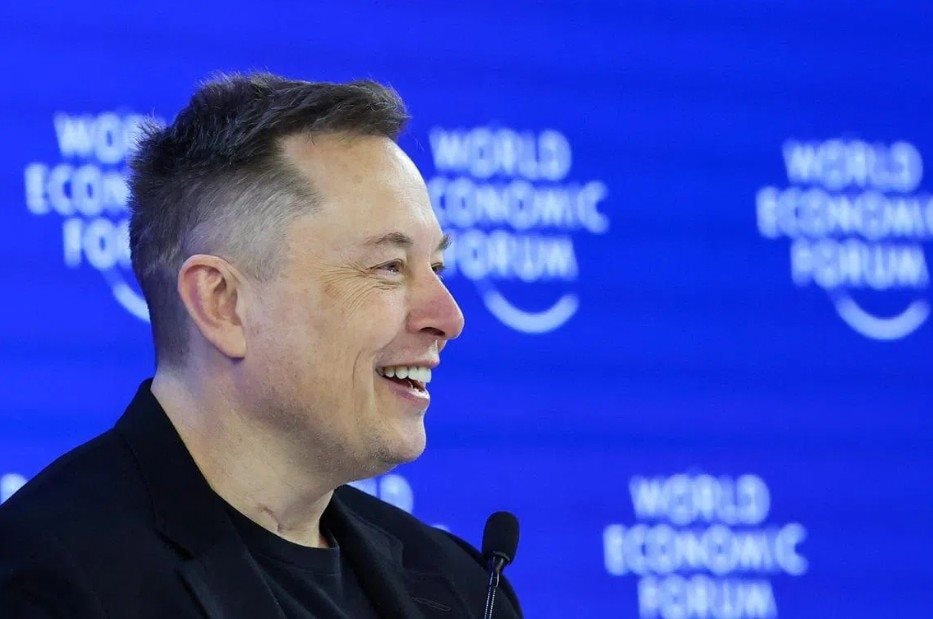
However, Musk’s approach of “engineering” every social issue is facing strong criticism.
Historian Rebecca Charbonneau at the American Institute of Physics commented in Scientific American that Musk’s thinking reflects an extreme technological ideology where everything is seen as a desperate race against disaster rather than a space for diverse development possibilities.
Musk’s portrayal of the Department for Government Efficiency (DOGE) as a “chainsaw cutting bureaucracy” is an example of how the goal was to cut $2 trillion in federal spending, but in reality, only about $150 billion was achieved through staff reductions.
Reports indicate that these extreme cuts have made the work of civil servants more difficult and have seriously affected the quality of public services.
Charbonneau argues that by viewing humanity’s challenges as simple technical problems rather than complex social systems, technologists like Musk are positioning themselves as “architects of the future,” while simultaneously overlooking the necessary efforts toward political and social change and multilateral cooperation.
Despite the controversy, it’s undeniable that Elon Musk’s “fear of loneliness” and his desire to protect his “candle of consciousness” have made him the most influential figure shaping the technology landscape of the 21st century.
News
Jelly Roll confesses to being afraid of magicians – “Magic tricks make me feel uneasy and give me the chills.”
Country Star Jelly Roll Reveals the One Thing That Makes His Skin Crawl—And It’s Not What You’d Expect The country…
Blake Shelton, Keith Urban, and many other artists have planned to honor a country music legend at the Grand Ole Opry – “he would be so proud.”
Blake Shelton, Keith Urban and More to Honor a Country Legend at the Grand Ole Opry A special night is…
Zach Bryan ‘misses Mom’ as he sends her a touching letter: “I wish Mom were still here.”
“Wish You Could’ve Seen Us”: Zach Bryan Pens Emotional Post-Wedding Letter To His Late Mother Black Edge Studios Country music…

Lainey Wilson ‘hopes’ these two country music icons will help her ‘fulfill her unfinished dream’.
“The List Goes On”: Lainey Wilson Reveals The Two Country Icons She’d LOVE To Work With CeCe Dawson Hopefully, this…

“Church Girl” – Carly Pearce spreads a message of tolerance for those who have made mistakes in her powerful new song.
“You Are Loved”: Carly Pearce Preaches Grace For Those Who Fall Short On Bold New Single, “Church Girl” Luke Rogers…

PGA Tour golfer hints Tiger Woods is very close to making his long-awaited return
A recent move from golf icon Tiger Woods is being seen as a possible hint that he could be returning to regular…
End of content
No more pages to load