
He hasn’t played in MLB for more than two decades. One team is paying him $1.2 million a year until 2035
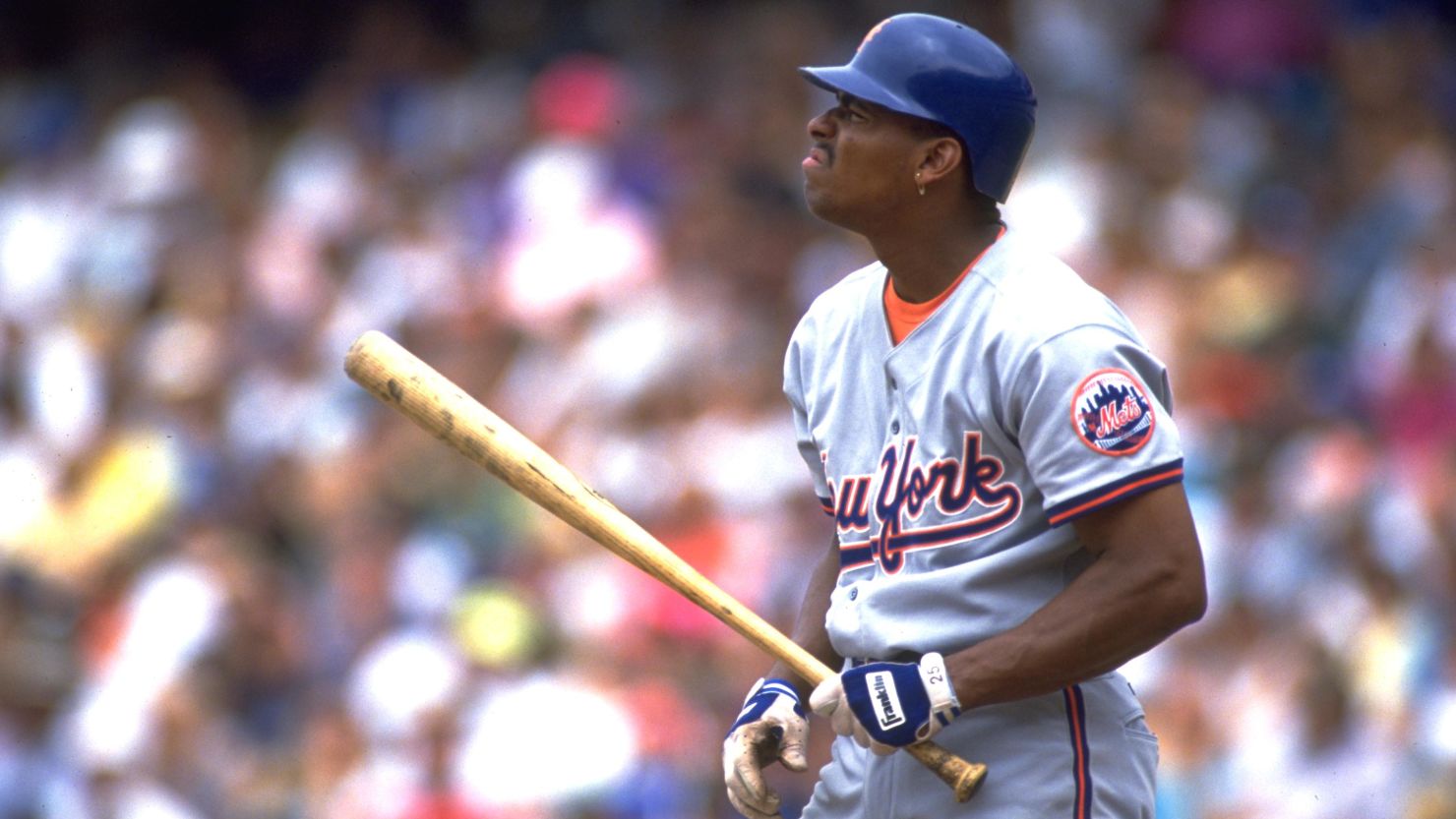
Bobby Bonilla gets $1.19M every year for not playing baseball. Stephen Dunn/Getty Images
He hasn’t picked up a professional baseball glove in 24 years, but he’s still picking up a paycheck – and a hefty one at that.
It’s July 1, which for New York Mets fans means it’s Bobby Bonilla Day.
The former slugger retired in 2001 with the St. Louis Cardinals, but he has been collecting a check of nearly $1.2 million from the Mets every year on July 1 for more than a decade.
The deal is part of a contract negotiated by Bonilla’s agent Dennis Gilbert, which will pay Bonilla $1,193,248.20 every year until 2035. Bonilla, a former All-Star who last played with the Mets in 1999, will be 72 when his contract with the team expires.
How was Gilbert able to secure such a sweet deal for his client? They can both thank disgraced financier Bernie Madoff and former Mets owner Fred Wilpon.
The Mets wanted to part ways with Bonilla after the 1999 season, but he had $6 million left on his contract. Wilpon believed he was getting a huge return on his investments through Madoff but the Mets owner turned out to be a victim of Madoff’s infamous Ponzi scheme.
Instead of paying Bonilla outright, Wilpon opted to defer payments so that the money could be unwittingly invested into Madoff’s Ponzi scheme.
Bonilla’s agent Gilbert negotiated with the team to defer payments until 2011, with an 8% annual interest rate.
Madoff was the mastermind of the most notorious Ponzi scheme in history. A Ponzi scheme is a form of fraud that uses funds from more recent investors to pay profits to earlier investors, leading them to believe that their investments are part of a successful enterprise.
Madoff, who died in 2021, was serving 150 years in prison for the multibillion-dollar scheme that he ran for decades.
In total, Bonilla will walk away with a $29.8 million payday because of Wilpon’s blunder.
Other deferred payment schemes in MLB
Players being paid over a long period of time isn’t uncommon in MLB, with contracts often deferring money down the line.
Most notably recently, after the Los Angeles Dodgers signed Japanese two-way star Shohei Ohtani to a 10-year, $700 million contract in 2023, Ohtani decided to annually defer $68 million of his $70 million average salary.
That means Ohtani will be paid $2 million a year over the contract and the deferrals – totaling $680 million – will begin in 2034. Starting then, Ohtani will receive $68 million per year from the Dodgers until 2043.
The Dodgers have made deferring payments a common theme in recent times, also doing so when signing Blake Snell and Tommy Edman.
But this idea has been around for a long time now, after it was first popularized by “The Dolgoff Plan” in the 1960s when an accountant, Ralph Dolgoff, helped the American Basketball Association (ABA) compete with the NBA by allowing teams to offer payments spread over multiple years in an attempt to attract players with the appeal of long-term security.
So while Mr. Bonilla is likely one of the most famous beneficiaries of deferred payment schemes, he is not the first and will most certainly not be the last.
News

Brandel Chamblee calls for Koepka’s PGA Tour return after LIV Golf exit
Brandel Chamblee has responded to news that Brooks Koepka has quit LIV Golf. A statement issued by LIV Golf this…
John Daly wants to share Ryder Cup captaincy with Tiger Woods
John Daly wants to share Ryder Cup captaincy with Tiger Woods. Yes, really. Who is the only eligible multiple major…
Complete shock!!! Erika Kirk Caught Lying About Dating History
Erika Kirk recently made an appearance on CBS News. While there was plenty for the internet to chew over, one particular…
‘Give Me Money,’ Says Elon Musk As He’s Asked How To Start With $1,000 — Even As He Warns It Would Take ‘Armageddon’ For Him To Be Broke
A blunt response about starting over with $1,000 drew attention after a billionaire said the most realistic move would be…
Has Elon Musk’s dream of the Moon been shattered?
Following a series of incidents involving SpaceX rockets, Elon Musk’s role in the goal of returning humanity to the Moon…
How Elon Musk and Mark Zuckerberg got rich without paying taxes, leaving a legacy for their children and grandchildren: Receiving a $1 salary, possessing ‘paper’ assets, and borrowing heavily to spend.
Why do workers bear the heaviest taxes in the US, while billionaires get richer through strategies like “Buy-Lend-Die”? In Meta’s…
End of content
No more pages to load