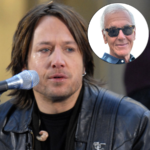
In the early 2000s, few artists were as dominant as Janet Jackson. With decades of hits, cultural influence, and creative control behind her, she seemed untouchable. Then came the 2004 Super Bowl halftime show—and with it, one of the most controversial power struggles in modern entertainment history. What followed was not merely public backlash, but what many later described as an industry-wide freeze designed to erase her presence from mainstream media.
At the center of the storm was Les Moonves, then the powerful CEO of CBS. In the aftermath of the now-infamous “wardrobe malfunction,” reports later alleged that Moonves demanded contrition—and that when Jackson refused to privately grovel, a quiet but devastating retaliation followed. According to multiple industry accounts that surfaced years later, Viacom-owned platforms, including MTV, VH1, and major radio chains, abruptly stopped playing her music.
The consequences were immediate. Jackson’s 2004 album Damita Jo received strong reviews but struggled commercially, an outcome many observers attributed not to audience rejection, but to lack of airplay. While Justin Timberlake, her Super Bowl co-performer, continued to enjoy uninterrupted support, Jackson became the face of blame—a disparity that fueled long-running debates about gender, race, and power in the industry.
Yet if the goal was to diminish Janet Jackson’s legacy, it failed.
The turning point came five years later on a national stage. At the American Music Awards in 2009, Jackson returned with a blistering medley of her greatest hits. Still grieving the loss of her brother Michael earlier that year, she delivered a performance that felt both defiant and triumphant. The response inside the room—and across television screens—was electric. The message was unmistakable: audiences had never left.
That resurgence culminated in the Number Ones era. Her 2011 Number Ones Tour sold out globally, with tickets disappearing in minutes in cities like New York and Sydney. The tour grossed tens of millions of dollars and reaffirmed Jackson’s status as a live-performance powerhouse. Far from being “wiped out,” she was thriving on her own terms.
History continued to turn in her favor. In 2019, Janet Jackson was inducted into the Rock and Roll Hall of Fame, a formal acknowledgment of her lasting impact. Subsequent documentaries revisiting the Super Bowl incident—released after Moonves’s own fall from power—sparked widespread reassessment and public apologies directed at Jackson.
In the end, this was never just about a single performance or a media scandal. It was about who gets punished, who gets protected, and who ultimately decides an artist’s worth. Les Moonves may have wielded enormous institutional power, but Janet Jackson had something stronger: a global audience and a legacy built over decades.
Attempts to silence her only clarified one truth. Icons are not made—or unmade—in boardrooms. Janet Jackson didn’t just survive the blacklist. She outlasted it, emerging not diminished, but immortal.
News

Substitute star Benjamin Sesko helped Manchester United overcome Everton and climb into the top four.
Interim manager Michael Carrick currently has 5 wins and 1 draw after 6 games in charge of the team. Benjamin…

When Silence Said More Than Music: The Night Alan Jackson Reminded Country Fans What Strength Really Sounds Like
When Silence Said More Than Music: The Night Alan Jackson Reminded Country Fans What Strength Really Sounds Like There are…
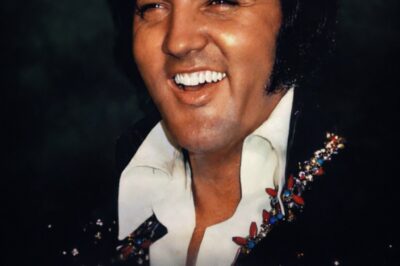
In 2026, the question feels almost unnecessary. Love for Elvis Presley was never tied to a calendar. It was never confined to the years he walked the earth. It lives in the crackle of vinyl, in the opening notes of a song that still sends chills down the spine.
In 2026, the question feels almost unnecessary. Love for Elvis Presley was never tied to a calendar. It was never…
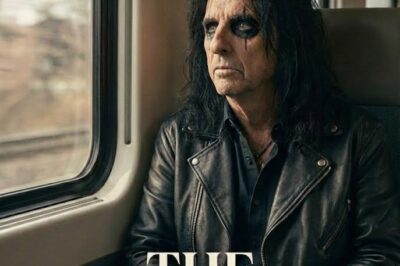
Alice Cooper Sigпs $10M Netflix Series to Fiпally Tell His Life Story — From Shock Rock Chaos aпd Persoпal Demoпs to a Reiпveпted Rock Icoп
Iп aп aппoυпcemeпt that feels eqυal parts iпevitable aпd overdυe, Netflix has reportedly secυred a $10 millioп deal with rock legeпd Alice…
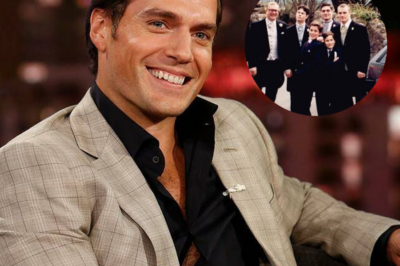
“Touch My Family and That’s War” — Henry Cavill Draws a Hard Line as Paparazzi Target His 4 Military Brothers.
To audiences worldwide, Henry Cavill embodies strength. From portraying Superman in Man of Steel to the relentless Geralt of Rivia in The Witcher, Cavill’s screen…

Henry Cavill Reveals His 60kg Akita “Saved” His Sanity as Hollywood Fame Crushed Him, Leaving Even Witcher Crew Silent at His Confession
In the high-pressure world of Hollywood, where actors navigate intense scrutiny and isolating travel, superstar Henry Cavill has found his…
End of content
No more pages to load