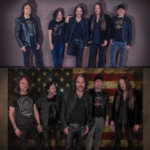
After publicly stepping away from full-time touring, WINGER surprised fans by announcing a return to live performances. Now, drummer ROD MORGENSTEIN has offered a deeply personal explanation for that decision, shedding light on the emotional realities of retirement and the physical demands faced by veteran rock musicians.
Speaking in a recent interview on Chris Akin Presents, ROD MORGENSTEIN reflected on how stepping away from the band affected him in ways he did not initially anticipate. Although retirement appeared logical on paper, the emotional aftermath proved far more complicated.
Retirement brought unexpected emotional weight
For ROD MORGENSTEIN, the year following WINGER’s retirement was far more difficult than expected. While the band had discussed ending its run for years, the emotional impact only became clear once the music stopped.
Transcribed by BLABBERMOUTH.NET
“Well, let me start by saying last year turned out to be a very rough year emotionally for me because I didn’t realize how much my life and my vision of who I am is tied up in my band,” Morgenstein said.
“And I think a lot of musicians understand that, but a lot don’t really until it hits them in the face.”
Although many artists intellectually understand that bands eventually slow down, the loss of identity can still arrive suddenly. For Morgenstein, that realization became unavoidable once touring ended.
The band always knew time would catch up
While emotions played a major role, WINGER’s decision to retire was not impulsive. According to Morgenstein, discussions about the band’s future had been ongoing for years. Aging, he explained, inevitably changes what is physically possible onstage.
“So we’ve been talking about the end of the band for years. Hindsight is 20/20.”
He then reflected on the band’s early days and the age differences within the original lineup.
“When the band formed, Kip [Winger, bass/vocals] and Reb [Beach, guitar] and Paul [Taylor, keyboards], they were in their twenties, I was in my thirties.”
At that stage, performing demanding material night after night posed no serious challenge. However, decades later, reality looks very different.
Vocal demands become harder with age
One of the most significant issues facing veteran rock bands involves vocals. ROD MORGENSTEIN emphasized that while instruments can be adjusted, the human voice has limitations that cannot always be overcome.
“For a singer to sing in the stratosphere, it was no problem,” he said of the band’s early years.
However, nearly four decades later, even small adjustments offer limited relief.
“Well, when nearly 40 years later, all you’re doing is detuning your guitars and basses a half step, which is not very much, singing in those registers becomes an issue for every singer.”
Morgenstein then highlighted just how rare it is for singers to maintain extreme vocal ranges into their sixties.
“I couldn’t even name three, I think, who in their sixties can still do it.”
He did, however, name a few notable exceptions.
“Mickey Thomas from Starship is the main one. Glenn Hughes [is another one]… But we’re not gonna get to five, I don’t think.”
Because of these realities, WINGER knew that continuing indefinitely was not realistic.
“So we knew it was coming,” Morgenstein admitted.
Leaving the door open mattered
Despite acknowledging those challenges, the band made a conscious choice not to declare a permanent ending. Their final show before stepping back was handled with intention.
“And the last gig that we did, and at the concert, instead of saying, ‘This is the last show. You’ll never see Winger again.’ We said, ‘Never say never. Circumstances change.’”
That choice, as it turns out, proved prophetic.
“And sure enough, we have four shows on the books this year — a festival in Brazil, a festival in Cancun.”
Rather than committing to extensive touring, WINGER opted for select appearances that respect both the band’s legacy and the members’ current capabilities.
A balanced approach to returning
The band’s return is not about denying age or chasing nostalgia at any cost. Instead, it reflects a careful balance between emotional fulfillment and physical reality. By limiting performances, WINGER can still connect with fans while protecting the integrity of their music.
For Morgenstein, returning also restored a sense of purpose that had been unexpectedly lost during retirement. Playing live again helped reaffirm his identity as a musician rather than forcing a premature ending.
Why this return resonates with fans
For longtime fans, WINGER’s return carries special meaning. Many believed they had already witnessed the band’s final moments onstage. Now, those same fans are being given another opportunity—albeit a more selective one—to experience the music live.
At the same time, the band’s honesty about aging sets a powerful example. Rather than pretending nothing has changed, WINGER is adapting with dignity.
Never say never, done the right way
Ultimately, ROD MORGENSTEIN’s comments reveal that retirement is not always a clean break. Sometimes, stepping away clarifies what truly matters. In this case, it reminded the band that music still plays a central role in who they are.
By returning thoughtfully rather than relentlessly, WINGER has found a way to honor both their past and their present. For fans and musicians alike, that approach may be the most sustainable form of longevity.
News

GUNS N’ ROSES Producer Says The Band Is Nearly Done With Touring
Legendary rock band GUNS N’ ROSES may be closer to the end of their touring career than many fans expect, according to…

Ant Middleton fell for an obviously fake Keanu Reeves account’s anti-woke message, and went straight into public ownership – 17 savage takedowns
It’s almost four months since London Mayoral hopeful and Dubai resident Ant Middleton fell for an AI slop video of…
Springsteen will sing Saturday at No Kings rally in St. Paul
He’ll offer “Streets of Minneapolis” before he opens his tour Tuesday, March 31, at Target Center. Bruce Springsteen apparently can’t…
Just like the family duties of a younger brother, Jon Bon Jovi carved out time to take his big brother to rehearsal.
Bruce Springsteen Brings The House Down With A Surprise Tribute To Bon Jovi At MusiCares Person Of The Year! Nobody…

‘Harry Potter’ Series Star Paapa Essiedu Says He’s Faced Death Threats Over Casting As Snape
Incoming Snape actor Paapa Essiedu has faced a number of racist death threats since he joined the blockbuster series adaptation of Harry Potter….

“She Was Gone Too Soon.” — Bruno Mars Sings ‘Valerie’ for 4 Minutes, Holds Back Tears, and Unites the Entire VMA Audience.
In August 2011, the music world was still raw with shock. Amy Winehouse—a once-in-a-generation voice—had died just one month earlier, leaving…
End of content
No more pages to load