Ted Nugent recently made controversial comments about several prominent musicians, including Green Day, during a statement shared on Ted Nugent.
The statement focused on his assessment of various artists’ musical abilities while also criticizing their political views.
“What’s his name? The guy in the White Stripes. I can’t think of his name, but he played the halftime show with Eminem for the Detroit Lions on Thanksgiving. A big deal. Jack White, is that his name? Jack White. No, I think the White Stripes, that his name. Anyhow, he was great. It wasn’t like a 10 like Sammy Hagar or James Brown,” Nugent said. “I think Sammy Hagar and James Brown, Steven Tyler, those are tens. Angus Young of AC/DC, that’s a 10. The guy’s a maniac. Billy Gibbons in the blues, rhythm, and blues soul music category, he’s a 10.”
Nugent then shifted his focus to criticizing the political stances of the artists he mentioned.
“Jack White, he’s not a 10. He’s like a four and a five, but he really delivered what? Real rock and roll. Real Detroit piss and vinegar. And Eminem, both of those guys, Eminem and Jack White total idiots,” he continued. “They don’t want their country to have secure borders. They think men should destroy women’s sports. That’s exactly what they stand for. … Idiots. But their music is soulful.”
The musician extended his criticism to include Green Day and Tom Morello.

“Just like Green Day. Green Day, there’s not a brain amongst them, I don’t think. But man, can they play really really killer stuff like Tom Morello. Is that his name? Tom Morello, who played with Springsteen and Rage Against the Machine,” Nugent said. “When actually they are the machine. Come on Tom, you got to know that you’re not raging against the machine. You are the machine.”
“They don’t believe that America should have secure borders, which means they don’t believe in America, which means they want to have a great successful like in America, but they don’t think you should be able to have one. Hey, Tom, come on my show. Make your case. Good luck. So, anyhow, I love great music,” he concluded.
These latest comments reflect Nugent’s long-standing pattern of mixing musical commentary with political criticism. This approach has defined much of his public persona over the decades.
Nugent’s career spans over five decades. During this time, he has established himself as both a guitar virtuoso and one of rock music’s most polarizing figures. His musical journey began in the 1960s with The Amboy Dukes. He gained widespread recognition as a solo artist in the 1970s with hits like “Cat Scratch Fever” and “Stranglehold.” Throughout his career, he has collaborated with numerous rock legends and maintained his reputation as an accomplished musician despite his controversial public statements.
The rock veteran has never shied away from expressing his conservative political views. He often uses his platform to criticize artists whose political stances differ from his own. His comments about Green Day, Jack White, Eminem, and Tom Morello follow a familiar pattern. He acknowledges their musical talents while simultaneously attacking their political beliefs. This approach has become a trademark of Nugent’s public commentary style.
His criticism of these artists centers around their perceived liberal political positions, particularly regarding immigration and social issues. Nugent’s characterization of Tom Morello as “the machine” rather than someone “raging against the machine” reflects his view that politically liberal musicians are part of the establishment they claim to oppose. This type of political commentary has made Nugent a frequent subject of both support and criticism within the music community.
The timing of these comments comes as political divisions in America continue to influence discussions within the entertainment industry. Nugent’s willingness to publicly challenge fellow musicians on political grounds demonstrates how deeply these divisions have penetrated the rock music world. Artists increasingly find themselves taking sides on contentious social and political issues.
News
“The Night Elvis Couldn’t Hide the Cost”: Fort Worth, June 3, 1976—A Concert That Felt Like a Warning
The Night Elvis Couldn’t Hide the Cost”: Fort Worth, June 3, 1976—A Concert That Felt Like a Warning Some concerts…
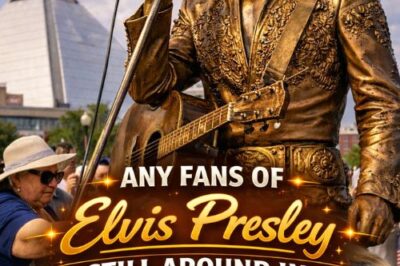
“Memphis Didn’t Clap—It Held Its Breath.” The Silent Moment That Welcomed Elvis Home Again
Memphis Didn’t Clap—It Held Its Breath.” The Silent Moment That Welcomed Elvis Home Again There are unveilings that feel like…
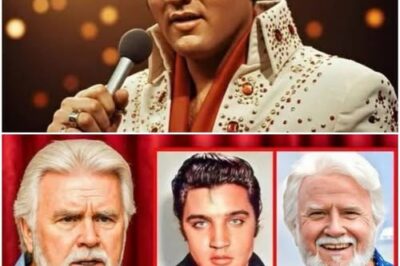
JUST RELEASED: A Newly Surfaced DNA File Allegedly Links a 90-Year-Old Man to Elvis Presley — and the story behind the decades-long deception is even more shocking than his “death.”
THE DNA REVELATION: Could a 90-Year-Old Man Finally Prove Elvis Never Left? The world of rock and roll history was…
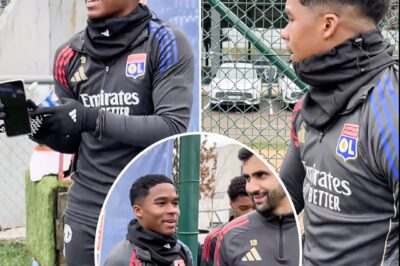
Endrick was trying to charge his teammates for being late to practice
Endrick has quickly become a funny disciplinary force at Lyon after his loan move from Real Madrid, with a viral training clip showing the…
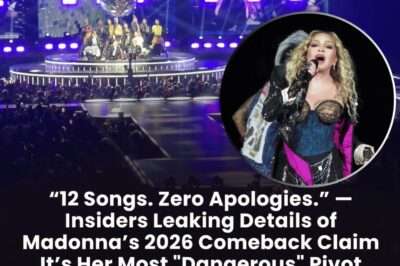
Madonna 2026 Comeback: Inside the “12 Songs. Zero Apologies.” Era and Warner Bros’ Fear Over Her Most Dangerous Pivot Since Erotica
Picture this: Madonna, the queen of pop, drops a bombshell in early 2026. Insiders spill details on her next album,…
Mohamed Salah replacement ‘would absolutely’ complete Liverpool transfer as player named
Liverpool could soon be searching for a replacement for talisman Mohamed Salah, who continues to be linked with a summer…
End of content
No more pages to load