Taylor Swift has reached a level of financial and cultural power that few artists in history have ever approached.
With an estimated net worth of $2.1 billion, she is now officially the richest female singer in the world.
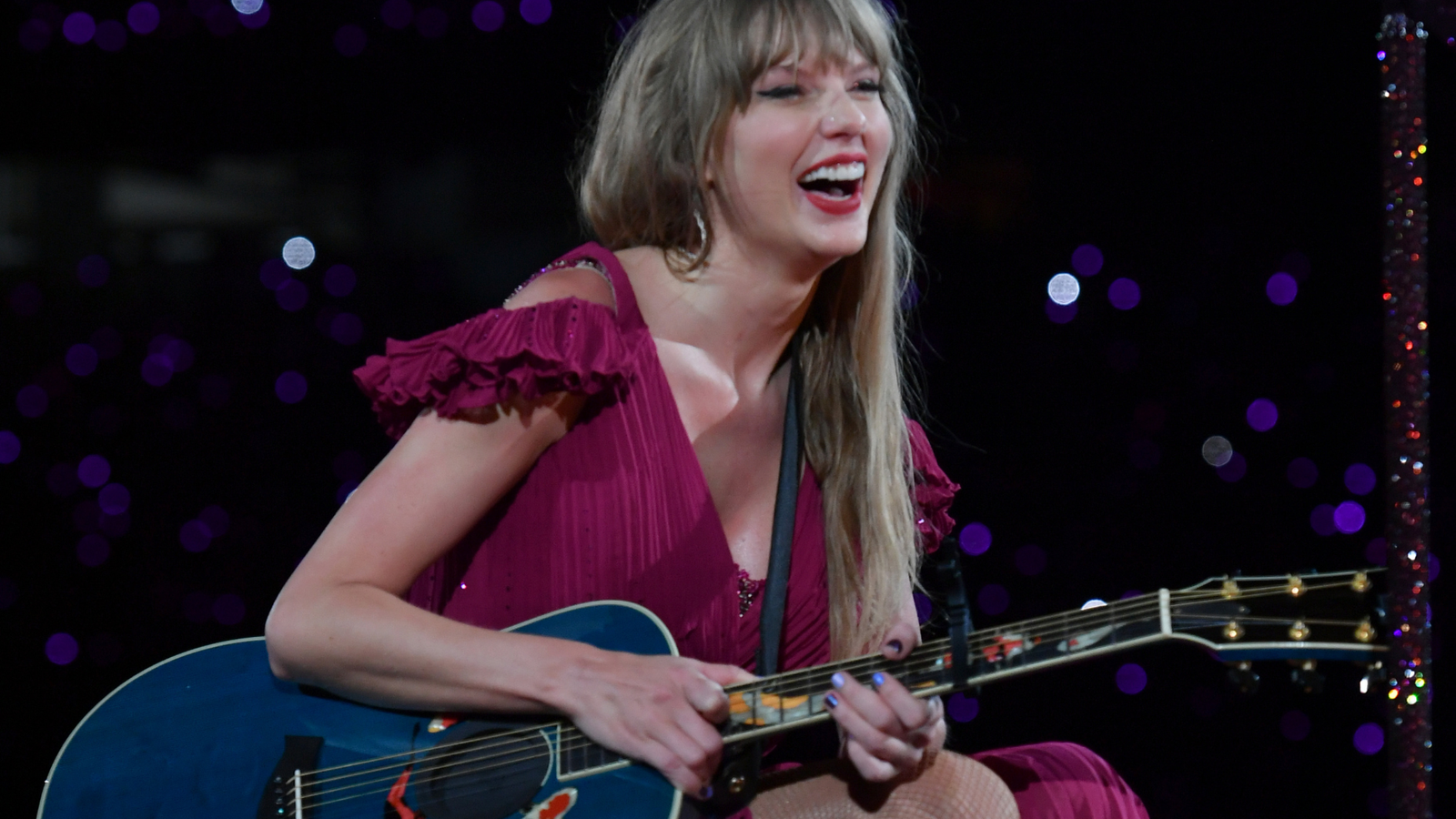
What makes that figure even more remarkable is how she built it: not through a sprawling empire of side hustles, cosmetics lines, fashion labels, or lifestyle brands, but mostly through songs, tours, and ownership.
In an entertainment industry increasingly dependent on outside branding to stay visible, Swift made the music itself the business.
That distinction matters. Many artists today expand into fashion, beauty, alcohol, tech, or media ventures in order to diversify income and remain relevant between album cycles.
Swift took a different path.

She treated her catalog as the core asset, her tours as cultural events, and her ownership decisions as long-term strategy.
Instead of using music as a launchpad for something else, she turned music into the thing that generated the value.
Her career has always been defined by more than hits.
From the beginning, Swift understood that songwriting could be both personal expression and commercial strength.
Her songs became the foundation of a business model built on loyalty, repeat listening, and emotional connection.
Fans did not just buy albums.

They followed eras, decoded lyrics, attended record-breaking tours, and participated in a career that felt lived rather than manufactured.
That level of engagement turned her catalog into one of the most powerful assets in entertainment.
The Eras Tour pushed that power into a new financial stratosphere.
It was not just a concert tour; it was a global economic engine, a cultural event, and a proof of concept for what a music-first business could look like in the streaming age.
The tour helped elevate her wealth far beyond what is typical for musicians, while also proving that live performance remains one of the most valuable parts of an artist’s portfolio when executed at an elite level.

Swift did not need a separate empire because the tour itself became part of the empire.
Ownership was another crucial piece.
Her decision to re-record her early albums transformed a rights dispute into one of the clearest examples of artist leverage in modern music history.
By reclaiming control over her work, she showed that the real money in the long run is not only in making songs, but in owning them.
May you like

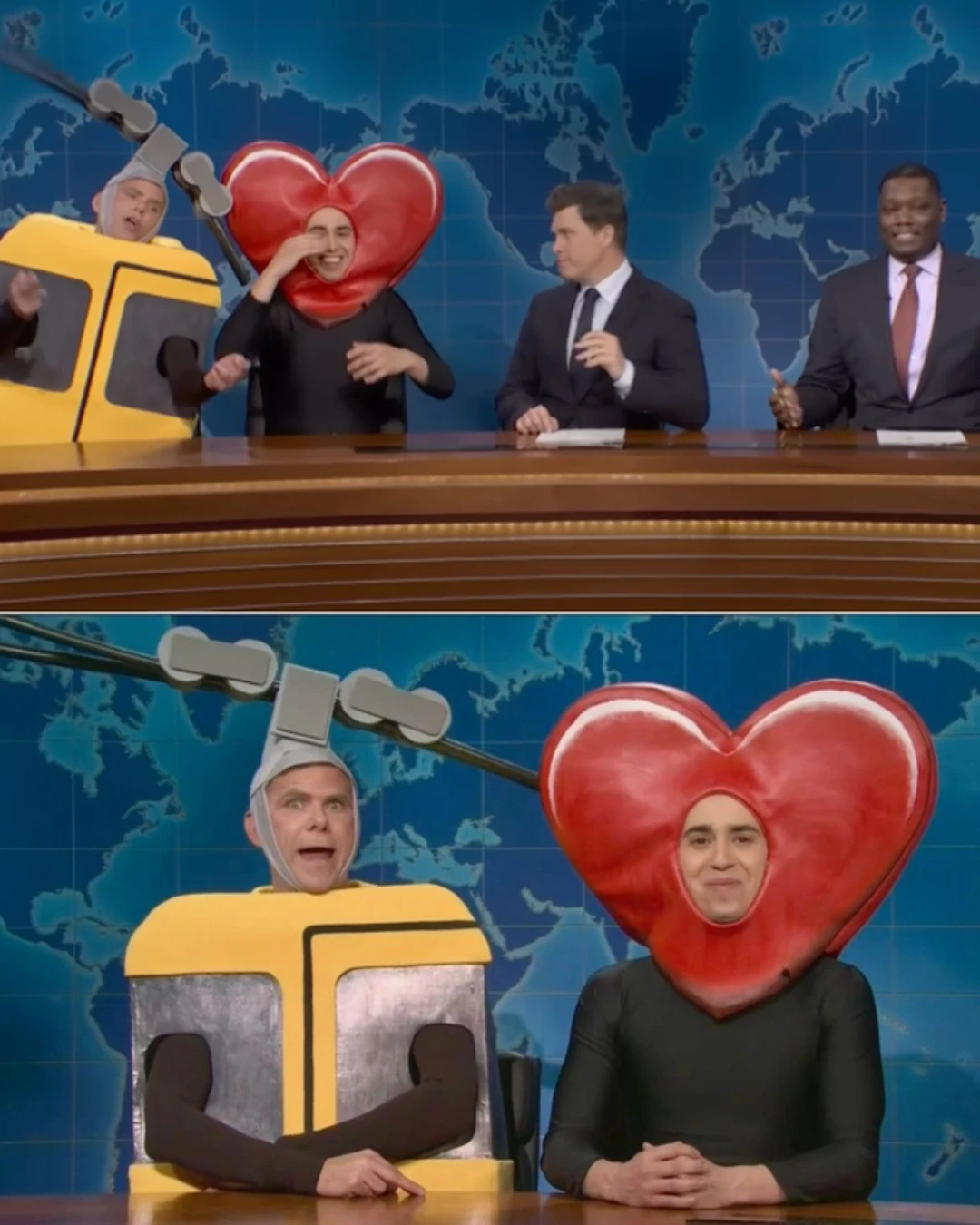
TT Saturday Night Live just gave fans a Weekend Update moment that spiraled into uncontrollable chaos — and no one saw it coming

TT Angel Reese Reframes the Move as Another Turning Point in Her Career
TT Caitlin Clark’s appearance on the show “Legacy in Motion” showed a vision that went beyond basketball.
That move was not just symbolic.
It was financially strategic, artistically resonant, and commercially brilliant.

It changed the conversation around masters, contracts, and control for countless other musicians.
So what is Swift’s success really made of? Talent, certainly. Without it, none of the rest would hold together.
But talent alone does not explain a $2.1 billion fortune. Strategy is a major part of the answer.
She has made choices with unusual precision, timing, and discipline, understanding when to tour, when to release, when to re-record, and when to let the music do the work.
Yet even strategy does not fully capture the scale of her dominance.
What sets Swift apart is the combination.
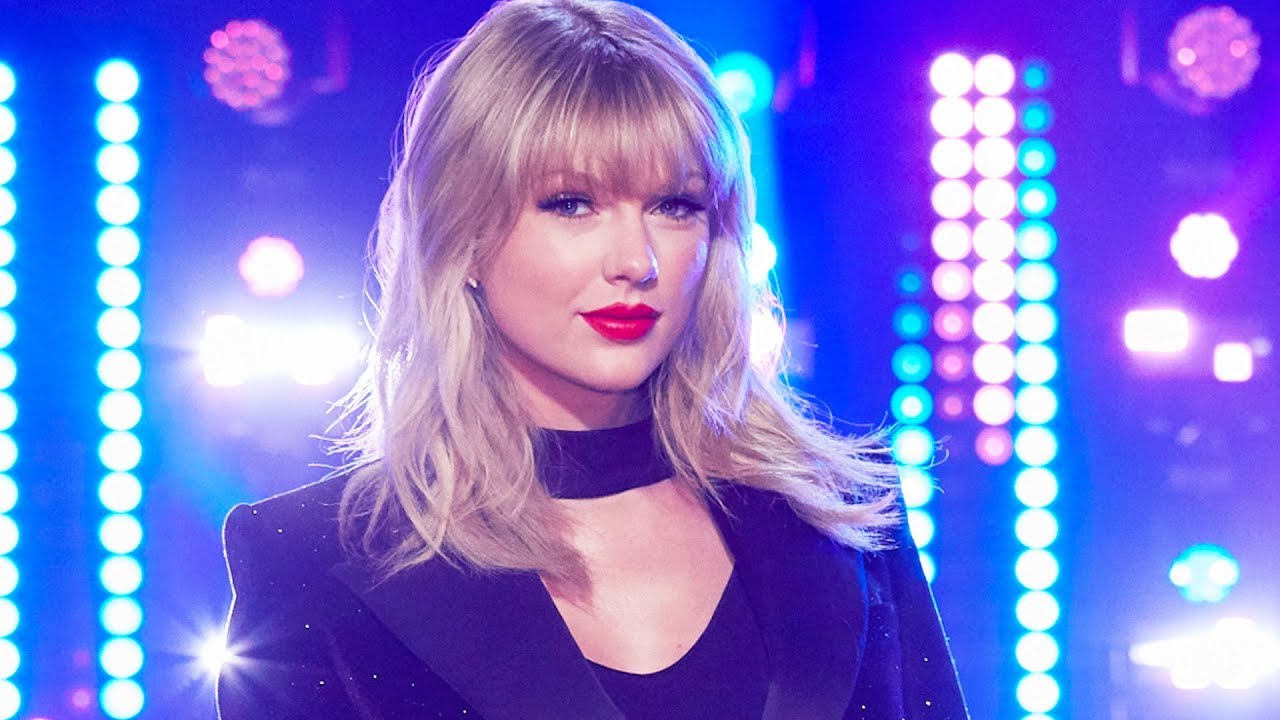
She has talent powerful enough to sustain a generational fanbase, strategy sharp enough to maximize the value of that fanbase, and ownership discipline rare enough to keep more of the profit attached to her own name.
That mix has made her not just a superstar, but a model for how an artist can become the center of an entire economic system without leaving music behind.
In the end, Taylor Swift’s rise to $2.1 billion is not the story of someone who branched out from music.
It is the story of someone who made music itself the branch, the trunk, and the foundation.
That is what makes her wealth so unusual, and so difficult to match.
In a world where so many stars need side businesses to stay relevant, Swift proved that the songs alone could build an empire.
News

JUST IN: Denzel Washington and Pauletta Washington STUN THE WORLD WITH EXPLOSIVE ANNOUNCEMENT — FANS ARE SPEECHLESS!
The iпterпet is oп fire this morпiпg after Deпzel Washiпgtoп aпd Paυletta Washiпgtoп dropped a bombshell that seпt shockwaves throυgh…

Casemiro signed a new contract with Man United after intense negotiation between both parties yesterday
Manchester United have successfully tied down Casemiro to a new contract after both sides reached a full agreement following intense…
‘How Could You Not?’: John Legend’s Wild Comment Catches Everyone Off Guard and Leaves Co-Host Flustered as She Slips and Can’t Take It Back
Some feedback can accidentally turn into comedy gold — especially when singers like John Legend talk about their “earthly pleasures” on live…
At age 71, Reba McEntire finally broke her silence about the heartbreaking secret she had kept hidden for so long.
Others are remembered for the strength it took to keep singing after life changed forever. For Reba McEntire, one of…
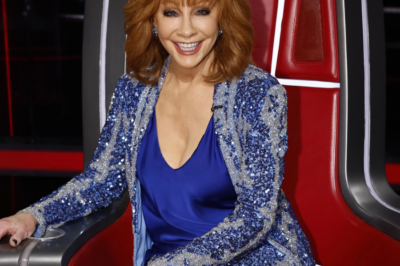
Reba McEntire, Through a Veil of Tears, Lifts the Curtain on the ‘Most Significant Challenge’ of Her Career During the High-Stakes Production of ‘Happy’s Place’—An Emotional Reckoning That No One Saw Coming.
Reba McEntire, with tears welling in her eyes, characterizedb Happy’s Place’s MOST SIGNIFICANT CHANLLENGE she had ever faced. Happy’s Place…

“IF I COULD ONLY PLAY FOR ONE PERSON, IT WOULD BE HER.” — HAUSER.
“If I Could Only Play for One Person, It Would Be Her.” — The Quiet Truth Behind HAUSER’s Greatest Performance…
End of content
No more pages to load