Sammy Hagar and Rick Springfield will team up for a six-date tour this summer, kicking off June 13 in St. Louis and currently scheduled to conclude on June 24 in Mansfield, Massachusetts.
For Hagar, this will be a continuation of his recent Best of All Worlds tours, which focus on his decade-long stint as Van Halen’s lead singer with help from fellow VH alumni Michael Anthony, guitarist Joe Satriani and drummer Kenny Aronoff.
For this tour this quartet will be joined by famed keyboardist Gregg Phillanganes, who will perform in place of Ray Thistlewayte.
You can see the complete itinerary below. Hagar also announced two shows without Springfield, June 26 and 27 in Maryland.
The careers of these two rock stars have been linked ever since 1981, when Springfield earned a Top 10 with a cover of Hagar’s 1978 single “I’ve Done Everything for You.”
Despite the fact that his version soared much higher on the charts, in 2019 Springfield insisted that he preferred his friend’s original: “I may be prettier than you,” he told Hagar, “but you’ve got a way better voice.”
In 2020 they teamed up to release a variety of rums. In an interview the following year, Hagar revealed that the two were hoping to tour together, and recorded a song named “Party at the Beach Bar” together.
“It is so badass, I can see it being the theme of a tour for me or him or both of us,” Hagar explained at the time. “What we really want to do — our managers are good friends, we’re good friends, our fans are friends, we have everything in common — I think we’re trying to tour together.”
Tickets go on sale to the public Friday, January 16, with special pre-sales starting as soon as Tuesday the 13th. Go to RedRocker.com for full details.
Sammy Hagar and Rick Springfield 2026 Tour Schedule
June 13, 2026 – Hollywood Casino Amphitheater – St. Louis, MO
June 14, 2026 – Ruoff Music Center – Noblesville, IN
June 17, 2026 – Soaring Eagle Casino – Mt. Pleasant, MI
June 19, 2026 – Pine Knob Music Theatre – Clarkston, MI
June 22, 2026 – PNC Bank Arts Center – Holmdel, NJ
June 24, 2026 – Xfinity Center – Mansfield, MA
Hagar without Rick Springfield:
June 26, 2026 – MGM National Harbor – Oxon Hill, MD
June 27, 2026 – MGM National Harbor – Oxon Hill, MD

Vinyl Records
Van Halen – Balance (Expanded Edition)
Sammy Hagar Solo and Band Albums Ranked Worst to Best
Whether on his own or with Van Halen, Montrose, Chickenfoot or HSAS, he rarely takes his foot off the pedal.
Gallery Credit: Matthew Wilkening

27. Not 4 Sale (2002)
Cabo Wabo Music
27. ‘Not 4 Sale’ (2002)
Sammy Hagar worked at an accelerated pace following his 1996 departure from Van Halen, releasing four solo albums in a six-year span and dispelling his former bandmates’ claims of him having a diminished work ethic. But this phase of his career hit a dead end with 2002’s aimless Not 4 Sale, where Hagar tried out nu-metal riffs, Led Zeppelin medleys and country-style ballads but failed to generate much spark. He briefly reunited with Van Halen afterward, and his next solo album sounded completely different.

26. Nine on a Ten Scale (1976)
26. ‘Nine on a Ten Scale’ (1976)
A year after differences led to his acrimonious departure from Montrose, Hagar released his first solo album. With songwriting help from heavyweights such as Van Morrison and Fleetwood Mac’s Bob Welch, Nine on a Ten Scale stakes his claims on an ambitious range of territory. 1977’s Sammy Hagar and Musical Chairs would find Hagar refining and improving upon a template established here.

25. Sammy Hagar (1977)
25. ‘Sammy Hagar’ (1977)
With former Montrose bandmates Bill Church and Alan Fitzgerald now in his solo band, Hagar follows the same half covers, half originals template from his debut but with improved results. “Red” became his first anthem and helped establish his nickname. But tracks like “Rock and Roll Weekend” and “Cruisin’ and Boozin’” best show off Hagar’s knack for sharp hooks.

24. Musical Chairs (1977)
24. ‘Musical Chairs’ (1977)
With the addition of drummer Danny Carmassi, Hagar’s solo band now included everyone who performed on Montrose’s first two albums except Ronnie Montrose. Musical Chairs also introduced second guitarist Gary Pihl, who, along with bassist Bill Church, would remain with Hagar until he joined Van Halen in 1985. Hagar further hones his skills here, confidently delivering arena-ready singalongs (“Turn Up the Music”), metallic riff rockers (“Reckless”), ballads (“You Make Me Crazy”) and Pink Floyd-inspired progressive rock (“Crack in the World”).

23. Livin It Up! (2006)
23. ‘Livin’ It Up!” (2006)
After a disastrous 2004 reunion tour with Van Halen, Hagar temporarily abandoned hard rock for the Jimmy Buffett-inspired Livin’ It Up. This is what would happen if Hagar decided to take the stage at a beach bar using only the acoustic guitars and other instruments left behind by the cover band that was playing the night before. Did the world need to hear Hagar performing Toby Keith, Bob Dylan and the Staple Singers in this manner? Probably not. But his enthusiasm for the project keeps this ship from capsizing.

22. Sammy Hagar & Friends (2013)
Frontiers
22. ‘Sammy Hagar & Friends’ (2013)
After the demise of Chickenfoot, Hagar regrouped by recruiting a bunch of famous friends for the covers-heavy album Sammy Hagar and Friends. But besides a few notable exceptions – the partial Montrose reunion “Not Going Down,” the fiery live-in-the-studio Neal Schon showcase “Going Down” – most of these performances simmer rather than boil over.

21. Cosmic Universal Fashion (2008)
Loud & Proud / Roadrunner
21. ‘Cosmic Universal Fashion’ (2008)
Released two years after the largely acoustic, beach-themed Livin’ It Up!, Cosmic Universal Fashion finds Hagar returning to rock ‘n’ roll. The title track, an ambitiously forward-thinking online collaboration with an Iraqi rocker named Steven Lost, is followed by two tracks from Hagar, Neal Schon and Michael Anthony’s abandoned 2002 Planet Us supergroup. There’s also a duet with Billy Gibbons, a regrettable Beastie Boys cover and a handful of traditional Hagar rock songs. Not everything works, but unlike Not 4 Sale there’s an infectious energy at play here.

20. Red Voodoo (1999)
MCA
20. ‘Red Voodoo’ (1999)
After purging himself from his Van Halen bitter split on 1997’s Marching to Mars, Hagar softened his approach on 1999’s Red Voodoo, which introduces a new backing band the Waboritas and marks his first move into party host. “Mas Tequila,” an alcohol-themed rewrite of Gary Glitter’s “Rock and Roll,” was a hit. There’s some filler, but “Lay Your Hands on Me” and “High and Dry Again” highlights Hagar’s new approach.

19. Danger Zone (1980)
Capitol
19. ‘Danger Zone’ (1980)
Not as consistent as its predecessor Street Machine, Danger Zone finds Hagar primed for stardom. Years of touring earned him a devoted live following by this point, and tracks such as “Love or Money” and “20th Century Man” prove he knew how to craft crowd-pleasing anthems. Frustrated by a lack of support from his label, Hagar soon left for greener pastures, more sympathetic producers and a long-awaited breakthrough.

18. Crazy Times (2022)
UMe
18. ‘Crazy Times’ (2022)
The pandemic put the world on lockdown a year after Hagar released the first studio album by the Circle. But it didn’t slow him down much; within weeks the group was remotely recording the covers album Lockdown 2020. As soon as they were able to get into the studio, the group recorded a serious-minded collection of songs addressing world events and the passing of time. It’s all very respectable but a bit subdued and mannered. At producer Dave Cobb’s insistence, Hagar didn’t play guitar on the album, which seems like a lost opportunity when you hear how well his playing jump starts the bonus track “2120.”

17. Space Between (2019)
BMG
17. ‘Space Between’ (2019)
The dissolution of Chickenfoot was one of the few times Hagar’s career slowed down. The longest break he’d ever taken between albums of original songs was four years, but the Circle’s 2019 debut Space Between arrived eight years after Chickenfoot III. By that time Hagar had been touring with his new band the Circle (featuring Jason Bonham and longtime Hagar collaborators Michael Anthony and Vic Johnson) for five years. So there wasn’t much rust to shake off, and the group’s chemistry resulted in a thematically linked set of songs that showed off the full range of Hagar’s strengths.

16. Ten 13 (2000)
Beyond Music
16. ‘Ten 13’ (2000)
For his third post-Van Halen solo album Hagar returned to Standing Hampton-styled riff-based hard rock, showcasing his guitar skills on songs such as “Let Sally Drive, “Shake Doobie” and “3 in the Middle.” Ten 13 also included more sophisticated tracks like the single “Serious Juju” and the dramatic progressive rock of “The Message.”

15. Chickenfoot (2009)
Redline
15. ‘Chickenfoot’ (2009)
Fourteen years after releasing his last album with Van Halen, Hagar assembled a supergroup with nearly equal firepower: bassist Michael Anthony, guitarist Joe Satriani and Red Hot Chili Peppers drummer Chad Smith. Their enthusiasm is undeniable, even if the songs are a bit generic and the band’s chemistry hasn’t fully developed. After hitting the road, the band returned two years later in a stronger position.

14. Street Machine (1979)
Capitol
14. ‘Street Machine’ (1979)
The fourth time proved to be the charm for Hagar’s solo career: The muscular Street Machine found him taking a big step forward. With an increased focus on riff-based hard rock songs such as “Trans Am,” “Growing Pains” and “This Planet’s on Fire,” the album pointed the way to the Red Rocker’s ’80s solo success.

13. Three Lock Box (1982)
Geffen
13. ‘Three Lock Box’ (1982)
Hagar’s second album of 1982 isn’t as consistent as Standing Hampton, but by pumping up the keyboards and pushing further into pop territory, Three Lock Box earned Hagar his only Top 20 hit, “Your Love Is Driving Me Crazy.” There are still plenty of guitar-based rockers here, most notably the title track and the bitter kiss-off “I Don’t Need Love.”

12. Through the Fire (Hagar Schon Aaronson Shrieve, 1984)
Geffen
12. ‘Through the Fire’ (Hagar Schon Aaronson Shrieve, 1984)
With his career on the verge of a major breakthrough, Hagar took an unexpected detour by teaming up with Journey guitarist Neal Schon on 1984’s Through the Fire. Much of the album focused on hard rock stripped of Three Lock Box‘s and Journey’s Frontiers pop sheen, as they devote a chunk of Side One to the weird but enjoyable prog-inspired three-song suite of “Animation,” “Valley of the Kings” and “Giza.”

11. Marching to Mars (1997)
MCA
11. ‘Marching to Mars’ (1997)
If you’re planning to fire Sammy Hagar from your band, be sure you’re ready for him to make a strong album designed to make you question your decision. Hagar’s first post-Van Halen record, 1997’s Marching to Mars, included help from Slash and a temporarily reunited Montrose as he tears into his former bandmates. The album outshined Van Halen’s next album, the Gary Cherone-fronted III. Hagar also returned to a more positive place, inviting fans to follow him to a new promised land on the stomping title track.

10. Paper Money (Montrose, 1974)
Warner Bros.
10. ‘Paper Money’ (Montrose, 1974)
It’s a shame the relationship between Hagar and Ronnie Montrose deteriorated so quickly because the band’s second album suggests there was more they could have explored together. Paper Money finds Montrose expanding into more sophisticated riffs and textures. An underrated album in Hagar’s career.

9. Balance (Van Halen, 1995)
Warner Bros.
9. ‘Balance’ (Van Halen, 1995)
Hagar’s fourth and final album with Van Halen was made by an openly feuding band and it shows. There are highlights, such as the opening “The Seventh Seal” and the single “Don’t Tell Me (What Love Can Do),” but there’s also unforgivable cheese like “I Can’t Stop Loving You” and a general lack of purpose. Still, the undeniable talents of everybody involved and great deep cuts like “Take Me Back (Deja Vu)” keep it from sinking.

8. Chickenfoot III (Chickenfoot, 2011)
eOne
8. ‘Chickenfoot III’ (Chickenfoot, 2011)
Somewhere between their first and second albums, Chickenfoot moved from a supergroup to a real band. The jokingly titled III improved on its predecessor. Hagar and guitar wizard Joe Satriani clicked better on riff-fests such as “Big Foot,” “Up Next” and “Dubai Blues,” as they confidently branched into more serious material (“Different Devil,” “Come Closer”).

7. I Never Said Goodbye (1987)
Geffen
7. ‘I Never Said Goodbye’ (1987)
Geffen Records wasn’t thrilled to hear about Hagar’s plans to join Van Halen after the success of “I Can’t Drive 55.” As a condition of being released from the label, Hagar promised to record a solo LP after Van Halen’s 5150. Although it was made in just 10 days Hagar gave them their money’s worth. With Eddie Van Halen on bass, Hagar delivered a set that demonstrated much growth since 1984’s VOA. Hagar also takes extended guitar solos on nearly every song.

6. Standing Hampton (1982)
Geffen
6. ‘Standing Hampton’ (1982)
Energized by his new label and a new producer, Hagar delivered his strongest solo album at that point with 1982’s Standing Hampton. “There’s Only One Way to Rock,” “Heavy Metal” and the bittersweet breakup song “I’ll Fall in Love Again” represented new songwriting highs. Producer Keith Olsen adds enough polish to make them staples on classic rock radio.

5. VOA (1984)
Geffen
5. ‘VOA’ (1984)
With a Top 20 hit now under his belt thanks to “Your Love Is Driving Me Crazy,” Hagar reunited with producer Ted Templeman for his eighth solo album, 1984’s VOA. “I Can’t Drive 55” is here, but the LP marks a huge step forward from Standing Hampton and Three Lock Box. This is the most consistent album Hagar released since he first hooked up with Templeman for Montrose’s debut more than a decade earlier; it even suggested that with the right collaborators, he could accomplish even more. A phone call from Eddie Van Halen would soon test that.

4. For Unlawful Carnal Knowledge (Van Halen, 1991)
Warner Bros.
4. ‘For Unlawful Carnal Knowledge’ (Van Halen, 1991)
Hagar’s third album with Van Halen found the band unexpectedly changing course, eschewing the keyboards and genre-hopping of 5150 and OU812 in favor of guitar-based hard rock. Hit singles “Poundcake” and “Runaround” deliver the goods, but the album turns a bit repetitive by the end. Still, the huge success of the only piano-based song, “Right Now,” makes you wonder what could have been achieved if they pushed themselves more.

3. OU812 (Van Halen, 1988)
Warner Bros.
3. ‘OU812’ (Van Halen, 1988)
The Sammy Hagar-fronted Van Halen released their first album with a gigantic target on their back. After shutting down doubters with 5150, the group was free to cut loose on their next album. OU812 finds the band genre-hopping like never before. The Journey-style ballad “When It’s Love” was a hit, but so was the country-style oddity “Finish What You Started.” The album also featured Eddie Van Halen’s most metallic and showy riffs since Fair Warning and took detours into jazz fusion and the Led Zeppelin-styled epic “Cabo Wabo.” OU812 definitively ended the “Van Halen or David Lee Roth?” debate.
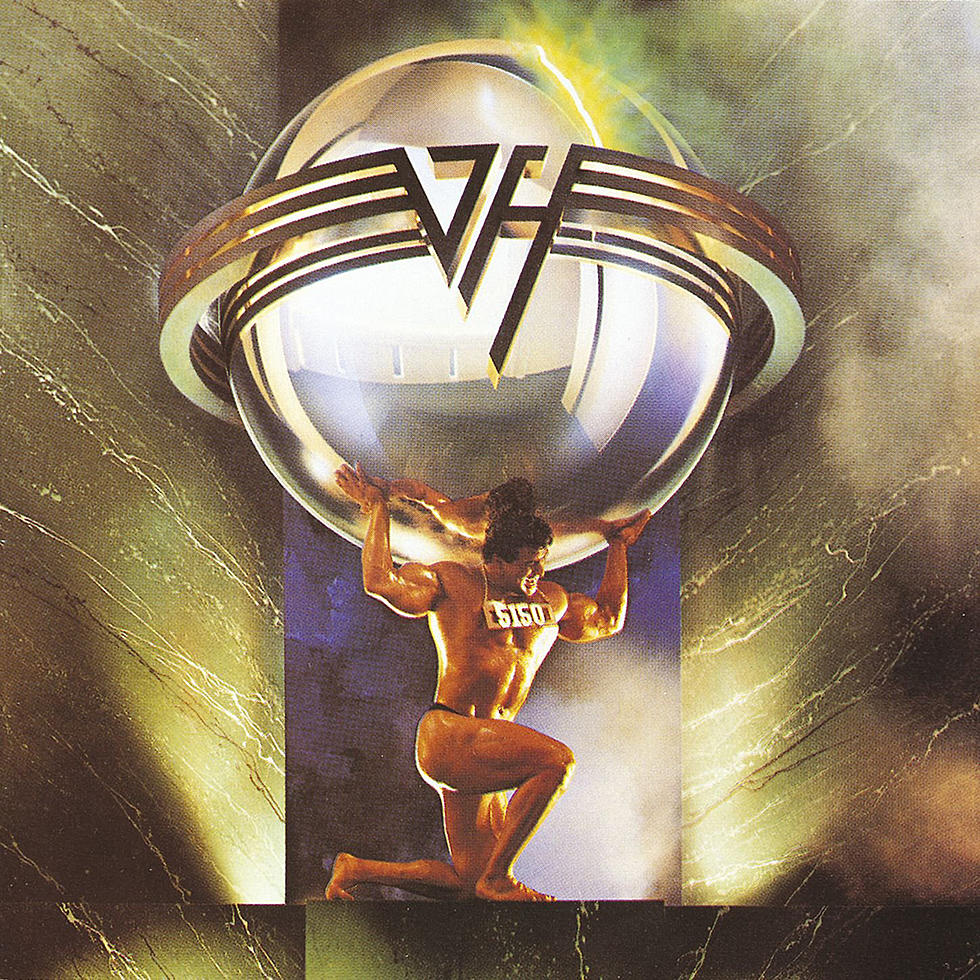
2. 5150 (Van Halen, 1986)
Warner Bros.
2. ‘5150’ (Van Halen, 1986)
Van Halen’s previous album, 1984, was a career high point for the band, and its keyboard-based hit “Jump” single-handedly kick-started a revolution in hard rock. After a decade of clawing his way up the ladder, Sammy Hagar had just become an arena headliner thanks to the success of “I Can’t Drive 55.” So there was a risk of alienating two fan bases here. But Van Halen and Hagar united to push their respective musical journeys forward. The commercial and creative success of 5150 advanced the chart gains of 1984 with the singles “Why Can’t This Be Love” and “Dreams” while also breaking new ground on “Best of Both Worlds” and “5150.”

1. Montrose (Montrose, 1973)
Warner Bros.
1. ‘Montrose’ (Montrose, 1973)
Montrose is the equivalent of the hard rock Pixies. Just as Kurt Cobain took that indie band’s loud-quiet-loud dynamic to much greater commercial success with Nevermind, many hard rock bands used 1973’s Montrose as their North Star. Van Halen hired Montrose producer Ted Templeman and engineer Donn Landee for their first six albums, covered “Make It Last” during their club days and recruited the band’s singer Sammy Hagar in the ’80s. Montrose remains unassailable, packing eight classic rock anthems into a compact 32 minutes. Motley Crue and Iron Maiden have cited Montrose as a huge influence. It’s easy to hear why.
Read More: Sammy Hagar and Rick Springfield Announce 2026 Tour | https://ultimateclassicrock.com/sammy-hagar-rick-springfield-2026-tour/?fbclid=IwY2xjawPUbgVicmlkETFwYTlKeGhoMWc4Q2NUZFJFc3J0YwZhcHBfaWQQMjIyMDM5MTc4ODIwMDg5MgABHi6jaVDfcwZfYtebkweAMJ74NfsKSfMPPg6_Z1LoShQtil60Kz4MoGOUfkQK&brid=t-N5355LO67Il_qTMnE1nA&utm_source=tsmclip&utm_medium=referral
News

She is affecting the production, and we are considering our options.” The Last of Us director Craig Mazin is reportedly unhappy with Bella Ramsey’s recent statements. After a meeting with the producers, an official announcement was issued that has had a serious impact on Bella
She is affecting the production, and we are considering our options.” The Last of Us director Craig Mazin is reportedly unhappy with…

WORLD IN SHOCK: BELLA RAMSEY officially joins the Marvel Universe as the NEW FEMALE HERO of the MCU. According to leaked reports from the X-Men Reboot production, her character’s identity is being kept under absolute secrecy — but one newly exposed detail has just sent social media into a frenzy.
WORLD IN SHOCK: BELLA RAMSEY officially joins the Marvel Universe as the NEW FEMALE HERO of the MCU. According to…

Pope Leo XIV Issues 12 Revolutionary Mass Rules — A Spiritual Shockwave Hits the Catholic World
Pope Leo XIV has issued 12 strict new Mass rules aimed at restoring reverence and holiness during the Eucharist, sparking…

ALL OF HOLLYWOOD IS SHOCKED: Jennifer Aniston, in her 50s, unexpectedly became the center of attention after an emotional revelation from a family member — what happened behind closed doors that left fans worried and curious?
The entertainment world has been left stunned following an emotional announcement from a member of Jennifer Aniston’s family. The beloved actress, known…

“DON’T MESS WITH ME! YOU HAVE BETRAYED THE NATION!” – SUPER-SCANDEMIC CLIP LEAKED: ALBANESE GOES CRAZY, THROWING STONES AFTER ROYAL COMMISSION BONDI STORM!
Australia was thrown into political chaos after a leaked video allegedly showing Prime Minister Anthony Albanese in a furious outburst…

Australia’s political arena implodes as Governor-General Sam Mostyn drops a nuclear truth bomb on Prime Minister Anthony Albanese, accusing Labor of monumental failures in combating anti-Semitism that fueled the deadly Bondi Beach massacre – claiming 15 lives in a targeted Hanukkah terror strike. Mostyn slams Albo’s delayed response, ignored warnings, and politicized inaction as the root of surging hate crimes, forcing a humiliating royal commission U-turn amid Jewish community fury. With polls cratering and internal revolts brewing, insiders whisper Labor’s endgame: Resignation calls echo national. Aussies rage: How much blood is on their hands? The reckoning begins!
Australia’s political arena implodes as Governor-General Sam Mostyn drops a nuclear truth bomb on Prime Minister Anthony Albanese, accusing Labor…
End of content
No more pages to load