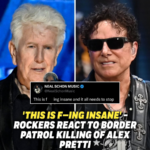
Graham Nash, Neal Schon, Tom Morello and other rock stars took to social media to react to a Border Patrol agent fatally shooting 37-year-old Alex Pretti in Minneapolis on Saturday.
You can see their reactions below.
What Happened to Alex Pretti?
On Saturday, federal agents in Minneapolis fatally shot killed Alex Pretti, a 37-year-old intensive care nurse who appeared to be using his phone to record U.S. Customs and Border Protection officers. Videos show agents pinning Pretti to the ground and hitting him, and one officer leaving with what appears to be a gun.
These videos appear to contradict claims that Pretti “approached U.S. Border Patrol officers with a 9mm semi-automatic handgun” and “attacked” them, according to ABC News.
Pretti’s death marked the second fatal Minneapolis shooting by a federal agent this month, following the Jan. 7 shooting of Renee Good by ICE agent Jonathan Ross. Both deaths have led to nationwide calls for more thorough investigations and the dismantling of ICE.
“The events of this weekend in Minneapolis are terrifying, deeply disturbing, and heartbreaking — with yet another U.S. citizen losing their life while taking part in the time-honored and Constitutionally protected activity of being present to observe and peacefully advocate for their beliefs,” Good’s family said in a statement released by their attorneys.
They continued: “We urge all Americans to trust their own eyes as they interpret the horrific video, and to call for an absolute end to ICE activity in Minneapolis. It has clearly gone too far and strayed far beyond its stated mission of removing criminal non-citizens from the country. It is time for a hard reset. ICE agents can leave Minneapolis. The residents of Minnesota cannot.”
Graham Nash Says ‘F**K ICE’ and ‘F**K Trump Too’
Nash offered a lengthy, full-throated denunciation of ICE on Instagram, marveling at the people who tell him to “stick to music” when his music has been politically motivated for decades. “Anytime I dare to have an opinion, as a human being, about what is going on around me there’s always the inevitable comment where somebody tells me to ‘stick to music,’” he wrote.
“Now, I’m getting older myself so maybe the people leaving those comments have trouble hearing. So do I! That’s the only reason I can think of that anyone would ever be shocked that myself, or anyone I’ve ever sung with, would talk about politics, the destruction of the environment, generational conflict, generational responsibility or the state of the world in an way.”
After detailing his extensive songwriting resume and naming political anthems such as “For What It’s Worth,” “Ohio” and “Teach Your Children,” Nash concluded: “So I’ll say it again… after just watching a bunch of thugs who call themselves ‘agents’ kill yet another human being: F**K ICE. And since these murderers are part of a government sanctioned agency I’ll say this and don’t bother getting mad about it: F**K TRUMP too.”

Vinyl Records
“This is f—ing insane and it all needs to stop,” Schon wrote bluntly on X (formerly Twitter). When another X user inevitably told the Journey guitarist to “stick to music,” Schon responded: “Shut up. This was wrong.”
Morello likewise got into a heated exchange with an X user after referring to President Donald Trump as a “murdering idiot” on an unrelated post prior to the Pretti shooting.
“You support white men with guns now!! Got it!” the user wrote, to which Morello replied: “You support masked federal government secret police murdering US citizens now. Got it. (PS—ur likely a paid MAGA troll bot living in S. East Asia, but anyway).”
Not everybody sided against Border Patrol though. On Saturday, notoriously outspoken conservative rocker Ted Nugent posted a text graphic on Facebook that said: “Stop interfering with federal agents enforcing the law. Stay home. Save lives. Save your own.”
You can see these reactions and more below.
Rockers React to Border Patrol’s Killing of Alex Pretti
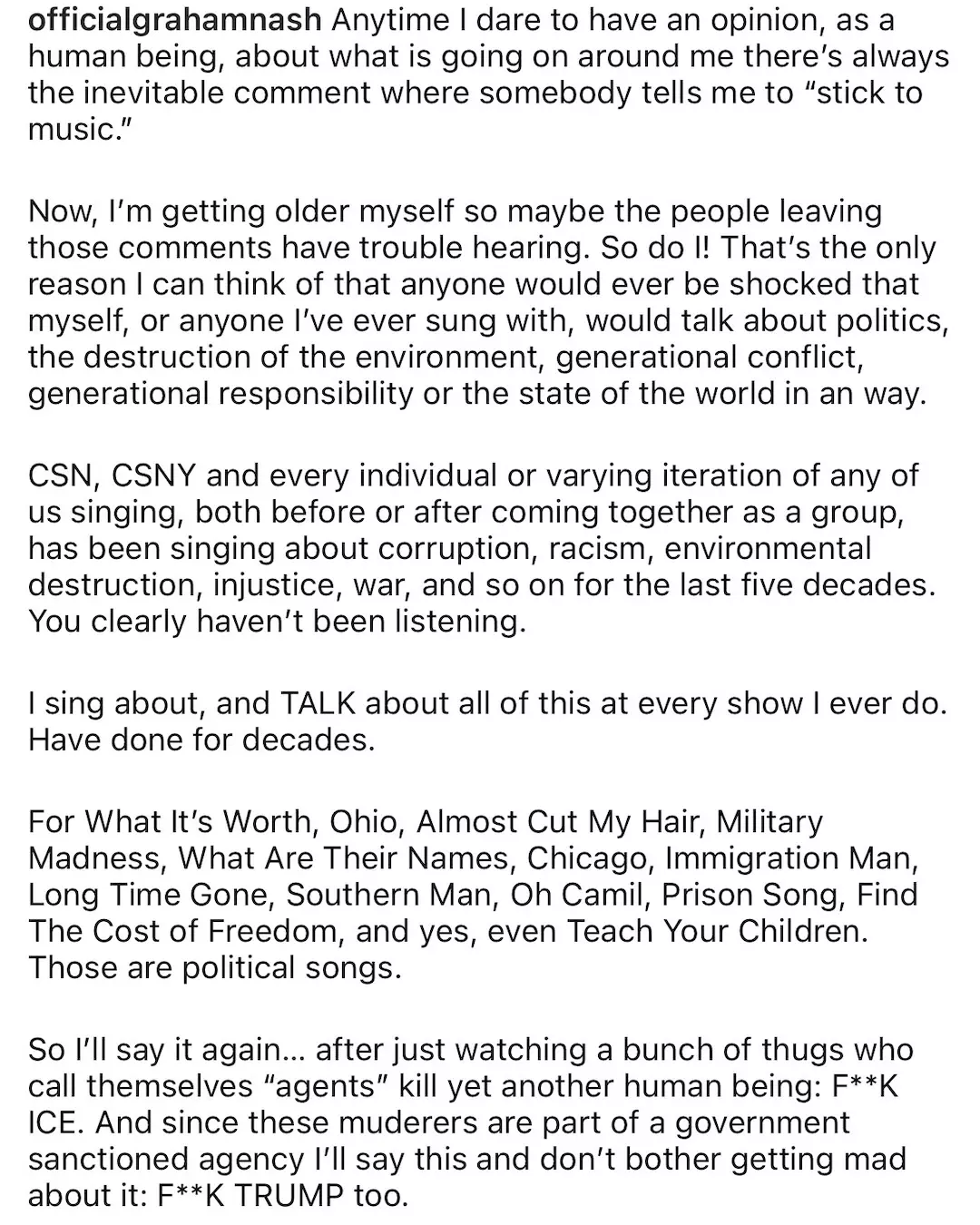
@officialgrahamnash, Instagram
See how rock stars have historically reacted to political unrest in our gallery of 20 protest songs that changed history:
20 Protest Songs That Changed History
Here’s a look back at songs that played a key role in political movements compiled by Stacker.
Gallery Credit: Stacker
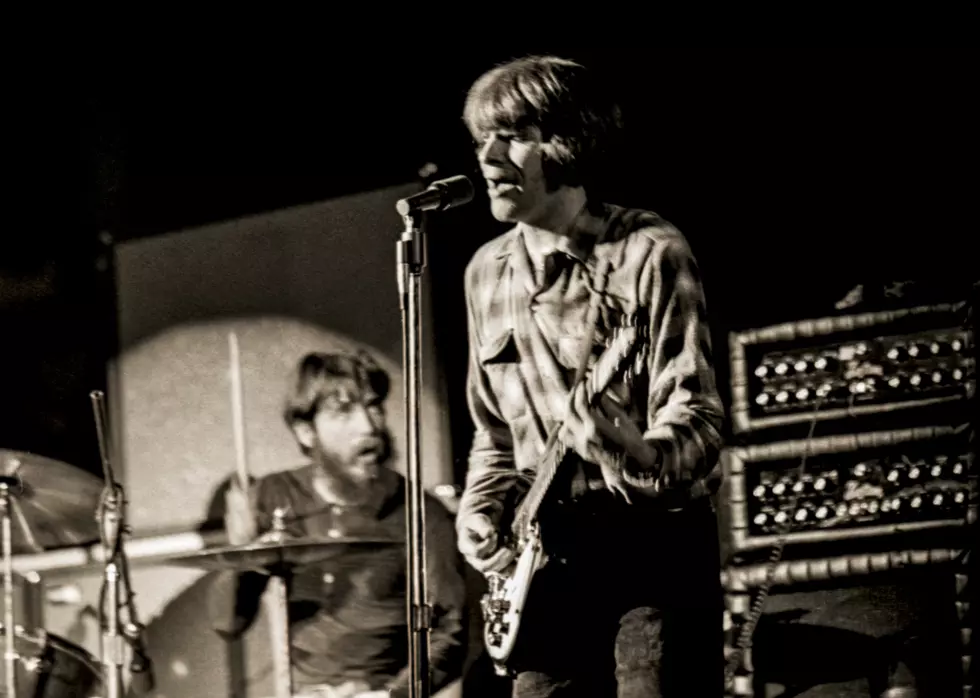
Fortunate Son, by Creedence Clearwater Revival
Jeff Hochberg, Getty Images
‘Fortunate Son,’ by Creedence Clearwater Revival
Known for powerful anti-war, anti-establishment ideals, the John Fogerty-led group Creedence Clearwater Revival gave us such classics as 1969’s “Fortunate Son,” which spoke to the frustrations Fogerty felt over the military draft during the Vietnam War. On top of the anti-war themes, CCR also touched on the apparent favoritism faced by the sons of the politicians and decision-makers who were sending troops to war in the first place.
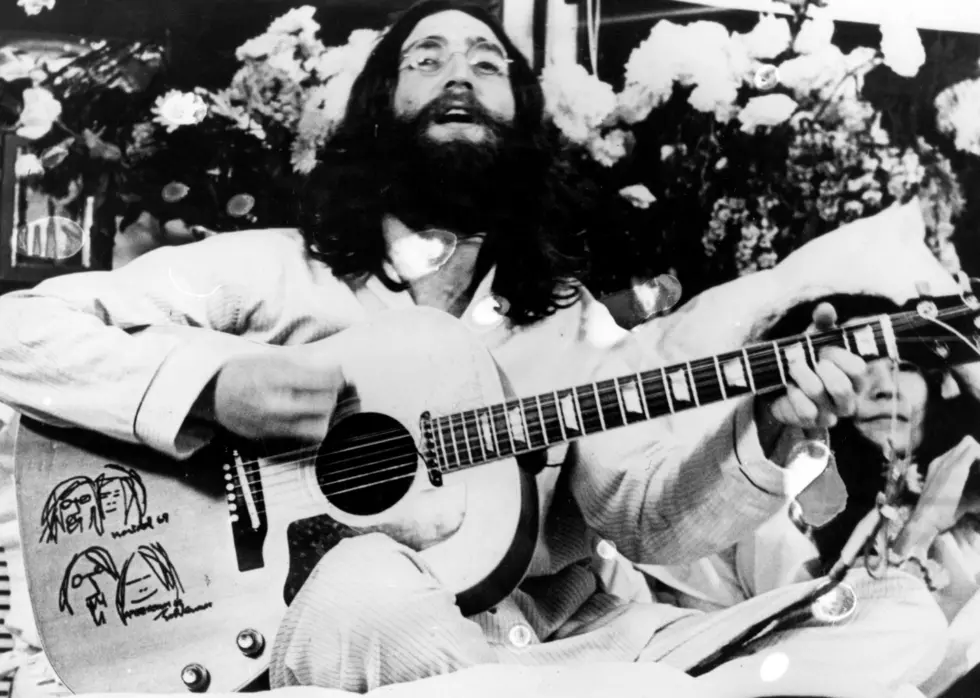
Give Peace a Chance, by the Plastic Ono Band
Keystone Features, Getty Images
‘Give Peace a Chance,’ by the Plastic Ono Band
John Lennon and Yoko Ono caused quite a few controversies throughout their relationship—including various anti-war protests. “Give Peace a Chance” arrived in July 1969 as Lennon’s first single without the other Beatles. The title phrase was first uttered by Lennon during the couple’s infamous “bed-in” protest, where the song took flight.
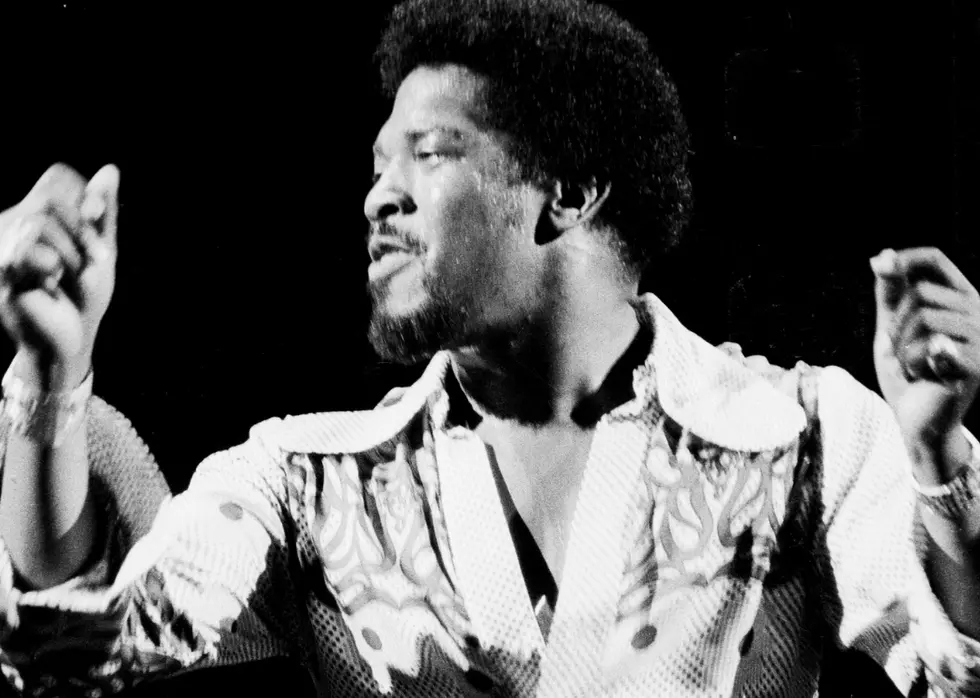
War, by Edwin Starr
Michael Putland, Getty Images
‘War,’ by Edwin Starr
Edwin Starr’s 1970 single “War” was quickly picked up by the anti-war movement. The powerful chorus features a multitude of voices chanting “war” and “what is it good for?” as Starr translates his anger, frustration, and pain into the refrains. Despite being widely popular in the Vietnam era, Starr would lament that his best-known single’s true lyrical meaning got lost. “It was about the neighborhood wars and the racial wars that were going on inside America at the time,” he told The Voice in 2001. “It just happened to coincide with the war in Vietnam.”
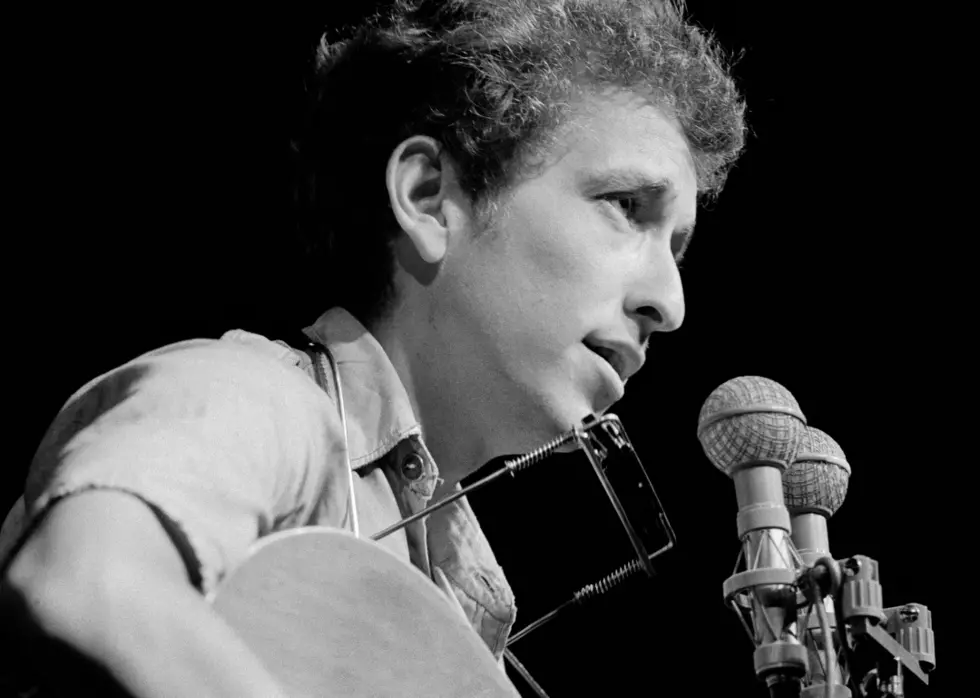
Blowin in the Wind, by Bob Dylan
Rowland Scherman, Getty Images
‘Blowin’ in the Wind,’ by Bob Dylan
Another seminal classic, “Blowin’ in the Wind” was written by Bob Dylan and also performed by Peter, Paul and Mary. Its foundation was pulled from an old spiritual titled “No More Auction Block” and echoed the same messages, but “Blowin’ in the Wind” was quickly adopted by the anti-war movement of the time since Dylan seemed to be alluding to sentiments against war, segregation, and racism.
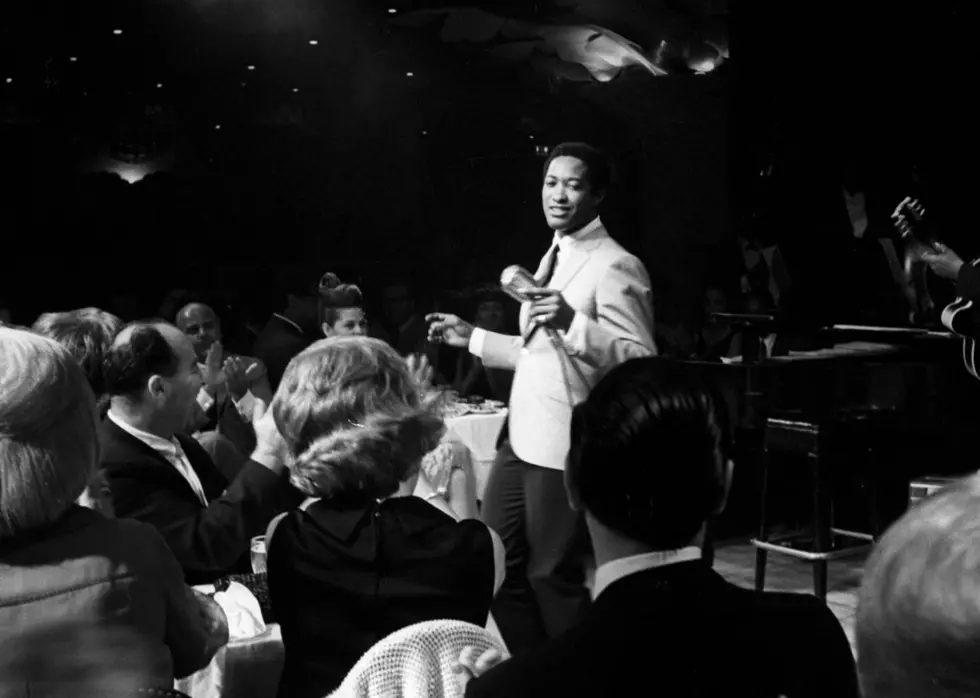
A Change is Gonna Come, by Sam Cooke
Ben Martin, Getty Images
‘A Change is Gonna Come,’ by Sam Cooke
The brief but brilliant career of singer Sam Cooke featured many popular songs, but this 1964 classic is among his most beloved. One of the unofficial anthems of the Civil Rights movement, “A Change is Gonna Come” was also one of the last songs Cooke recorded before he was murdered in a Los Angeles motel. Cooke had been moved to write a protest song that could climb the charts like Dylan’s “Blowin’ in the Wind” and infused it with a sense of urgency that could only come from someone who has lived the problem and continued to press on.

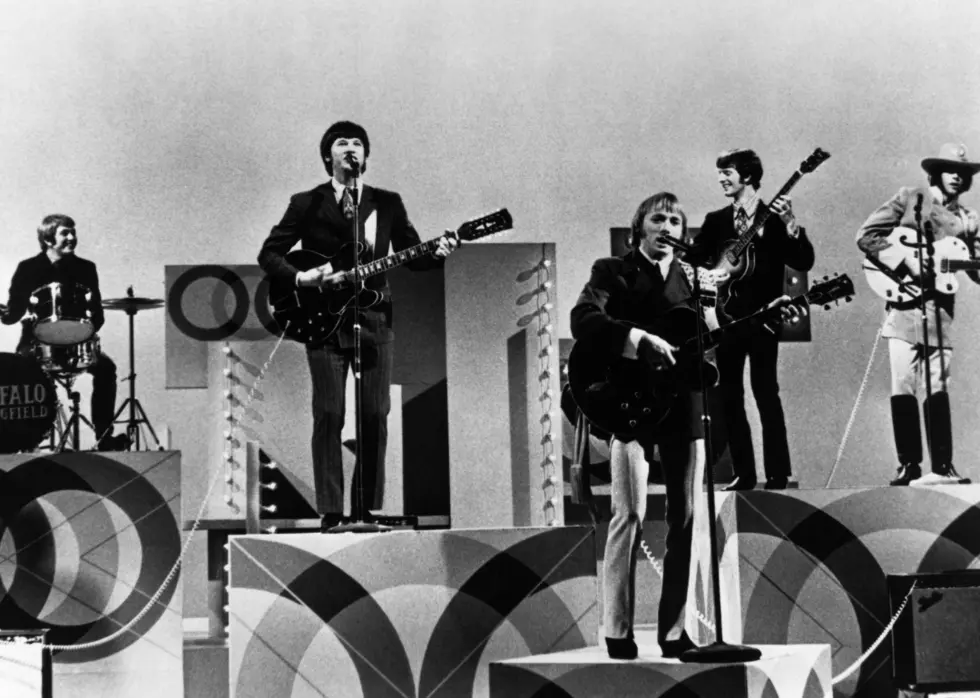
For What Its Worth, by Buffalo Springfield
Charlie Gillett / Redferns, Getty Images
‘For What It’s Worth,’ by Buffalo Springfield
This 1966 Buffalo Springfield single was another prime example of mainstream audiences embracing the messaging of the counterculture. Written by Stephen Stills, who would later form Crosby Stills Nash & Young, “For What It’s Worth” landed in the Top 10 of Billboard’s Hot 100 but boasted a deeply anti-establishment slant. In fact, the lyrics were inspired by the Sunset Strip Curfew Riots of the ’60s.
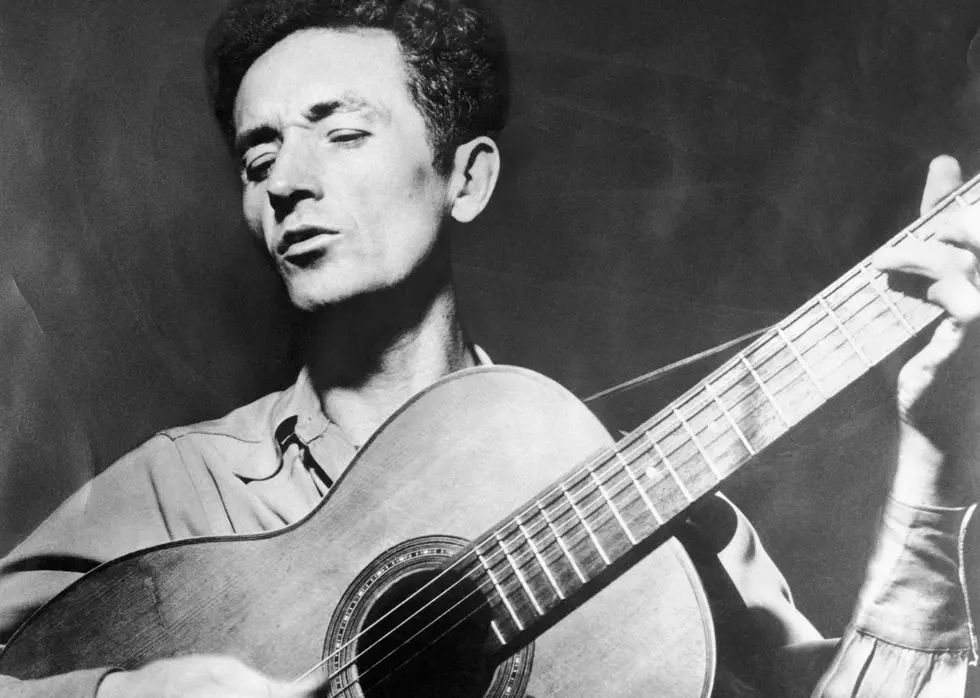
This Land Is Your Land, by Woody Guthrie
Bettmann Archive, Getty Images
‘This Land Is Your Land,’ by Woody Guthrie
“This Land Is Your Land” was written in response to Irving Berlin’s “God Bless America,” which had a message that increasingly annoyed Woody Gurthrie. He decries the overwhelming wealth held by an infinitesimally small portion of society – and the disparity between the wealthy and the rest of the country. Decades later, the song remains relevant: Rage Against the Machine’s Tom Morello memorably sang “This Land Is Your Land” in 2022 as he stood in solidarity with California farmworkers during the push for a pro-collective organizing bill.
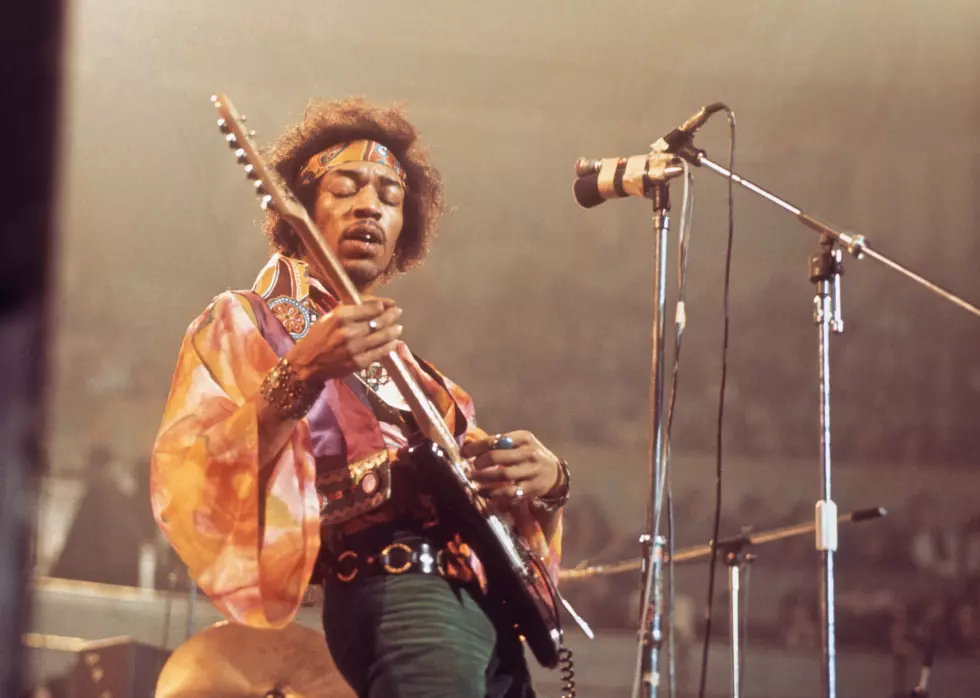
All Along the Watchtower, by the Jimi Hendrix Experience
David Redfern / Redferns, Getty Images
‘All Along the Watchtower,’ by the Jimi Hendrix Experience
Originally written by Bob Dylan, Jimi Hendrix’s powerful interpretation has maintained a heavy rotation on people’s playlists. The anti-establishment messaging, crunchy electric guitar riffs provided by Hendrix, and the powerful contrast to Dylan’s soft-spoken folk version turned this into a hard rock classic. The single peaked at No. 20 on Billboard’s Hot 100 and remained on the charts for nine weeks, proving that mainstream listeners were hungry for something more than saccharine pop groups.
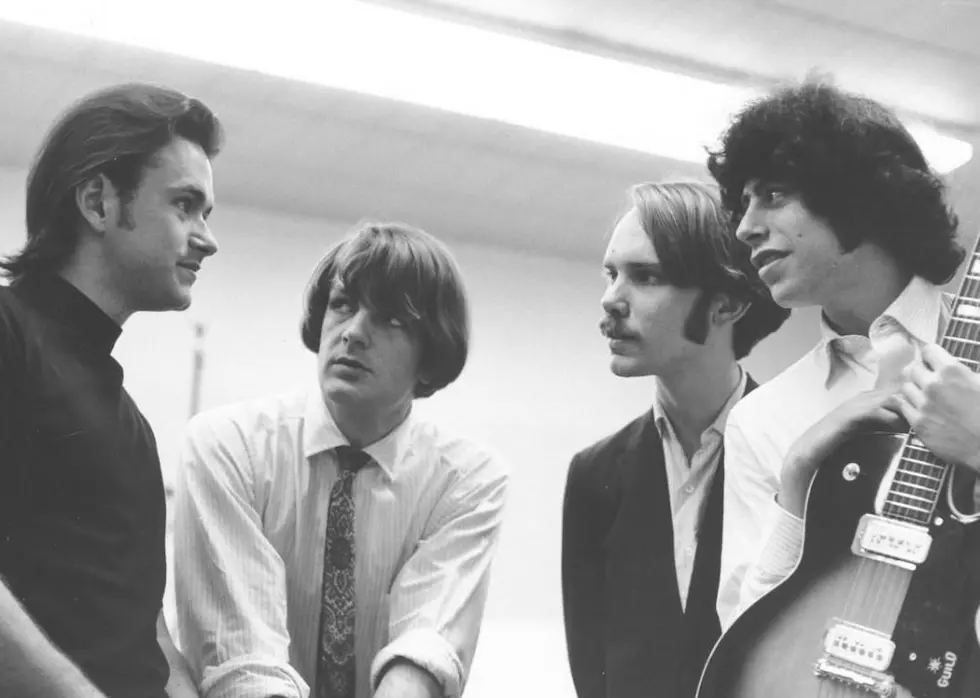
Get Together, by the Youngbloods
Michael Ochs Archives, Getty Images
‘Get Together,’ by the Youngbloods
“Get Together” by The Youngbloods blended folk sensibilities with psychedelia to create a shiny, happy protest song. The lilting lyrics melded with the gently harmonious tones of lead singers Jesse Colin Young and Jerry Corbitt as they called for listeners to solidarity across all manners of divisions. “Get Together” would play a key role in the peace movement at the time and has since been sampled in multiple iterations throughout the decades: Nirvana used the refrain for their song “Territorial Pissings” in the early ’90s.
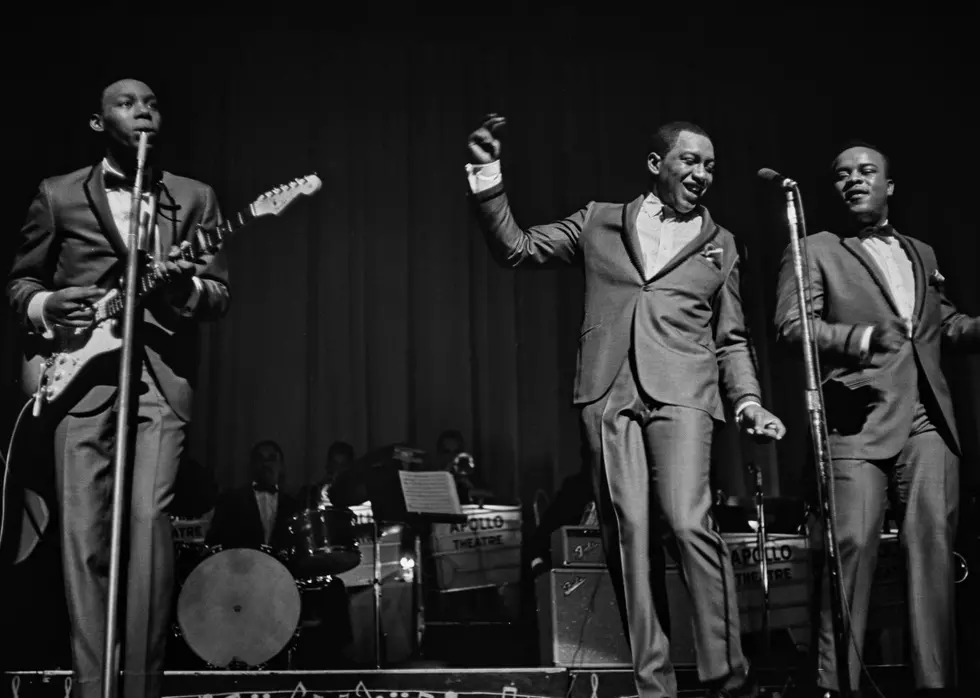
People Get Ready, by the Impressions
Don Paulsen / Michael Ochs Archives, Getty Images
‘People Get Ready,’ by the Impressions
Officially added to the National Registry in 2015, “People Get Ready” was chosen as the unofficial anthem of the Civil Rights movement by none other than Martin Luther King Jr. The Imressions’ 1965 song played on secular themes and had lyrics embedded with meaning. Written by Curtis Mayfield, “People Get Ready” eventually made its way from Chicago church songbooks to No. 3 on the Billboard R&B chart, then No. 14 on the Billboard pop chart, and into history.
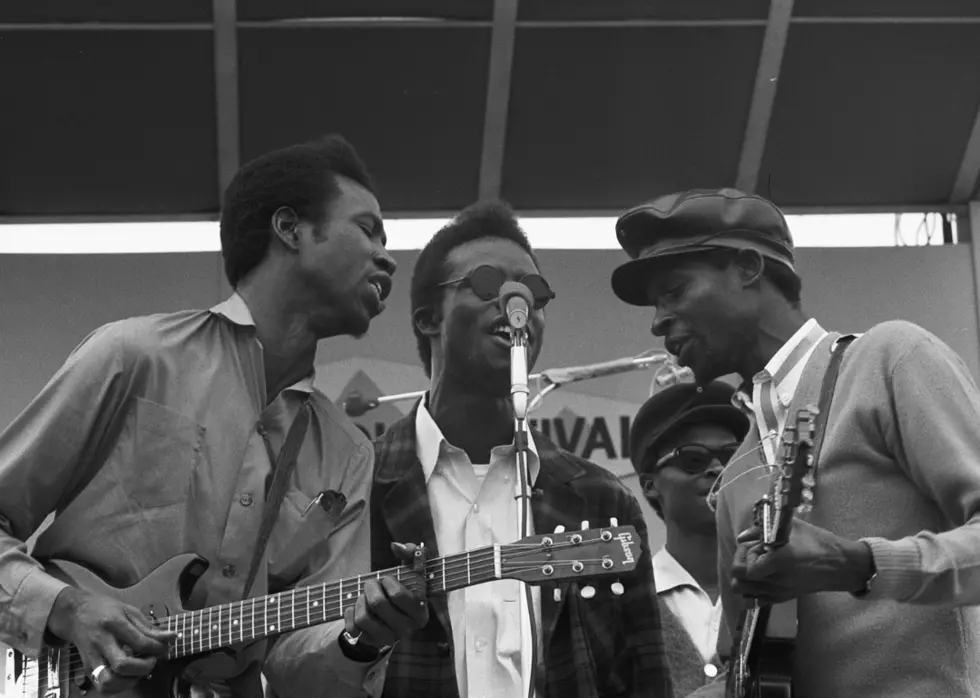
Time Has Come Today, by the Chamber Brothers
John Byrne Cooke Estate, Getty Images
‘Time Has Come Today,’ by the Chamber Brothers
There are few more memorable lines than the repetitive “TIME!” offered throughout this 1967 Chamber Brothers classic. The lyrics from “Time Has Come Today” were almost cleverly ambiguous, but its constant call to action helped the single continue to resonate with various counterculture movements over the years.

Respect, by Aretha Franklin
Jack Robinson, Getty Images
‘Respect,’ by Aretha Franklin
The late Aretha Franklin’s music crossed generations, with hits spanning decades. Yet few made as much of an impact as her first No. 1 hit, “Respect.” The song managed to play dual roles in both the feminist and the Civil Rights movements with a lasting message of empowerment. This demand for validation boasted a universality that allowed “Respect” to shape around a variety of causes.

San Francisco (Be Sure to Wear Flowers in Your Hair), by Scott McKenzie
Bettmann Archive, Getty Images
‘San Francisco (Be Sure to Wear Flowers in Your Hair),’ by Scott McKenzie
Written by John Phillips from the ’60s group Mamas & the Papas, this Scott McKenzie-sung hit was beloved for capturing the spirit of the counterculture – especially in Northern California. But “San Francisco (Be Sure to Wear Flowers in Your Hair)” also found its way into multiple movie soundtracks set during the ’60s and ’70s, including the box office smash and Oscar-winning Forrest Gump. This song was later updated by San Francisco rapper San Quinn, who shifted the original meaning to discuss the modern era of gentrification in the city.
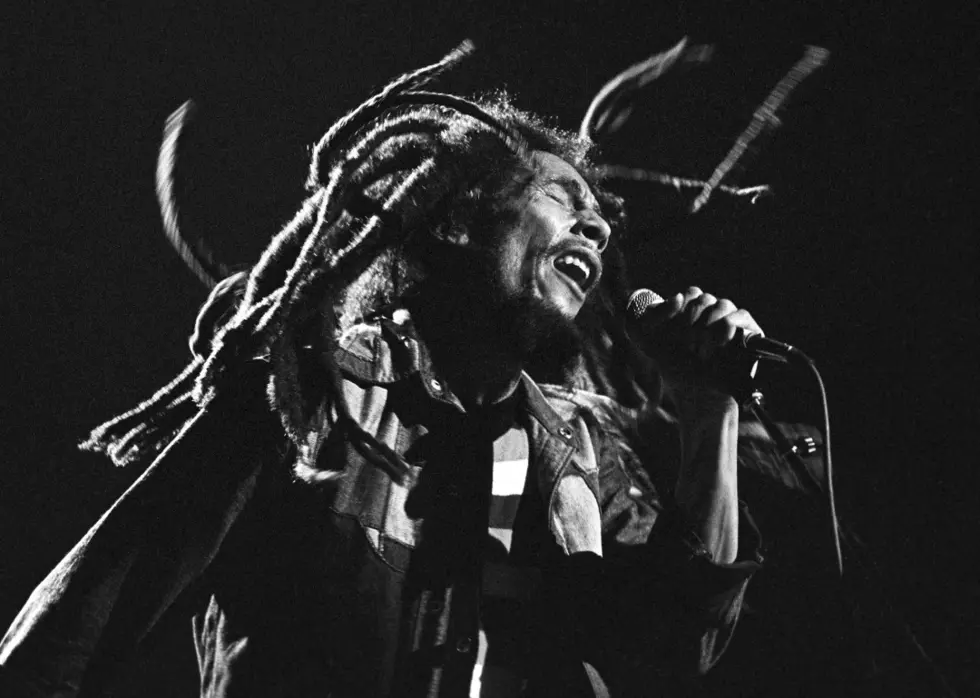
Get Up, Stand Up, by Bob Marley and the Wailers
Kirk West, Getty Images
‘Get Up, Stand Up,’ by Bob Marley and the Wailers
Bob Marley wrote “Get Up, Stand Up” alongside Peter Tosh as a call to action in the fight against oppression. Inspired by Marley’s own life experiences in Jamaica, as well as his travels to other countries, “Get Up, Stand Up” offered a somewhat militant message that took hold of the hearts and minds of counterrevolutionaries around the world. It’s still considered a relevant political anthem to this day.
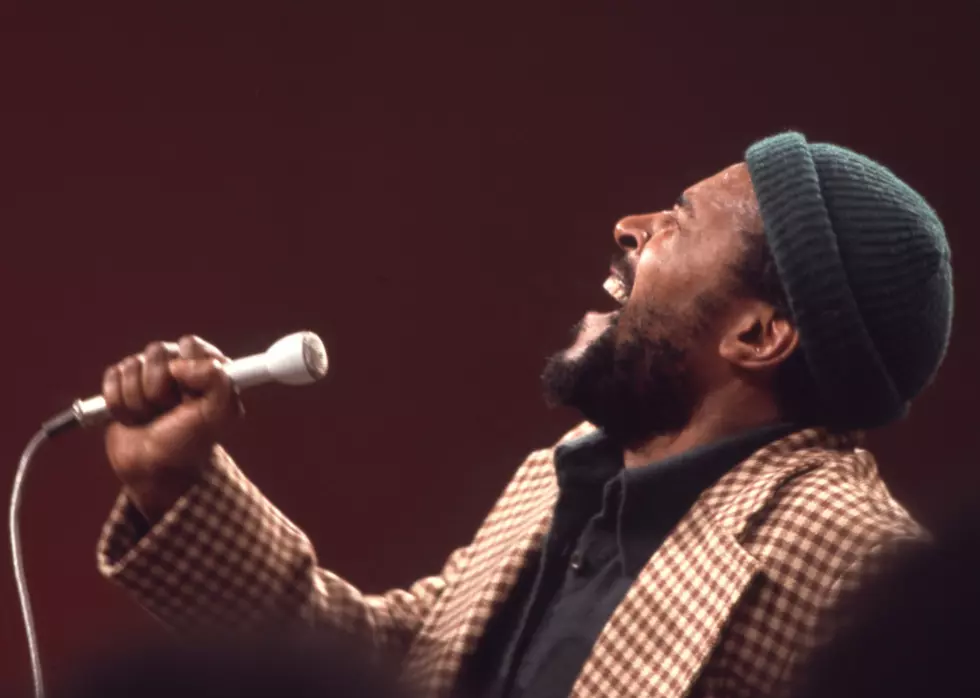
Inner City Blues, by Marvin Gaye
Soul Train via Getty Images
‘Inner City Blues,’ by Marvin Gaye
Another shining example of a song that has continued to carry weight, “Inner City Blues” has been covered and sampled by Gil Scott-Heron and A Tribe Called Quest, among more than 100 others. Marvin Gaye’s thought-provoking lyrics speak to the idea that freedom is a constant pursuit, while also pointing to the incredible spending our government directs at things like the space program while poorer neighborhoods continue to struggle. The song suddenly felt all too relevant again as residents in Flint, Michigan, residents grappled with a water crisis.

We Shall Overcome, by Pete Seeger
Brian Shuel / Redferns, Getty Images
‘We Shall Overcome,’ by Pete Seeger
“We Shall Overcome” was sung quite often during the Civil Rights movement, but it wasn’t the first time that Pete Seeger’s words were found on the lips of protesters. Its first appearance came in the ’40s during the labor strike against American Tobacco in South Carolina, when workers protested in an attempt to achieve higher pay than what they were offered.
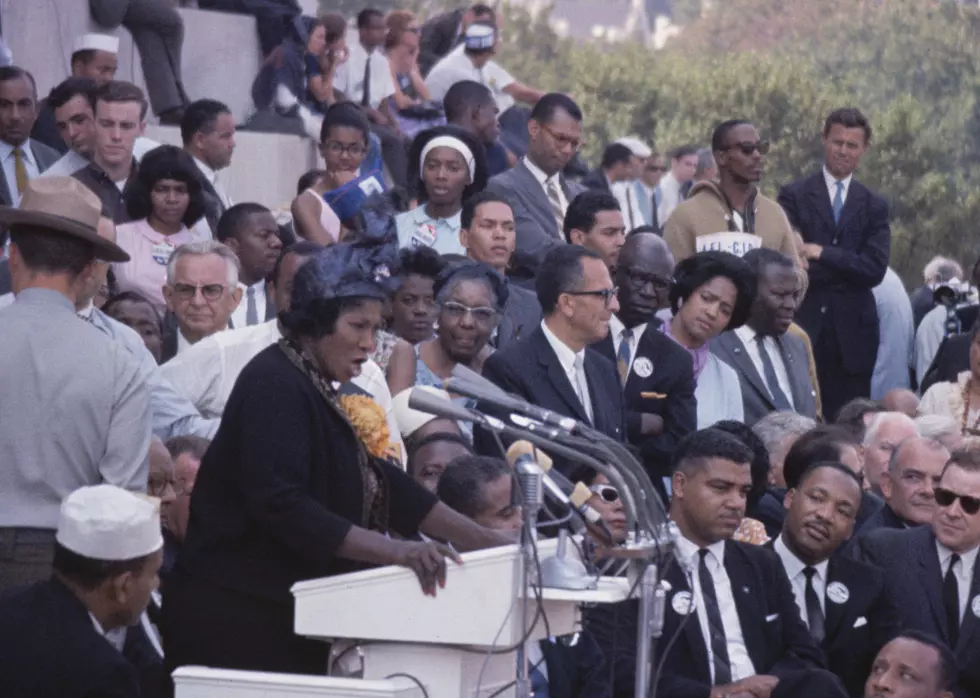
How I Got Over, by Mahalia Jackson
Bob Parent, Getty Images
‘How I Got Over,’ by Mahalia Jackson
Few artists had as big of an impact on the Civil Rights movement as the powerful New Orleans gospel singer Mahalia Jackson. She appeared at a seminal moment during 1963’s March on Washington to sing “How I Got Over,” then set the stage for Martin Luther King Jr.’s most famous speech. Jackson’s repeated call to King – “Tell ’em about the dream, Martin” – inspired the Civil Rights leader to cast aside his notes and speak extemporaneously. His subsequent “I have a dream …” speech would reverberate through the decades, while Jackson’s song and the moment became inextricably linked.
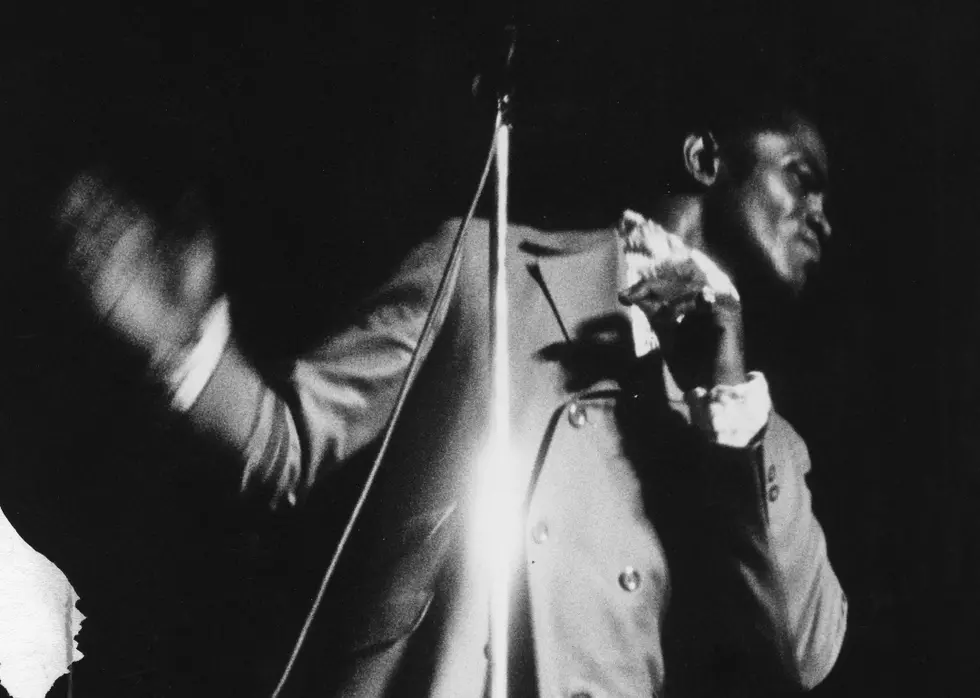
Say It Loud – Im Black and Im Proud, by James Brown
Gilbert E. Friedberg / The Boston Globe via Getty Images
‘Say It Loud – I’m Black and I’m Proud,’ by James Brown
Few songs have captured the attention of both the Billboard charts and a mass movement like “Say It Loud – I’m Black and I’m Proud.” Released four months after King’s assassination, this 1968 James Brown hit seemed to take the anguish and anger that many were feeling and somehow transpose it into a powerful expression of pride. Brown climbed to No. 1 on the R&B charts, remaining there for six weeks, while also peaking at No. 10 on the Hot 100.
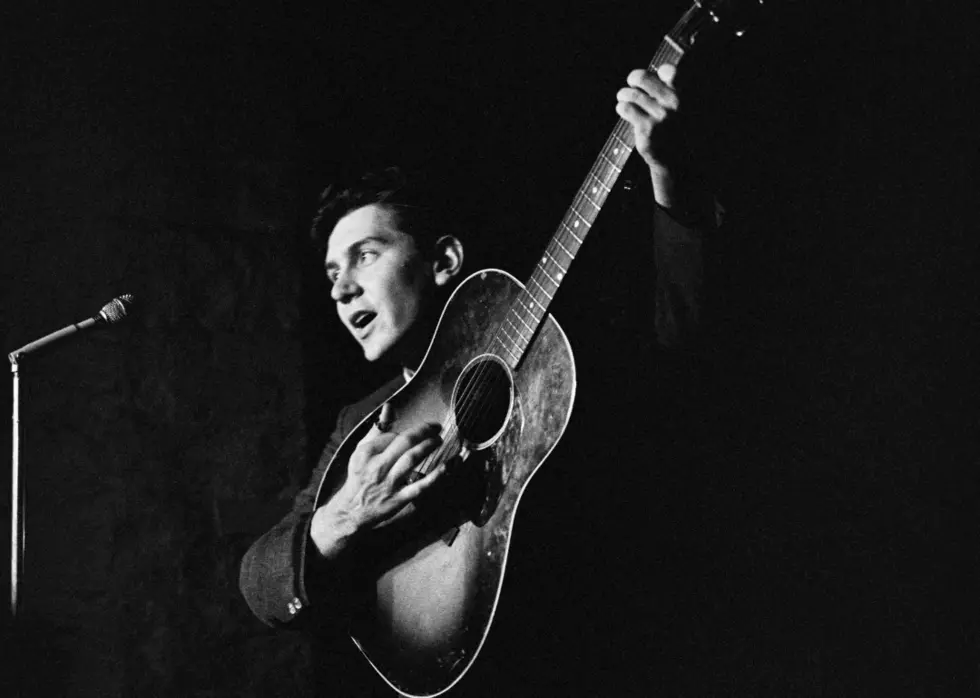
I Aint Marching Anymore, by Phil Ochs
Don Paulsen / Michael Ochs Archives, Getty Images
‘I Ain’t Marching Anymore,’ by Phil Ochs
Protest singer Phil Ochs was well known for his consistent critique of the military-industrial complex. This 1965 single seemed to strike a particular chord with listeners, with a stark anti-war stance punctuated at the end of every verse with the title line. “I Ain’t Marching Anymore” offered a repeated mantra of defiance as Ochs declared that he would no longer be a pawn in the political game of the Vietnam War – or any other conflict. “I Ain’t Marching Anymore” would become deeply rooted in anti-war protests as a song, a chant, and a declaration.

The Revolution Will Not Be Televised, by Gil Scott-Heron
David Redfern / Redferns, Getty Images
‘The Revolution Will Not Be Televised,’ by Gil Scott-Heron
Call it a phrase, a mantra, or a slogan – but Gil Scott-Heron’s jazz poetry fusion song “The Revolution Will Not Be Televised” elevated an idea that would become one of the most powerful messages of the counterrevolution. The late writer, musician and activist’s words still carry weight in modern-day political movements. Added to the National Registry of the Library of Congress in 2005, the song acts as a sharp reminder that nothing will change if you sit as a passive observer.
Story editing by Carren Jao. Copy editing by Tim Bruns.
Read More: Rockers React to ‘Insane’ Border Patrol Killing of Alex Pretti | https://ultimateclassicrock.com/rockers-react-ice-shooting/?fbclid=IwY2xjawPlli5leHRuA2FlbQIxMABicmlkETFkMko5bEpoa3duSmhhYjhKc3J0YwZhcHBfaWQQMjIyMDM5MTc4ODIwMDg5MgABHm3wjjqV5ezlp7M0H9FuqxJfRujdREXcQF1r6qDAfs-xT_8Bm__KP79kMxtR_aem_T3P3i74HSezjovUSjalKfA&utm_source=tsmclip&utm_medium=referral
News
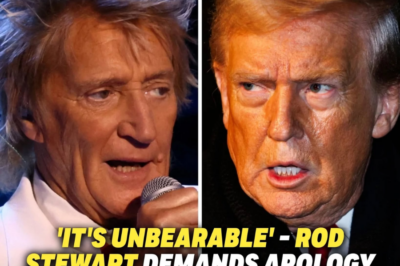
Rod Stewart Slams ‘Draft Dodger’ Trump for Insulting NATO Troops
Rod Stewart called on President Donald Trump to apologize for his disparaging remarks about NATO troops, exhorting British Prime Minister Keir Starmer and Leader…
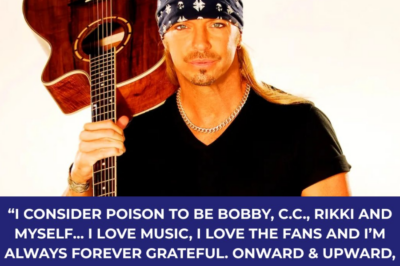
Bret Michaels Reacts After Poison Drummer Claims 40th Anniversary Tour Wasn’t Happening Due to Frontman’s Financial Demands
Michaels broke his silence in a Facebook post on Jan. 21 after Rikki Rockett alleged that the bandleader wanted $6…
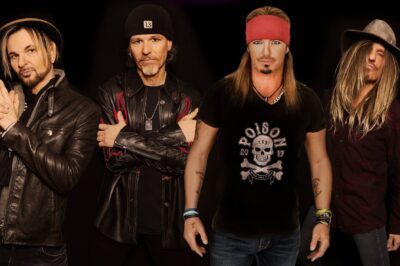
BRET MICHAELS Breaks Silence On POISON Tour Rift After RIKKI ROCKETT’s Pay Dispute Claims
BRET MICHAELS Breaks Silence On POISON Tour Rift After RIKKI ROCKETT’s Pay Dispute Claims As rumors swirl over a stalled…
Listen to Def Leppard’s hard rocking new song ‘Rejoice’
“We love it. It’s hard rock for us. It’s got a bit more of an ‘oomph’ than stuff we’ve been…
“Besides her huge breasts, what else does she have? I can wear a headscarf and still attract attention. That’s the power of the eye.” Bella Ramsey criticized Sydney Sweeney for relying on her looks to get roles, claiming Sydney’s acting was SOULLESS.
A remark attributed to Bella Ramsey about beauty, attention, and acting standards recently circulated online, quickly igniting debate across entertainment…
Truth behind the viral claim that Will Smith is returning to the Oscars
Truth behind the viral claim that Will Smith is returning to the Oscars Rumors claiming that Will Smith’s Oscars ban…
End of content
No more pages to load