
The holiday season is officially underway, and the proof is in the charts. Mariah Carey’s “All I Want for Christmas Is You” has made one of the earliest re-entries for a holiday song on the Billboard Hot 100, showing that fans are getting into the festive spirit sooner than ever.
During the week of October 31 to November 6, the song drew 9.9 million official streams, a 252% increase, and 942,000 radio airplay audience impressions, according to Luminate. U.S. sales also rose 302%, totaling 1,000 copies.
On October 31, Carey once again signaled that the holiday season had begun, teasing her “defrosting” for Christmas on TikTok.
“All I Want for Christmas Is You” didn’t reach the Hot 100’s top 10 until December 2017, more than 20 years after it was first released. Two years later, in December 2019, it finally claimed the No. 1 spot.
Carey’s 19th solo chart-topper has now spent 18 weeks at the summit, marking the third-longest run in Hot 100 history. Billboard also lists it as the No. 1 song on its Greatest of All Time Holiday 100 Songs chart.
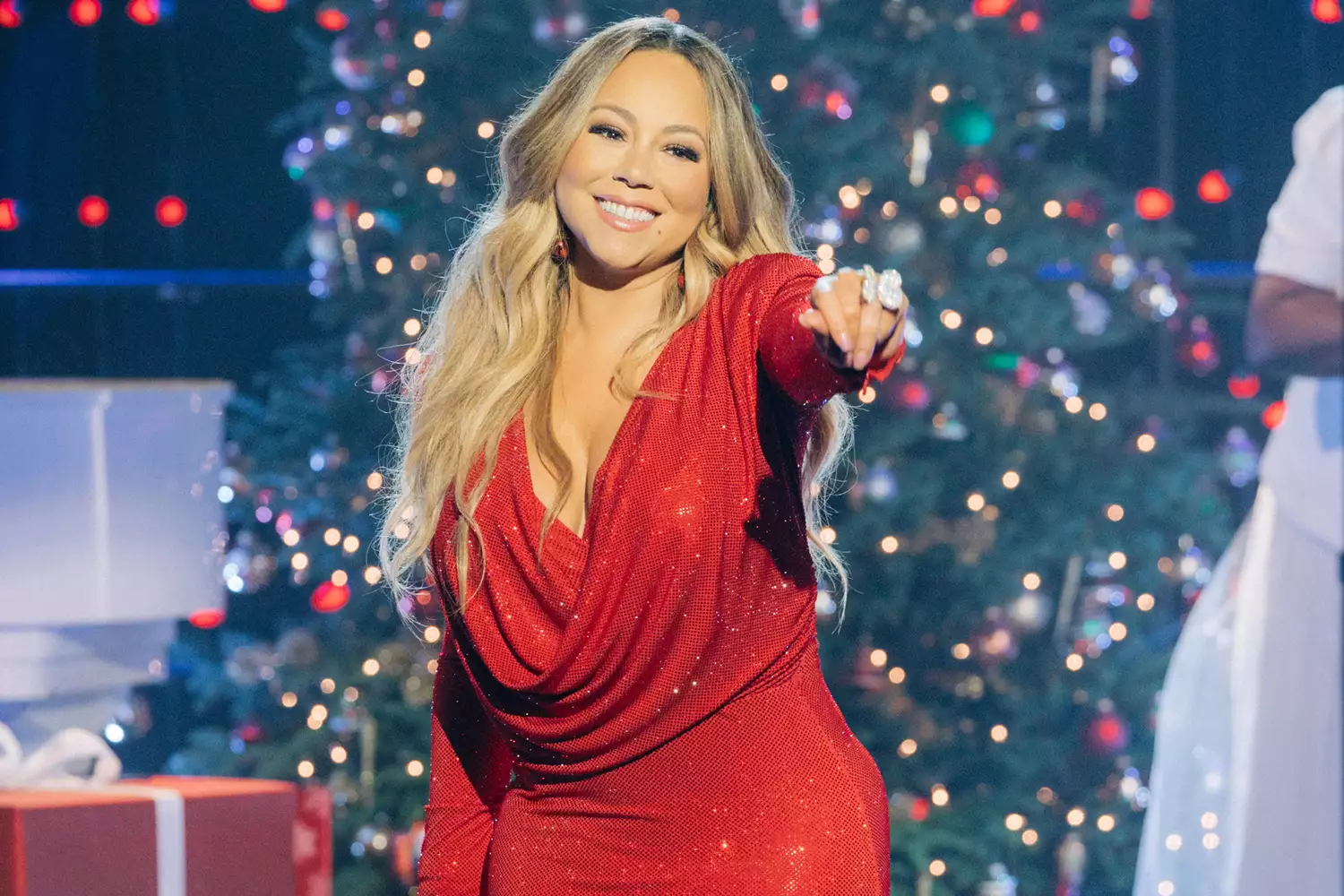
“When I wrote [it], I had absolutely no idea the impact the song would eventually have worldwide,” Carey said in 2021. “I’m so full of gratitude that so many people enjoy it with me every year.”
Following Carey’s track, Wham!’s “Last Christmas” also re-entered the Hot 100 with 8.2 million streams, up 217%. Originally released in 1984, the song reached a new high of No. 3 on the Hot 100 last holiday season for Andrew Ridgeley and the late George Michael.
When it comes to earnings, Billboard estimates that Carey may have made between $2.7 million and $3.3 million in 2022 from downloads and on-demand streaming alone, not counting other potentially lucrative sources like Christmas TV specials. Exact numbers are difficult to verify, given the private nature of contracts between Carey, her label and song publishers.
“The song is a money machine,” said George Howard, a professor at Berklee College of Music, to CNBC. “It’s a real phenomenon.”
Howard, who also advises on music copyright valuation, estimates that the hit generates $2 million to $4 million in annual gross revenue.
News

Kid Rock Insults ‘Ugly Broke LIBERAL Women’
MAGA musician Kid Rock went on a gross rant on Fox News, blaming “ugly a–” liberal women for the falling…

Steven Tyler, Slash, and Train Perform “Dream On” at the Howard Stern Birthday Bash
Isn’t it wild when there’s an event where an aging rocker or group of rockers come out and play with…

Stephen Colbert Reveals Date of Final ‘Late Show’ Episode
Stephen Colbert revealed that the curtain will fall on “The Late Show” on Thursday, May 21, bringing an end to a CBS franchise…

Former TURNSTILE Guitarist BRADY EBERT Accuses Band Of “Pandering” & Misusing Charity Funds
Former TURNSTILE Guitarist BRADY EBERT Accuses Band Of “Pandering” & Misusing Charity Funds Stefan Bollmann, Attribution, via Wikimedia Commons Former Turnstile guitarist Brady…
Alice Cooper’s 2026 Spring Tour
Alice Cooper has announced a headlining tour for this spring. The nearly 20 newly announced dates begin in mid-April and run…

REFLECTIONS Loses Two Members Due To “ICE Apologist” Vocalist
The progressive metalcore group Reflections just lost both their bassist and their guitarist in one fell swoop. The now ex-bassist Francis Xayana and now ex-guitarist Patrick “Patty” Somoulay individually…
End of content
No more pages to load