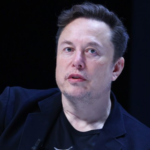
Elon Musk proposes deploying a network of solar-powered Artificial Intelligence (AI) satellites in orbit to regulate the Earth’s energy balance.
Billionaire Elon Musk recently stirred up the online community again when he shared on the X platform (formerly Twitter) a bold idea: deploying a network of solar-powered Artificial Intelligence (AI) satellites to regulate the amount of radiation reaching the Earth, thereby helping to control climate change.
 Elon Musk wants to deploy a network of solar-powered AI satellites to regulate the amount of radiation hitting Earth
According to Musk, this satellite network would operate in orbit and make subtle adjustments to the amount of sunlight reaching the Earth’s surface to maintain a global energy balance. In essence, this is a form of large-scale climate intervention (geoengineering) – a field that has been controversial because it has both huge potential opportunities and many ecological and political risks.
Musk’s post quickly attracted more than 26 million views. He said that thousands of solar-powered AI satellites could be put into orbit to monitor and fine-tune the flow of solar energy to Earth. Instead of completely blocking the light, these satellites would reflect or absorb a small portion of the sunlight, thereby helping to stabilize the planet’s temperature.
“Even very small adjustments can prevent global warming or global cooling,” Musk asserted. “The Earth has had many ice ages, and that proves that even small changes in solar power can have a big impact.”
 The idea of “sun shading” has caused a lot of controversy (Source: Internet)
The idea has received mixed reactions. Some supporters believe that, if coordinated by a global AI protocol, Musk’s satellite system could help maintain a balance between different hemispheres and climatic seasons, making solar power regulation an effective tool against climate change, similar to the way humanity is developing renewable energy technology.
However, many experts and social media users are cautious. User Ram ben Ze’ev warned: “While technically possible, this plan requires perfect global coordination. Even a 1–2% deviation in sunlight could disrupt ecosystems, disrupt photosynthesis and cause serious changes in weather patterns.”
These concerns are not without basis. Because Musk’s proposal comes in the context of a rapidly developing space solar energy technology. Most satellites today use photovoltaic (PV) panels as the main energy source to operate the control system, communication and data processing.
In particular, there is now another field that is even more advanced: Space-Based Solar Power (SBSP). SBSP developers are looking to collect solar energy in orbit and transmit it to receiving stations on Earth via wireless power transmission, using microwaves or lasers. Commercially, this technology can provide a continuous, weather-unaffected renewable energy source worldwide.
 Elon Musk’s proposal is revolutionary, but also risky (Source: Internet)
Therefore, although Musk’s idea may not be applied immediately, it reflects a clear trend in the technology world: using AI and renewable energy to intervene in the climate environment in a controlled manner.
News

Amy Winehouse’s tearful father Mitch wraps a comforting arm around her mother Janis as they visit her grave on the 13th anniversary of her death
Amy Winehouse‘s emotional parents Mitch and Janis were seen paying their respects to their late daughter on the 13th anniversary…

HBO CEO Casey Bloys recently announced preparations for season 4 of The Last of Us. However, it’s worth noting that actress Bella Ramsey will be removed from the role of Ellie in season 4, while season 3 will focus on the character of Abby. The reason was revealed by the director shortly afterward.
HBO CEO Casey Bloys recently announced preparations for The Last of Us Season 4, signaling the network’s commitment to extending the acclaimed…

Henry Cavill officially revealed that the storyline of the upcoming Highlander (2027) will be very different from the previous installments, and Connor MacLeod’s story will be even more exciting.
Henry Cavill revealed in a recent interview that the storyline of the upcoming Highlander reboot, slated for theaters in 2027, will be…

Henry Cavill debuts first look as Connor MacLeod in the new Highlander movie
Henry Cavill has shared the first images of himself in the Highlander reboot as the immortal warrior Connor MacLeod! “The…

BREAKING: Congratulations to Henry Cavill for being voted the most handsome man in the world by TC Candler after years of ranking fourth and second. He also shared that he doesn’t care much about these ranking awards, but because it’s a show of support and affection from his fans around the world, he’s very happy about it.
Congratulations to Henry Cavill for being voted the most handsome man in the world by TC Candler after years of ranking fourth…

“At Least I Can Identify What I Want. You Can’t Even Identify Your Own Gender.” Sydney Sweeney Recently Publicly Criticized Bella Ramsey After The Latter Accused Her Of “having Only Breasts And An Empty Brain, And Having To Trade Her Body For Roles.” She Also Released An Audio Recording That Sent Chills Down Anyone’s Spine.
According to widely circulated accounts, the exchange began after Bella Ramsey criticized Sydney Sweeney’s work and public image. The comments…
End of content
No more pages to load