In a surprising alignment of voices from the worlds of technology and literature, Elon Musk and JK Rowling have reignited their shared stance on gender eligibility in women’s sports, zeroing in on Algerian boxer Imane Khelif.
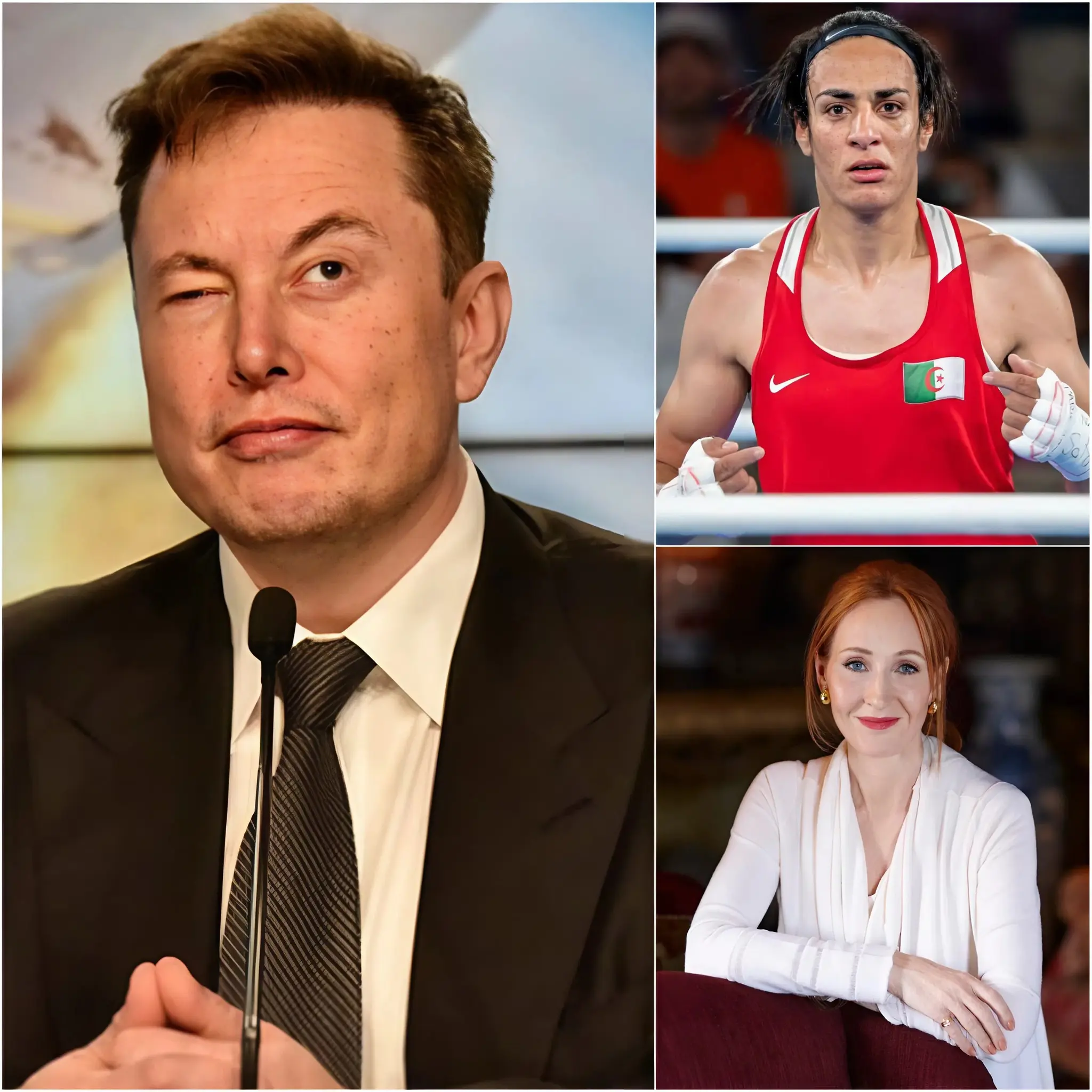
The duo’s past criticisms of Khelif, which drew legal backlash during the 2024 Paris Olympics, now intersect with fresh developments: reports that the International Olympic Committee (IOC) is poised to implement a blanket ban on transgender athletes for the 2028 Los Angeles Games.
While Khelif is not transgender—having been assigned female at birth and raised as such—the policy’s implications for athletes with differences in sex development (DSD), a category into which Khelif reportedly falls, have thrust her back into the spotlight.
Musk’s recent sarcastic endorsement of the ban on X (formerly Twitter) has amplified the debate, echoing Rowling’s long-held views that such inclusions undermine fairness for “real women.”
The saga began in earnest at the Paris Olympics, where Khelif clinched gold in the women’s 66kg welterweight division. Her path was marred by controversy after Italian opponent Angela Carini withdrew just 46 seconds into their bout, citing intense pain.
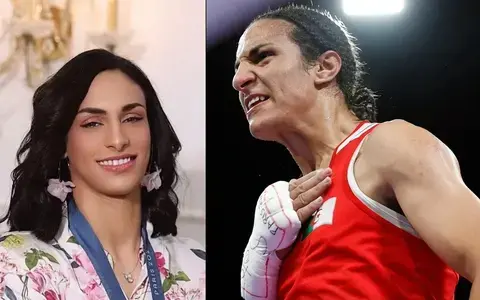
This sparked a firestorm of online scrutiny, fueled by resurfaced claims from the International Boxing Association (IBA)—expelled by the IOC for governance issues—that Khelif and Taiwan’s Lin Yu-ting had failed unspecified gender eligibility tests in 2023, allegedly due to XY chromosomes and elevated testosterone.
Despite the IOC clearing Khelif to compete based on passport gender and medical compliance, the narrative exploded on social media.
Enter Musk and Rowling. On August 1, 2024, Rowling posted on X: “Poor Carini.
An Italian woman who fought for her country and her dreams, only to have them crushed by a man in a wig and skirt.” She later added, referring to Khelif, “He’s enjoying the distress of a woman he’s just punched in the head.” Musk, the platform’s owner, amplified the outrage by reposting swimmer Riley Gaines’ claim that Khelif was a “transgender woman,” adding his own quip: “Absolutely insane.” These statements contributed to a torrent of “aggravated cyber-harassment,” as described by Khelif’s lawyer, Nabil Boudi.
On August 9, 2024—just after Khelif’s gold medal win—she filed a criminal complaint in Paris, explicitly naming Musk and Rowling among others, including former U.S. President Donald Trump. The case, probing misogynist, racist, and sexist abuse, remains ongoing, with French prosecutors investigating but no charges filed as of December 2025.
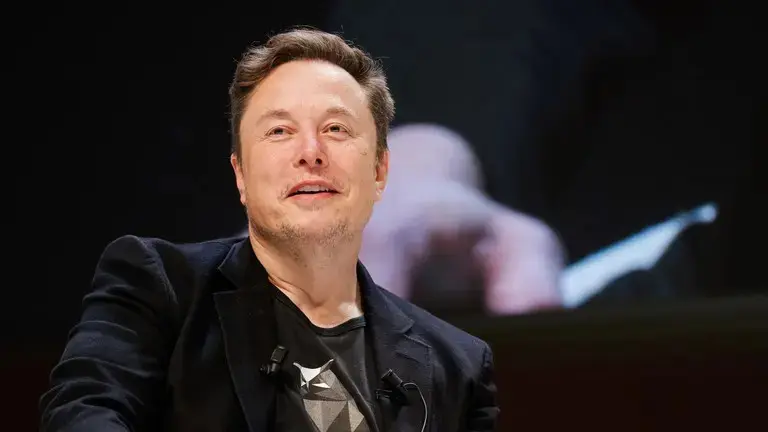
Khelif, now 27, has steadfastly defended her identity. “I am fully female. I was born a woman, raised as a woman, and I will always be a woman,” she declared post-victory, emphasizing the IOC’s support. Yet, the harassment took a toll.
In a rare interview with Algerian outlet El Birad in August 2024, she admitted, “It hurt me a lot… The scenario was very scary.” Her legal battle underscores a broader clash: personal vindication versus public discourse on biology in sport.
Fast-forward to November 2025, and the conversation has evolved with seismic policy shifts.
On November 10, the Daily Mail reported that under new IOC President Kirsty Coventry—elected earlier this year on a platform prioritizing female category integrity—the committee is “strongly expected” to ban all transgender women from women’s events at LA 2028.
This “direction of travel,” as sources describe it, stems from a scientific review presented by IOC medical director Dr. Jane Thornton, highlighting “advantages to being born male” that hormone suppression cannot fully mitigate.
The ban, potentially effective by mid-2026 after six to twelve months of approval, would bar cases like New Zealand weightlifter Laurel Hubbard’s 2021 Tokyo appearance. It aligns with U.S. President Trump’s February 2025 executive order prohibiting transgender women in federally funded women’s sports, avoiding diplomatic friction for the LA-hosted Games.
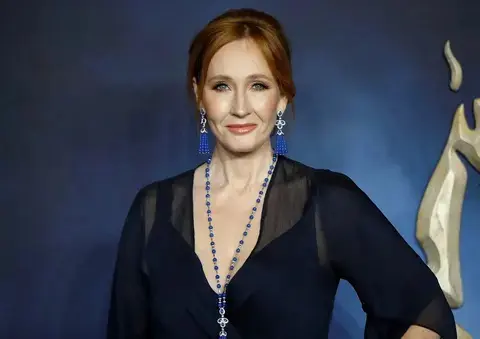
But the policy’s gray area on DSD athletes like Khelif has sparked fury. DSD refers to conditions where individuals have atypical sex characteristics, such as XY chromosomes in those phenotypically female. Khelif, disqualified by the IBA but cleared by the IOC, faces an uncertain future.
World Boxing—the provisional Olympic boxing authority for 2028—banned her from women’s events in May 2025 pending genetic screening, a rule she is challenging at the Court of Arbitration for Sport (CAS). Her appeal hearing, delayed multiple times, won’t conclude before the September 2025 World Championships in Liverpool, sidelining her further.
Khelif, undeterred, teased “surprises” in a November 13 Marca interview: “I’m focused on a second gold in 2028… I’ve got greater mental and physical balance now.” Speculation swirls around potential weight class shifts or medical disclosures to comply.
Musk’s response to the ban news was vintage irony. Reposting the Daily Mail article on November 10 with its headline—”Olympics set to ban ALL transgender athletes from female events after ‘finding scientific evidence of advantages to being born male’”—he quipped, “Mind-blowing discovery  ,” garnering over 577,000 likes.
The post, viewed 45 million times, subtly nods to his prior Khelif comments while mocking the IOC’s delayed “discovery.” Rowling, though silent on X recently about Khelif, has consistently advocated for biology-based categories.
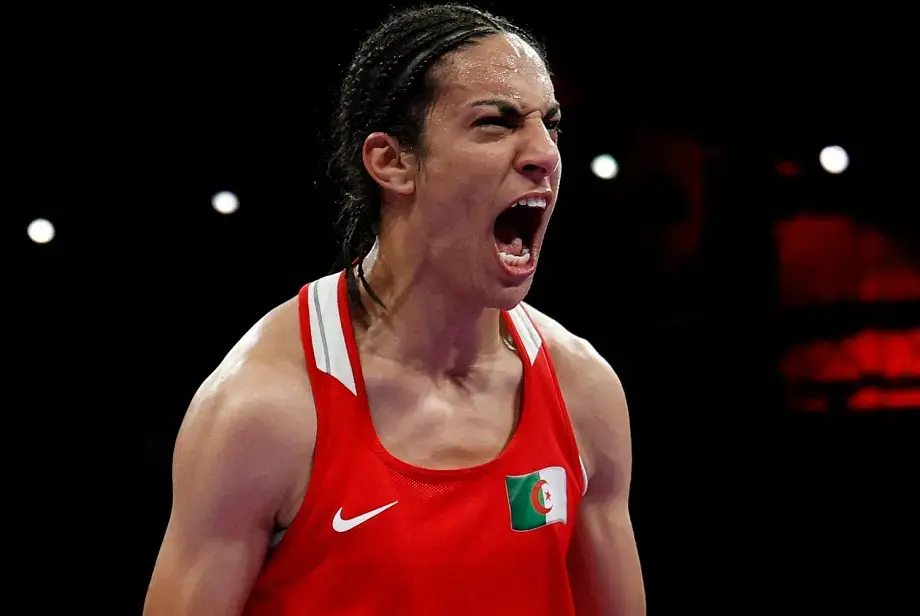
In a 2024 essay, she argued, “Protecting women’s sports means recognizing sex-based realities, not feelings.” Their informal “team-up”—never a formal collaboration—highlights a cultural fault line: free speech versus harm in the digital age
.
Critics decry the rhetoric as transphobic and bullying. PinkNews highlighted The Sun’s misleading use of Khelif’s image in a November 2025 trans ban story, blurring lines between transgender and DSD cases. Rights groups like GLAAD argue such policies discriminate against intersex athletes, violating Olympic Charter values of non-discrimination.
Supporters, including Gaines and former athletes like Martina Navratilova, hail it as justice: “Fairness for female competitors isn’t optional—it’s essential.” Oli London, a vocal commentator, polled X users on November 11: “Should Imane Khelif be banned?”—drawing 3,000+ yes votes.
As LA 2028 looms, this isn’t just about one boxer. It’s a referendum on science, equity, and identity in elite sport. Khelif’s “surprises” could sway her fate, but Musk and Rowling’s critique—politically incorrect yet substantiated by emerging IOC data—presses for unyielding boundaries.
“Transgender people need to be banned from women’s sports because it’s unfair to real women,” as Rowling phrased it in broader contexts, now resonates with policy momentum. Whether Khelif laces up in LA or litigates from afar, her story has irrevocably shaped the ring’s rules.
In the end, the gloves are off—not just in the squared circle, but in the arena of global discourse.
News
“It Was Incorrect.” — Henry Cavill Stops Production After Finding 3 Lore Errors on Page 10 of the New Warhammer Script.
For most productions, page ten of a script is still warm-up territory. For Henry Cavill, it was a red line. According…

“We Need Units on Shelves.” — Hasbro’s $1B ultimatum forces Amazon to scrap the streaming plan for Henry Cavill’s Voltron in favor of a 3,000-screen theatrical blitz.
Plastic, not pixels, may have just decided the fate of Voltron. On Wednesday, February 4, 2026, Hasbro confirmed a massive licensing agreement with Amazon…
“18 Years of Failure.” — How Henry Cavill Finally Broke the ‘Curse’ of Hollywood’s Most Doomed Sci-Fi Franchise in Just 3 Days.
Hollywood has a special phrase for projects that refuse to live or die: development hell. Few films embody that purgatory…
“I Don’t Deserve the Cape.” — Henry Cavill Explains Why His Brother’s Medal-Winning Service in the Royal Marines Makes Hollywood Heroics Feel Fake.
In the “scintillating” glow of a Hollywood premiere, Henry Cavill stands as the “archetype” of the modern god. With a…

“He’s Out for Blood.” — Henry Cavill’s 3-Film Plan to Humiliate His Old Bosses Reveals the $100M “Nerd Kingdom” They Refused to Let Him Build.
For years, Henry Cavill was the face of billion-dollar franchises. Now, industry insiders say he wants to own them. As cameras roll…
“I Begged for This.” — Dave Bautista Waited 10 Years for One Role, and First Photos Prove He Was Born to Destroy Henry Cavill’s Connor MacLeod.
For a decade, Dave Bautista has been unusually candid about one ambition: he wanted to play The Kurgan. Not casually….
End of content
No more pages to load