
In June 2025, the tranquil waters of a swimming pool at the Cornwall County Masters Championship in England became the stage for a bold and controversial act of protest.
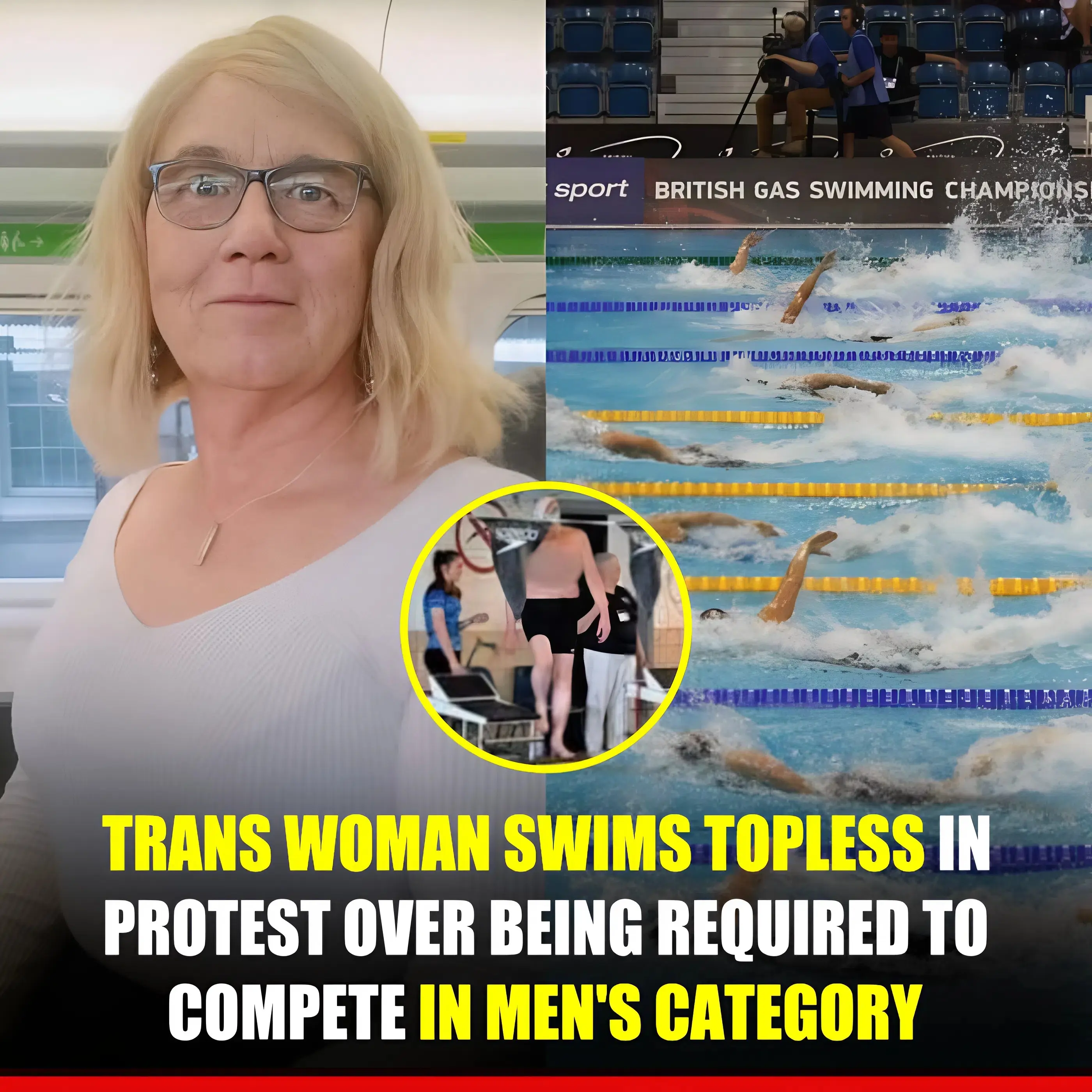
Anne Isabella Coombes, a 67-year-old transgender woman and dedicated swimmer, competed topless—wearing only men’s swimming trunks—while racing in the “open” category against male competitors. Her exposed breasts drew immediate attention, sparking a nationwide debate about gender policies in sports, personal dignity, and competitive fairness.
Coombes, a longtime member of the Reading Swimming Club with over 60 years of experience in the sport, had transitioned during the COVID-19 lockdown at age 62.
Prior to Swim England’s policy changes, she had successfully competed in the female category after fulfilling rigorous requirements, including medical documentation, testosterone monitoring, and interviews. In 2023, she even placed second in a masters event in Sheffield, finishing behind a swimmer who broke a European record.
But by 2025, new regulations forced a stark choice: compete in the newly created “open” category—effectively alongside men—or retire from competition.
Swim England’s transgender and non-binary competition policy, updated in 2023, prioritizes “fairness of competition” by reserving the “female” category for athletes born biologically female. The “open” category allows participation from male athletes, transgender women, and non-binary individuals.
The policy aims to balance inclusion with equity, particularly in protecting opportunities for female athletes who might face physiological disadvantages against those who have undergone male puberty. Proponents argue that sex-based categories are essential in sports where strength, speed, and endurance confer advantages retained even after hormone therapy.
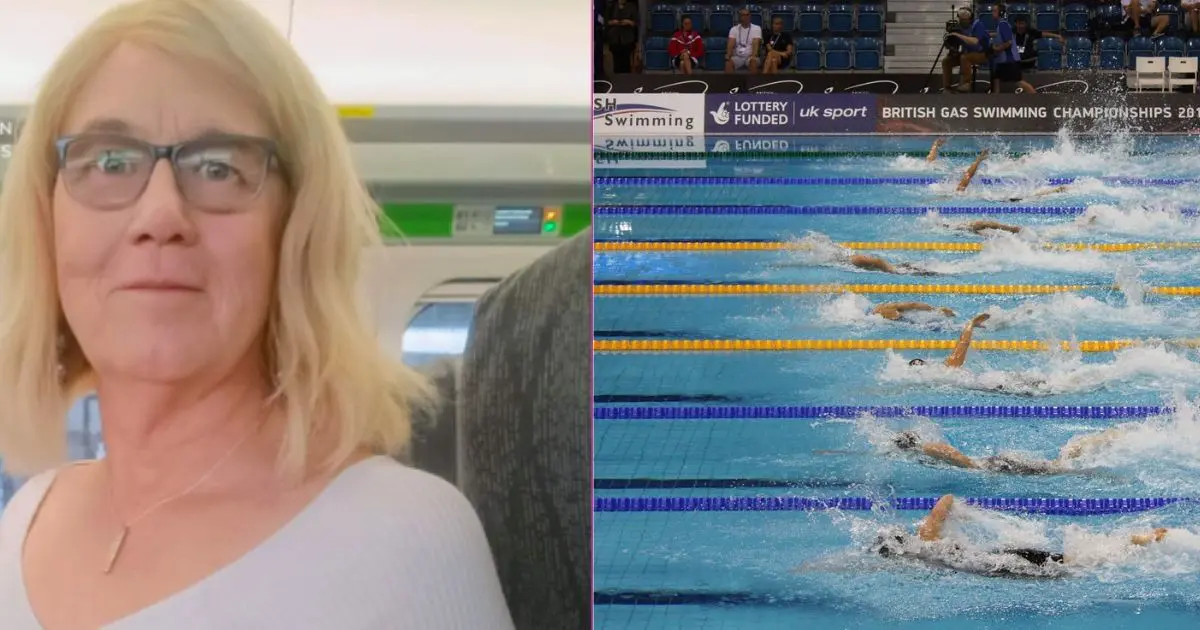
Coombes viewed the rules as contradictory and degrading. While required to compete in the open category (treating her as male for racing purposes), she was advised by officials to wear a female swimsuit to cover her breasts, citing potential disqualification under “good moral taste” clauses if her nipples were exposed.
This, she argued, created an illogical bind: standing on the starting blocks in a women’s costume among men in trunks would immediately “out” her as transgender, exposing her to scrutiny and potential discomfort. “If you’re a trans woman, you’ve got to wear a women’s costume, but compete with a man.
That illogicality is what I’m trying to use to point out the whole damn thing is stupid,” Coombes told PinkNews.
Her protest was deliberate and silent: by donning men’s jammers and swimming topless, she adhered strictly to the attire norms of the open category while highlighting the absurdity. “I want equality,” she declared, emphasizing that transgender athletes pose no significant threat to women’s sports.
“Trans people are not a threat when it comes to sport. We aren’t winning everything, and if we started to, then I would be first in line to discuss other options.
Right now, it is a non-issue.” Coombes, who has never dominated competitions, stressed that her action was meant to “raise trans issues” amid broader societal regressions, including legal rulings redefining sex as biological.

Supporters hailed the protest as courageous and necessary. LGBTQ+ advocacy groups and media outlets praised it for forcing a conversation about dignity and inclusion.
“Anne Isabella Coombes stood up to Swim England’s gender policies in an innovative way,” noted Out Magazine, framing her act as a stand against exclusionary rules that erase transgender identities.
On social media platforms like X (formerly Twitter), many applauded her bravery, with posts describing it as a “powerful statement” exposing policy hypocrisy.
Advocates argue that at the masters level—recreational competition for adults over 25—strict elite-level restrictions are unnecessary, especially for late-transitioning individuals like Coombes, whose performance is unlikely to reflect retained male advantages at age 67.
Critics, however, condemned the protest as inappropriate and provocative. Gender-critical voices pointed out that exposing breasts in a competitive setting, even if technically compliant with male attire rules, crossed boundaries of decorum.
Some reports and online reactions noted that race officials reportedly did not initially notice the protest, mistaking her chest for typical male physique variations—a detail that fueled mockery from detractors.
On X, users derided the act, with one commenting that it showcased “moobs” rather than making a profound point, while others argued it undermined the seriousness of fairness debates in women’s sports.
The incident underscores deeper tensions in sports governance. Organizations like World Aquatics and UK Athletics have adopted similar sex-based policies, citing evidence that male puberty confers lasting advantages in muscle mass, lung capacity, and bone density.
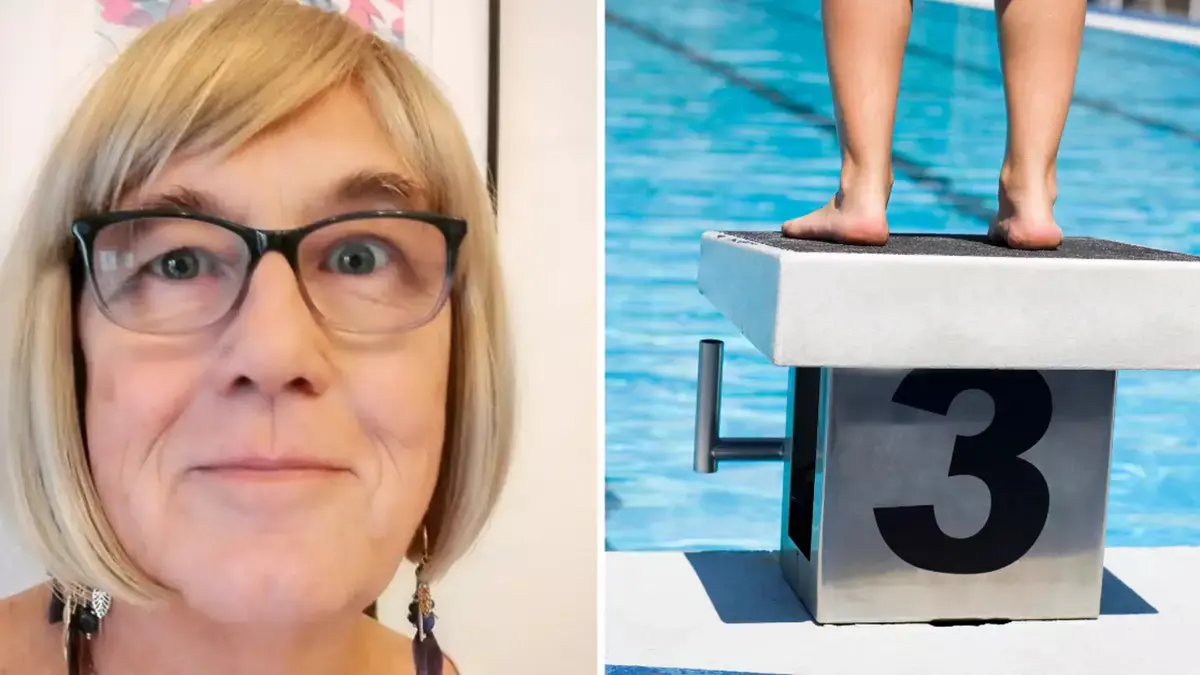
Even post-transition hormone suppression does not fully eliminate these, according to studies referenced in policy justifications. Critics of inclusion in female categories fear erosion of opportunities for biological women, referencing high-profile cases like Lia Thomas in the U.S.
Yet Coombes and her supporters counter that blanket bans stigmatize transgender athletes without evidence of widespread dominance, especially in non-elite contexts. “It doesn’t need to be a problem. There are far bigger problems in this country that need to be sorted out,” she said.
Her protest, while polarizing, has amplified calls for nuanced approaches—perhaps third categories or case-by-case assessments—that prioritize both fairness and respect.
Six months later, in early 2026, the debate rages on. Swim England has stood by its policy, emphasizing entry-level opportunities for transgender swimmers in aligned categories. Coombes’ act has become a symbol: for some, of resilience against discrimination; for others, of the challenges in reconciling biology, identity, and equity.
As sports bodies worldwide grapple with these issues, incidents like this remind us that policies affect real lives, demanding solutions that honor dignity for all while preserving competitive integrity.
News

Brazil’s Neymar: I might retire at end of ‘important’ 2026
Brazil forward Neymar said he is “living year to year” as he considers retirement at the end of the season. The 34-year-old currently…

Selena Gomez was a meme-worthy ‘mood’ while watching Lionel Messi play against LAFC
Selena Gomez was one of the thousands of soccer fans eager to see Lionel Messi face off against LAFC during their…
Lionel Messi teammate Rodrigo De Paul downplays Champions League importance after Inter Miami’s MLS title
Rodrigo De Paul, who plays alongside Lionel Messi both with the Argentine national team and Inter Miami, made a controversial…

“He Wore It for 12 Hours.” — The 1 Gritty Detail in Henry Cavill’s First Highlander Photo That Proves He’s Done With CGI Capes Forever.
The internet didn’t just react when the first official image of Henry Cavill as Connor MacLeod dropped—it froze. After years of rumors,…

“He DESTROYS Me at Chess!” — Natalie Viscuso’s five-word revelation about Henry Cavill’s brilliant mind—the true hobby behind the muscle is pure strategic genius.
Across social media and film commentary, a shallow assumption occasionally surfaces around Henry Cavill: that he is a purely physical…

“I Felt Like a Fraud.” — Henry Cavill Confesses He Almost Quit the Movie During Rehab, Convinced He Was Too Old to Play an Immortal Warrior at 42.
“I Felt Like a Fraud.” — Henry Cavill Confesses He Almost Quit ‘Highlander’ During Rehab The man chosen to play…
End of content
No more pages to load